dailynewsnblog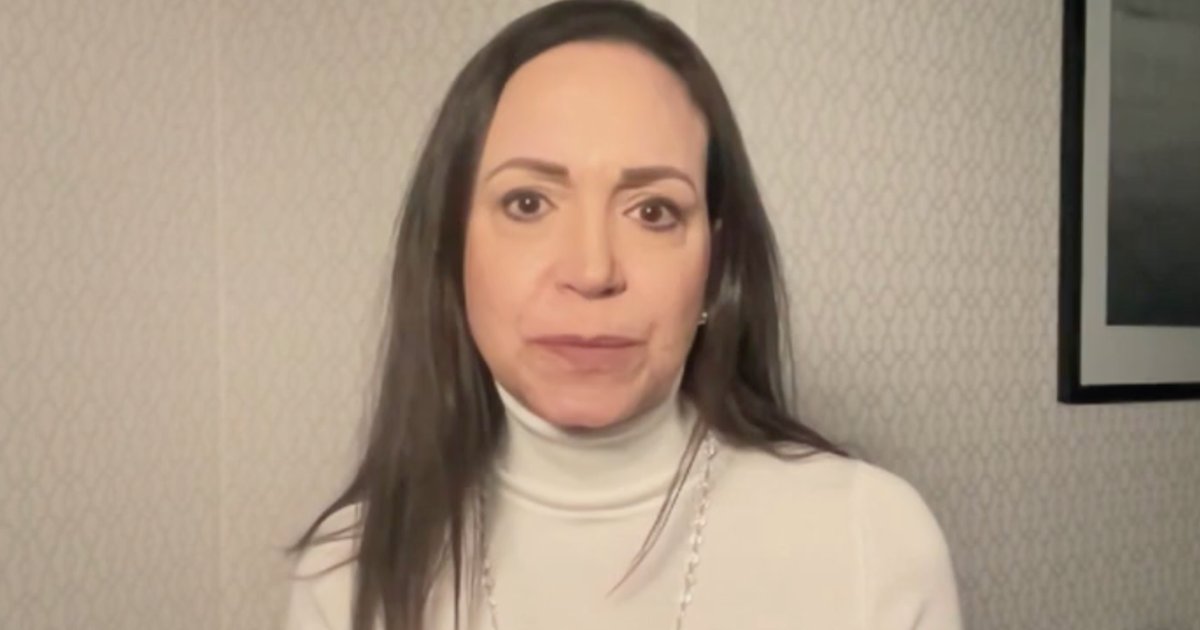
Washington — Venezuelan opposition leader María Corina Machado said she’s “absolutely” supportive of President Trump’s strategy in the country amid his administration’s increased pressure campaign against the regime of President Nicolás Maduro.
“We, the Venezuelan people, are very grateful to him and to his administration, because I believe he is a champion of freedom in this hemisphere,” Machado said of Mr. Trump on “Face the Nation with Margaret Brennan.”
Last week, the Venezuelan opposition leader made a daring escape from her country to collect her Nobel Peace Prize in Norway. The appearance marked the first time Machado has been seen in public in almost a year, after living in hiding in Venezuela. In an exclusive interview with “Face the Nation,” Machado said she dedicated the award to Mr. Trump because “he finally has put Venezuela in where it should be, in terms of a priority for the United States national security.”
“We have been asking this for years, so it’s finally happening,” Machado said. “That’s why I believe the regime has its days numbered.”
The U.S. has increased pressure on the Maduro regime in recent weeks, with a buildup of military assets in the region, strikes on alleged drug boats off the coast of Venezuela, new sanctions on Venezuelan individuals and vessels, along with the seizure of an oil rig.
Machado acknowledged that more sanctions and more possible seizures of oil come with the risk of cutting off the already impoverished people of Venezuela. But she said “what we’re doing is for the well being of the Venezuelan people.”
“What we want to do is to save lives, but Maduro was the one who declared a war on the Venezuelan people,” Machado said. “A war we didn’t want. A war we are suffering with hundreds of thousands of killings and forced executions in the last years.”
Asked by Brennan whether she wants more seizures and a blockade, Machado said “we want every legal action through law enforcement approach,” not only from the U.S., but also from Caribbean, Latin American and European countries to “further block the illegal activities of the regime.”
“Why? Because we need to increase the cost of staying in power by force. Once you arrive to that point in which the cost of staying in power is higher than the cost of leaving power, the regime will fall apart, and it’s the moment where we, you know, advance into a negotiated transition,” Machado said.
Maduro refused to leave after last year’s presidential election, even after tallies showed the opposition winning nearly 70% of the vote. But Machado said things have changed significantly in recent months, and Venezuela is a “total different country.”
“Maduro is weaker than ever. The Armed Forces, police are certainly divided and fractured, and our country is united, cohesive, and we finally have the administration, in this case, President Trump with a clear strategy that truly represents a credible threat for the regime,” she said. “So if we had ever had a chance to finally move ahead into, towards democracy in our country, it’s today.”
Asked whether she would welcome U.S. military action in Venezuela, Machado said “I will welcome more and more pressure so that Maduro understands that he has to go, that his time is over.”
On the task of keeping the country together after Maduro’s regime leaves, Machado cited cooperation with key allies, saying, “our main ally will be the United States of America.” On the question of whether that would include U.S. troops on the ground, Machado said she doesn’t “think that’s the case.”
“There are other countries that have offered support as well in order to strengthen democratic institutions once the government-elect is in place, but that we will have to address that once we have the, you know, the government-elect in place and put in order, bringing order back to our country.”
Machado said “the day Maduro goes, you will see tens of thousands, hundreds of thousands of Venezuelan migrants coming back home from the United States and all over the world.”
“Our diaspora is desperate to go back to Venezuela,” she said. “So even from that perspective, it is a win-win situation to have democracy in Venezuela.”