dailynewsnblog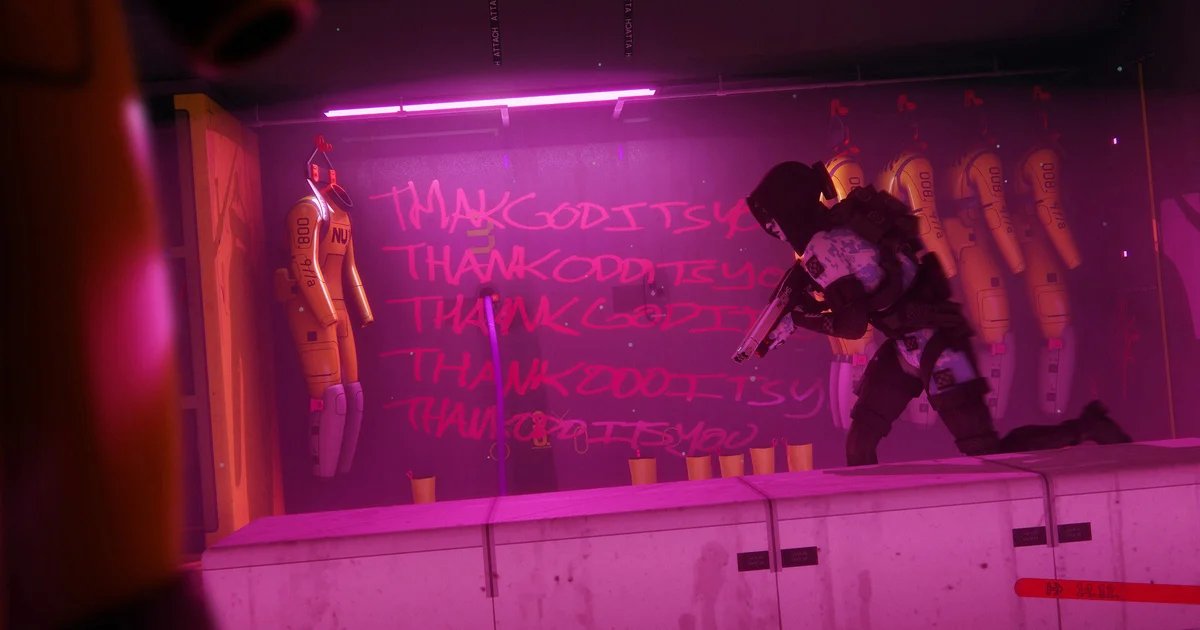
The human colony on Tau Ceti IV has been abandoned for half a century, as far as anyone can tell. The only exports leaving the planet are those nabbed by Runners in mechanical bodies, like fruit pickers at the end of the universe. But there are imports, too, of a sort: elements pulled in from other extraction shooters, which reveal the kind of experience Bungie wanted to make.
Namely, a stealth game.
The first such import I noticed was the birds. With their enormous, hot-pink bills and strange chatter – a rattling kind of chirrup, like a rolling knucklebone – they appear pretty alien. But in behaviour, they’re evidently a family relation of the crows in Hunt: Showdown. Creep too close and they’ll take off, in clamorous fashion. The flap of their wings is bad enough, but once they’re in the air, they squawk and holler like the tattletales they are – alerting any nearby players to your position. It’s wince-inducing stuff.
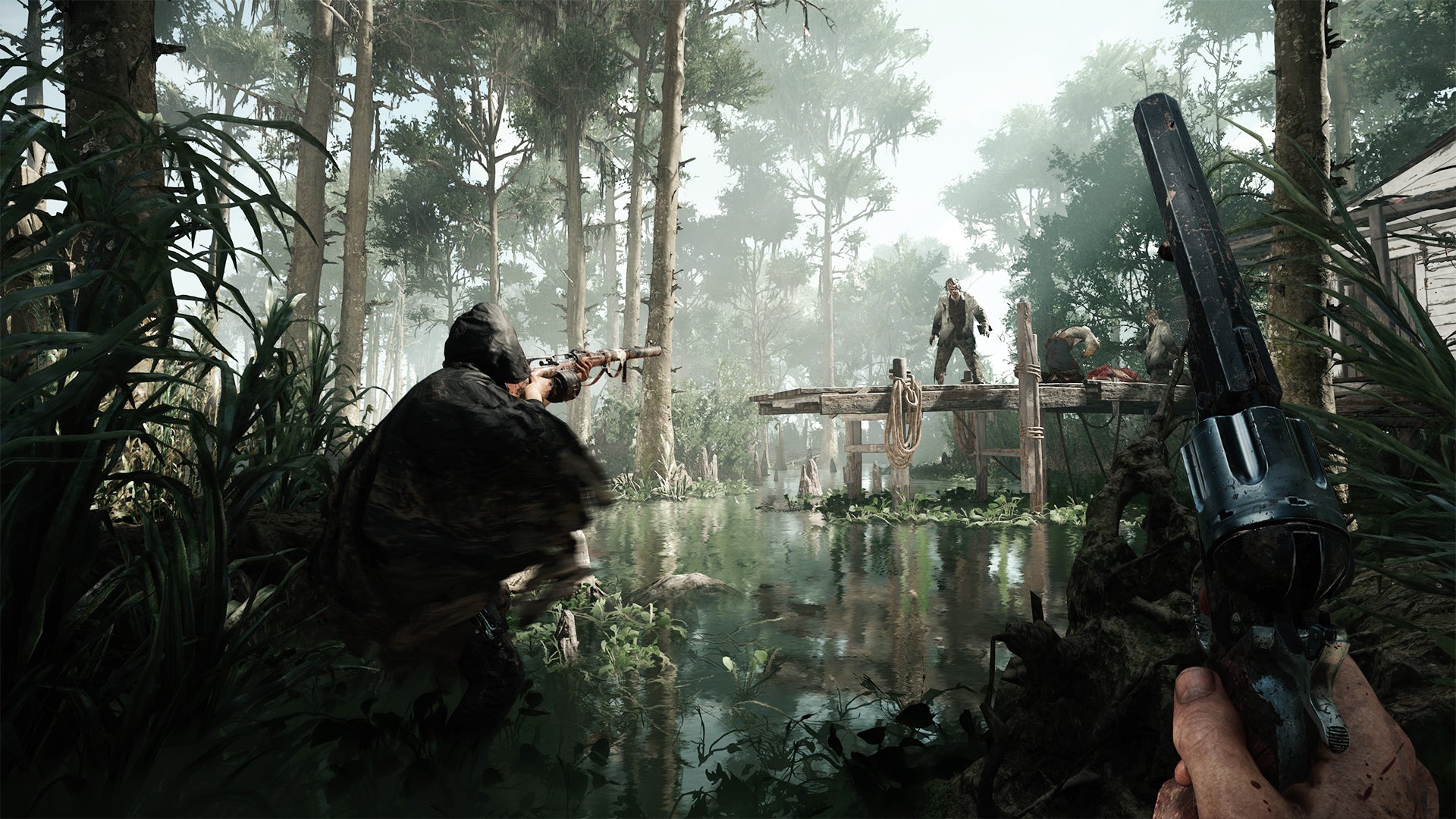
As a fan of single-player stealth games, I fell in love with Hunt: Showdown half a decade ago. In retrospect, it’s no surprise that one of the extraction shooter’s foundational texts should have been made by Crytek’s Frankfurt studio. Crysis, and Far Cry before it, had been ‘wide corridor’ shooters – plonking you in lush outdoor environments with one objective at a time. They were all about the tension between crossing open ground and maintaining a constant state of alertness – alive to the enemy patrols that might pass by on the road, or hear you tearing through the undergrowth.
Crytek took all of that and applied it to the soupy Louisiana bayou of Hunt. The developer treated its maps like single-player stealth levels, drenching them in swampy atmosphere and filling them with monsters – any of which could trip you like a bear trap unless you learned their patterns and dealt with them quietly.
Then it sprinkled extra players on top. I realise this is the point I lose a lot of you – the stealth devotees in the room. You may be thinking ruefully of spawn-killers and slide-cancellers and fiction-shattering teabag incidents. Perhaps more than anything else, you’re thinking about the way competitive multiplayer robs you of the opportunity to set your own pace – handing control to the most frenetic minds on the map.
You can think of your human rivals as the xenomorph in Alien: Isolation
But Hunt isn’t like that, and nor is Marathon. In both games, you can think of your human rivals as the xenomorph in Alien: Isolation, or Mr X in Resident Evil 2 – a smart enemy that isn’t just looking for you but, more pertinently, listening as well. The presence of other players turns each Marathon map into one enormous alarm system – where even a swiftly resolved firefight with robots runs the risk of drawing the apex predator.

That’s especially true in solo mode – something that Hunt never truly supported. When you’re alone, sound propagation is king, and you learn to distinguish between the ambient noise of creaking girders, the charged thud of lightning strikes and the distant splash of volt-fire. It’s sound that transforms every action into a calculated risk in Marathon – from the pneumatic hiss-thunk that makes you think twice about opening a simple door, to the clatter of a vent grill hitting the floor.
When playing the Assassin class, a cloaking ability helps you get by unseen. But activating it involves an electronic warble that can be recognised by opponents, making its use a toss-up when facing off against other players. To those who take the time to learn the soundscape of Marathon, such noises are like signatures, signed in florid handwriting by the overconfident.
My standout memories of Marathon have involved staring at a wall for five minutes
Very often, victory goes to the player who leaves the smallest footprint – not the one with the biggest gun. But what victory looks like is something you’re free to shape largely on your own terms. As long as you manage to exfil, everything else is a bonus, and avoidant strategies are just as valid as aggressive ones. The missions offered by the corporate vultures circling Tau Ceti will ask you to pick plants in the swamps, or activate a doodad in the dormitories of a collapsing outpost. Rarely will they demand that you kill fellow players for your supper, and so dodging a fight doesn’t feel like failure.
As in classic Thief and Deus Ex, some of my standout memories of Marathon have involved staring at a wall for five minutes – heart thumping in fear, ears straining for signs that a hunter has moved on or discovered my hiding place.

The key to all of this is a kind of persistent ambiguity. You’re never really clear on how many players are left in a map; whether they’ve all escaped, or stabbed one another with knives, or been overwhelmed by exploding grubs in some obscure tunnel. Only once you leave yourself are you shown the cameras of whichever players still remain and – surprise! Turns out there was a dude in the window overlooking your exfil point, watching your every move, deciding not to engage. Thanks, dude. You’ve creeped me out, but thanks.
Looted containers and disassembled bots can clue you into the routes other players have taken through the level. But any tracking is muddied by the red herrings Bungie introduces to keep you on your toes. Was that window broken by a passing opponent, or the settlers 50 years ago?
Marathon’s a quietly spectacular test of skills honed in Thief and Far Cry
Then there are the bot routines which, 30 hours in, I still sometimes mistake for players – catching a cloaked sprinter out the corner of my eye, or a sniper ducking back on a gantry. It’s a witchy approach to enemy AI that, I can only presume, Bungie mastered on Destiny 2 while I wasn’t paying attention. Very occasionally, you’ll be thrown off by the twitch of a wrecked robot, their motorised limbs spasming with a noise like a handheld drill. Even the dead can’t resist the opportunity to complicate the sound mix, making you ever more jumpy and doubtful.
It’s this uncertainty that lends Marathon its magic. As in the very best stealth games, the goal is to gather as much aural and visual information as you can, without becoming an information point yourself. But while you might think you’re safe, you can never really know. It’s a quietly spectacular test of skills honed in Thief and Far Cry, and every fan of single-player sneaking owes it to themselves to give it a try.