dailynewsnblog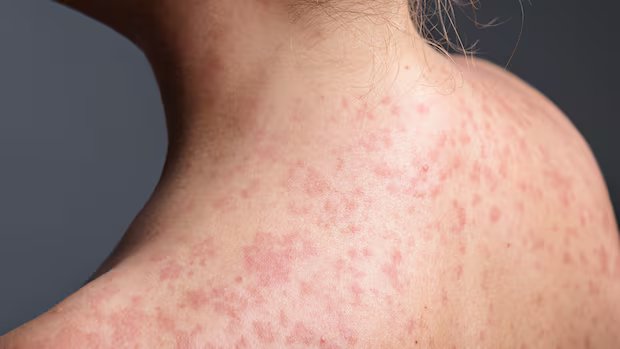
It’s been one year since the first measles cases in the latest outbreak were reported in Manitoba — and there’s no sign the spread of the highly contagious disease is slowing.
“It’s been very busy,” said Dr. Davinder Singh, a medical officer of health with Southern Health, the regional health area that has seen the majority of the province’s cases.
Since February of last year, there have been 371 confirmed and 32 probable measles cases reported in Manitoba, as of Jan. 24, the latest numbers available.
Manitoba had no reported measles cases in 2024, according to federal data.
The province announced the first five cases in the current outbreak on Feb. 4, 2025. Case numbers swelled in the following months, peaking in May with 72 infections, then dropped during the fall to 23 cases in October.
But measles cases are growing again, with 51 confirmed infections so far in the new year, according to the latest data from the province.
“It’s obviously signalling that there’s still a challenge in Manitoba in addressing those growing number of cases,” said Michelle Driedger, a University of Manitoba professor who specializes in community health.
About eight in every 10 measles cases in Manitoba have been reported in Southern Health, according to Singh.
“The outbreak could be over in a month or six weeks if everyone who was not immunized and susceptible chose to get immunized,” he said. “That’s really what we need.”
Southern Health has a low measles vaccination rate compared to other parts of the province, said Singh. Most patients who contract the virus are from areas with the lowest rates of immunizations, he said.
The health region has been trying to curb the spread of measles by encouraging vaccination during the last year — but that hasn’t been easy, he said.

There are early signals that measles — one of the world’s most contagious but preventable diseases — may be spreading in parts of Canada. Andrew Chang breaks down the way the virus attacks the body and what makes it so contagious.
Most people who aren’t immunized have expressed either concerns about vaccine safety or think the virus is not severe enough to require immunization.
The vast majority of measles cases in Manitoba — 334 cases, or 85.6 per cent — have been in people who are not immunized against the illness, while 25 cases, or just over six per cent, have been in people whose vaccination status is unknown, according to provincial data.
A total of 12 cases, or three per cent, were in people who had one vaccination dose against measles. Twenty-one cases, or 5.2 per cent, involved people with two or more doses.
Singh said the measles vaccine is extremely safe and its risks are very rare, but misinformation still spreads.
“It’s not something that can easily be changed with an advertising campaign,” he said. “You really have to get to kind of the roots of why someone might not be trusting vaccination to have any chance of overcoming it.”
Health officials are working with the education system, as well as family doctors, to get accurate information out, he said.
Southern Health has also been talking about immunization during sessions with families, including during prenatal and postpartum care programming, Singh said, which is intended to open the door to talk about concerns around the measles vaccine.
“I think a lot of it comes down to trust,” he said.
Burden to the health-care system
The number of measles infections in Manitoba is adding work for already busy emergency departments, but also straining administrative units, said Singh.
With every positive case, health-care officials must contact trace to learn where the virus circulated, and then alert the public.
“Any burden on those systems can be very significant,” he said. “It just adds up to a lot of additional work for a lot of additional people in the system.”

But Singh said his biggest concern is the unnecessary illness and suffering the outbreak is causing.
“That is completely preventable, because we have a very effective vaccine,” he said.
Since February of last year, 22 people have been hospitalized in Manitoba for measles, two of whom required treatment in an intensive care unit, the province’s data says.
Of those hospitalized, 16 were children under the age of 10. Children are among the most at risk from severe measles complications.
Listening to concerns
The University of Manitoba’s Driedger, who specializes in public health and health communication, said she feels like health authorities are doing what they can to increase immunization rates.
That includes extending measles vaccination eligibility to children as young as six months in Southern Health last year. A spokesperson for the province told CBC News 2,078 infants between six and 12 months have received a dose of the measles vaccine since the eligibility was expanded.
Driedger says her research on COVID-19 vaccine acceptance in that region showed increasing the availability of immunizations didn’t necessarily translate into an increase in vaccination.
Public health messaging about vaccines is better when it comes from local health providers rather than from provincial authorities, she said, so primary care providers, including doctors, started having conversations directly with their patients about the COVID-19 vaccine.
“There was a greater willingness to listen because it was coming from people who also lived in the community,” she said.
“Having the conversation is making sure they leave the door open. Even if the patient didn’t want to accept the vaccine at that point, they might return to it.”

Driedger says conversations are key with the measles outbreak as well.
“It’s not a magic solution. It’s not going to solve that problem, but it is certainly one of those things that certainly helps.”
Kyle Penner, co-pastor of Grace Mennonite Church in Steinbach, which is part of the Southern Health region, said he has dealt with vaccine hesitancy by referring concerns about measles or immunization to health professionals among his congregation.
Some congregants think that not getting vaccinated is a sign of trust in God, Penner said.
“To that I say, when my kids were little and I made a bath for them, I tested the water. I still wear seatbelts,” he said in an interview with CBC’s Information Radio. “I wouldn’t use vaccination as a test about how faithful we are to God.”
Information Radio – MB8:16Navigating Vaccine Hesitancy and Community Division in Southern Manitoba
Kyle Penner, co-pastor of Grace Mennonite Church in Steinbach, speaks with host Marcy Markusa about the roots of authority mistrust and the social challenges of discussing measles vaccinations following the COVID-19 pandemic.
A conversation about measles vaccine has to be handled without shame or blame, Penner said.
“If we can establish we’re on the same team, then we’re not enemies.… We’re working to the same goal,” he said.
“I think we all just need a little bit of time to heal and remember that those of us who choose differently are still good people.”