dailynewsnblog

As soon as the ball landed at the feet of a Manchester City attacker at any point during the first half against Newcastle United on Wednesday, there was a sense of inevitability. It did not matter exactly where the team’s offense was positioned – near the halfway line, tucked behind several Newcastle defenders closer to goal or somewhere in between. There was always a pass to be played, an area to exploit, a chance to create frenzy amongst the opposition defense, a goal to be scored. As Pep Guardiola’s side put three past Newcastle before the halftime break, boasting a 5-0 aggregate lead in the EFL Cup semifinals, vintage City made their long-awaited comeback.
They managed to do so without the one player who is a most natural fit for their definition of dominance, too – Erling Haaland.
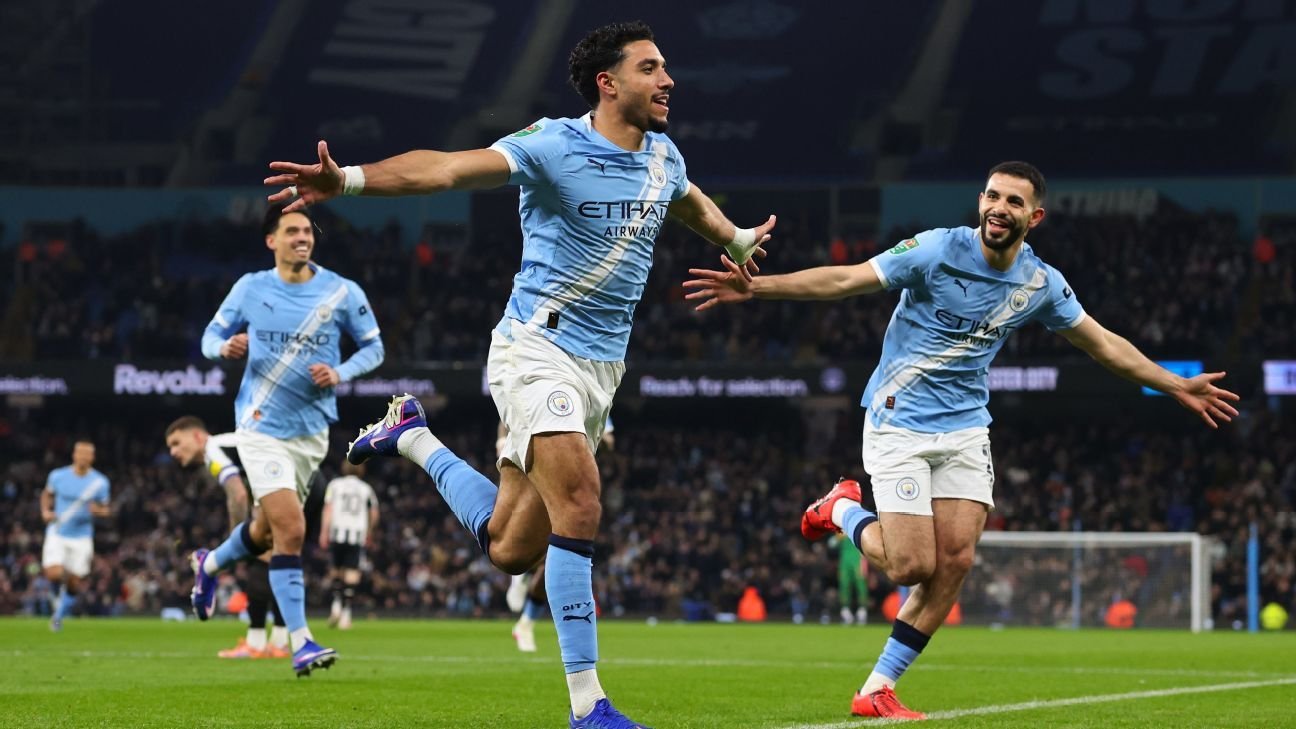
For just the second time in 12 games, the other instance a demolition of League One side Exeter City in the FA Cup, City scored three goals in a game, this time managing them all in a dynamic first half. Haaland’s absence was barely felt; those who instead made up City’s attack – Omar Marmoush, Tijjani Reijnders and Antoine Semenyo – had their moments in front of goal, tearing Newcastle apart with every chance they could get. Marmoush, who had one goal before taking part in Egypt’s fourth place finish at the Africa Cup of Nations, had a brace by the half hour mark, each goal an example of persistence. In his seventh minute strike to open the scoring, he nicked the ball from an opponent on the left flank and went to the races, finding an opening and finishing things off. About 20 minutes later, he was there to finish things off after Antoine Semenyo’s shot was blocked but sent awkwardly back into play, Marmoush running to the far post and all alone as he popped the ball into the back of the net.
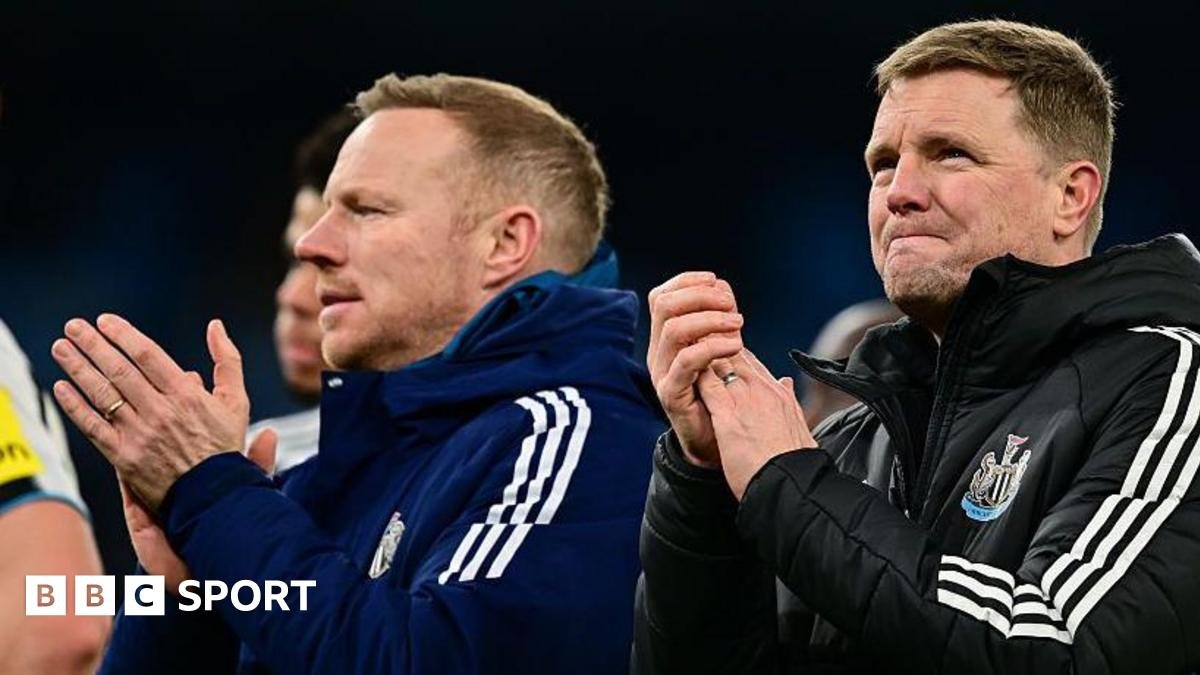
Reijnders added a third to City’s account in the 32nd minute, borrowing a bit from Marmoush in the process. Semenyo was in front of goal and in perfect position to take a shot, though he let the ball get away from him. It was no trouble in the end – Reijnders made a darting run and seamlessly picked up from where Semenyo left off, quickly finishing off the chance and leaving Newcastle’s defense crestfallen. Eddie Howe had already described City as the hardest team in England to play over two legs, his team now feeling the brutal reality of that experience.
The fact, though, that City managed all that without Haaland – and Rayan Cherki, arguably this season’s breakout star – offers a strong reminder that something is working for Guardiola, even if his side entered Wednesday’s match with just four wins in their last 10. Reijnders has a demonstrated habit for goalscoring as a midfielder and is now up to seven goals in his first season at City, but Marmoush’s uptick in form is a welcome development for a player who has struggled to find his footing at times with the Manchester club. He now has three goals in his last four games since returning from the Africa Cup of Nations, the flurry of goals coming at a very important time for City.
Wednesday’s goalscorers, alongside Cherki and Semenyo, are finding a way to make up the difference as Haaland hits a slump – he has just two goals in his last 12, including his 19-minute cameo against Newcastle. The downward turn is all-encompassing – he has not simply been unlucky in front of goal, his underlying statistics trending in the wrong direction in a handful of categories. His shot-taking is down to an average of 2.5 per match, below his season-long average of 3.4, and so is the quality of those opportunities – he is averaging just 0.4 expected goals per game, below his average of 0.7 xG across all competitions this season.
Haaland is supposed to be a cheat code for City but when he cannot be, it is crucial that others pick up the slack and even in the team’s inconsistent form, goals have not been hard to come by. Marmoush’s addition to a goal-happy group headlined by Cherki, Reijnders and January signing Semenyo will at least allow City to hold steady amidst a rebuild.
Familiar problems, though, were never far away. Despite being down 5-0 on aggregate, Newcastle found a way to thrust themselves back into the game for an evenly-contested second half that stayed short of being nervy. Anthony Elanga finally pulled one back for the visitors, carving out space around a handful of City defenders, who merely watched as he took tight turns around them for a finish in the center of the penalty area. More may have come, too, if goalkeeper James Trafford had not come up big later on in the second half and if Newcastle were a bit more accurate in front of goal.
City were outdone in more ways than one in the second half, truly benefitting from the monumental advantage they had already built for themselves. It is generally hard to judge a team who had already created a 5-0 advantage but Guardiola’s side are building a habit of being a first half team – look no further than Sunday’s 2-2 draw at Tottenham Hotspur, where their 2-0 lead crumbled in stunning fashion and against a team that has struggled to find even a little bit of consistency in domestic play. City have the right to blame some of their defensive woes on injuries but they essentially got away with reverting to unfortunate tendencies, which may be hard to avoid in their post-peak Rodri reality. Simply outscoring the opponent might be the only way to survive their up-and-down season at this point, though a stiff test awaits in next month’s final against defensive stalwarts Arsenal, who have no issue going down the unglamorous route to get the job done.
As City entered another tense second half, though, a familiar fogginess seemed to set in. Guardiola’s side have all the tools they need to survive most tests but their rotated defense was a bit too easy to get through, much as it was in their defeat at Bodo/Glimt in the UEFA Champions League last month. The symptoms of their funk remain easy to spot but the diagnosis still eludes them, perhaps the burnout of back-to-back long seasons hard to beat. City have refreshed their roster considerably in the last year but they jumped straight into last summer’s expanded Club World Cup after a lengthy campaign and then had a brand-new season waiting for them weeks after their exit.
It is not a burden that is only theirs to carry – a Premier League rival in Chelsea left the U.S. as the Club World Cup winners, while just about every other notable team in England can complain of fixture congestion even if they got the summer off. In their dominant victory over Newcastle over two legs, City proved they still have the ability to win titles, even if they are an unfinished product as Guardiola mounts another rebuild. They might just be in survival mode, even if it is a very impressive version of survival mode.