dailynewsnblog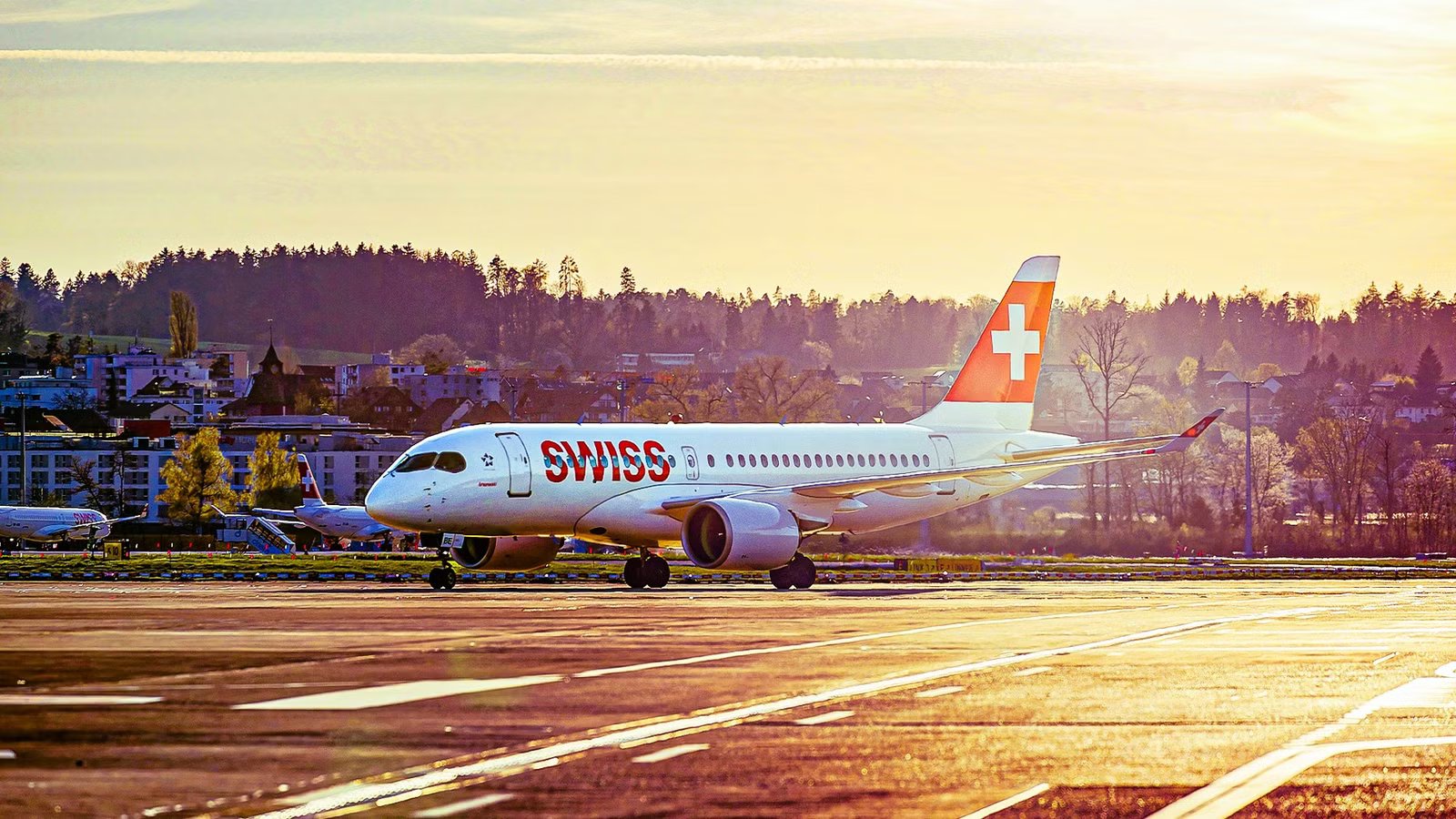
SWISS is offering its flight attendants up to CHF 15,000, or nearly $20,000, to leave the airline voluntarily as it tries to reduce a cabin crew workforce that has become too large for the flying it is able to operate. The Lufthansa Group carrier says the imbalance is due to it operating fewer flights than planned this summer, with the disruption linked to both pilot shortages and engine-related aircraft groundings.
What makes the move unusual is that SWISS is not a weak airline facing a collapse in demand. It remains one of Lufthansa Group’s strongest-performing carriers, and in recent financial results emerged as the most profitable based on margins. The problem is more specific: SWISS is unable to operate as many flights as expected due to Pratt & Whitney (P&W) engine issues across its narrowbody fleet, leaving it with more flight attendants than it currently needs.
Paying Crew To Go

Last year, SWISS was forced to cancel more than 1,400 flights over its busy summer schedule due to pilot shortages and the grounding of parts of its Airbus fleet for repairs to Pratt & Whitney engines. SWI now reports that more than 300 flights have already been canceled in 2026 for the same reasons, with further cancellations in the months ahead very likely. The net result is that SWISS finds itself with a surplus of up to 300 cabin crew members, prompting the airline to issue a memo to its nearly 4,500 flight attendants seeking voluntary resignations.
In the memo, the airline states that “balanced inventory levels will not be achieved in the second half of the year as previously planned, and probably not until 2027.” As a result, SWISS is offering “incentivized measures to reduce the excess cabin crew.” The airline is offering a lump-sum payment of 15,000 Swiss francs, the equivalent of nearly $20,000, to crew willing to resign by April 30, and leave the airline by the end of August at the latest. This represents nearly four times the starting salary for a SWISS flight attendant, providing a significant incentive for employees who are already considering a career change.
SWISS is also offering payouts to employees participating in the airline’s “Study & Fly” model, designed for employees taking a study course and working a reduced schedule with the airline. In addition, incentives are available for employees who opt for a “retired employment relationship” of at least one year, with the guarantee that they can return to the company at a future date. By providing a range of options, the airline hopes to correct the situation without forced staff cuts, with a spokesperson saying:
“Redundancies are not planned at this stage and would be a last resort if the voluntary measures do not have sufficient effect.”
Too Few Jets, Too Few Pilots

SWISS’s current problem is being driven by two separate constraints at once. The first is its ongoing shortage of captains and first officers for the Airbus A320-family aircraft, which is limiting its regional operations. This is exacerbated by further crew shortages for its Airbus A330 and Airbus A340 fleets, with many tied up due to retraining for the new Airbus A350. But this is only part of the issue, as SWISS is facing the same P&W engine-related issues afflicting airlines globally, but is particularly afflicted due to its fleet choice.
Back in 2024, Simple Flying reported on how SWISS was grounding six A320neo-family aircraft through the summer due to the P&W issues. Since then, the issue has only grown larger, with the PW1500G engines on the airline’s 30-strong Airbus A220 fleet also being impacted. Last fall, SWISS made the difficult decision to ground its nine A220-100s for at least 18 months, with their spare engines being used on larger A220-300 jets.
|
The Current State Of The SWISS Narrowbody Fleet |
|||
|---|---|---|---|
|
Aircraft type |
Operational |
Parked |
Total |
|
Airbus A220-100 |
– |
9 |
9 |
|
Airbus A220-300 |
18 |
3 |
21 |
|
Airbus A320-200 |
6 |
– |
6 |
|
Airbus A320neo |
6 |
5 |
11 |
|
Airbus A321-200 |
6 |
– |
6 |
|
Airbus A321neo |
5 |
2 |
7 |
|
Total |
41 |
19 |
60 |
Looking at the current state of the SWISS narrowbody fleet, those A220-100s remain grounded, and a further three of the -300s are currently in maintenance. The A320-family is not out of the woods either, with at least four parked at Ljubljana Jože Pucnik Airport undergoing maintenance with Adria Tehnika, with another parked at Geneva. The net result is that nearly a third of the SWISS narrowbody fleet is not currently flying, leading to the airline having to cancel flights and having more cabin crew than it actually needs.

Almost A Fifth Of Airbus A220s Are On The Ground Amid P&W Engine Issues
Airlines are taking drastic steps to solve the problems plaguing the worldwide A220 fleet.
SWISS Is Still Lufthansa Group’s Profit Star

What makes the situation more surprising is that SWISS remains highly profitable. When the Lufthansa Group reported its 2025 financial results earlier this month, the airline reported nearly $700 million in profits on revenue of over $7 billion. What really stood out is that it reported margins in excess of 9%, which were the highest in the group, and more than ten times those of  Lufthansa mainline.
There are a few reasons for that. SWISS benefits from a strong premium home market with two strong bases at Zurich Airport and Geneva Airport. This provides a high-value corporate customer base, and a network that is better positioned than many peers to capture premium long-haul and connecting demand. That gives it stronger revenue quality than a carrier relying more heavily on lower-yield short-haul volume. It also helps that SWISS has generally been one of the more disciplined and efficient airlines inside the Lufthansa Group portfolio.
Which all contributes to the irony of the current situation. SWISS is offering nearly $20,000 for some flight attendants to leave not because demand has fallen, its premium model is faltering, or profitability is falling. It is simply because operational disruption has left the airline unable to fly the schedule its business could otherwise support. That makes the voluntary exit package less a sign of weakness than a vivid example of how even a profitable airline can be knocked off balance by technical and labor constraints at the same time.