dailynewsnblog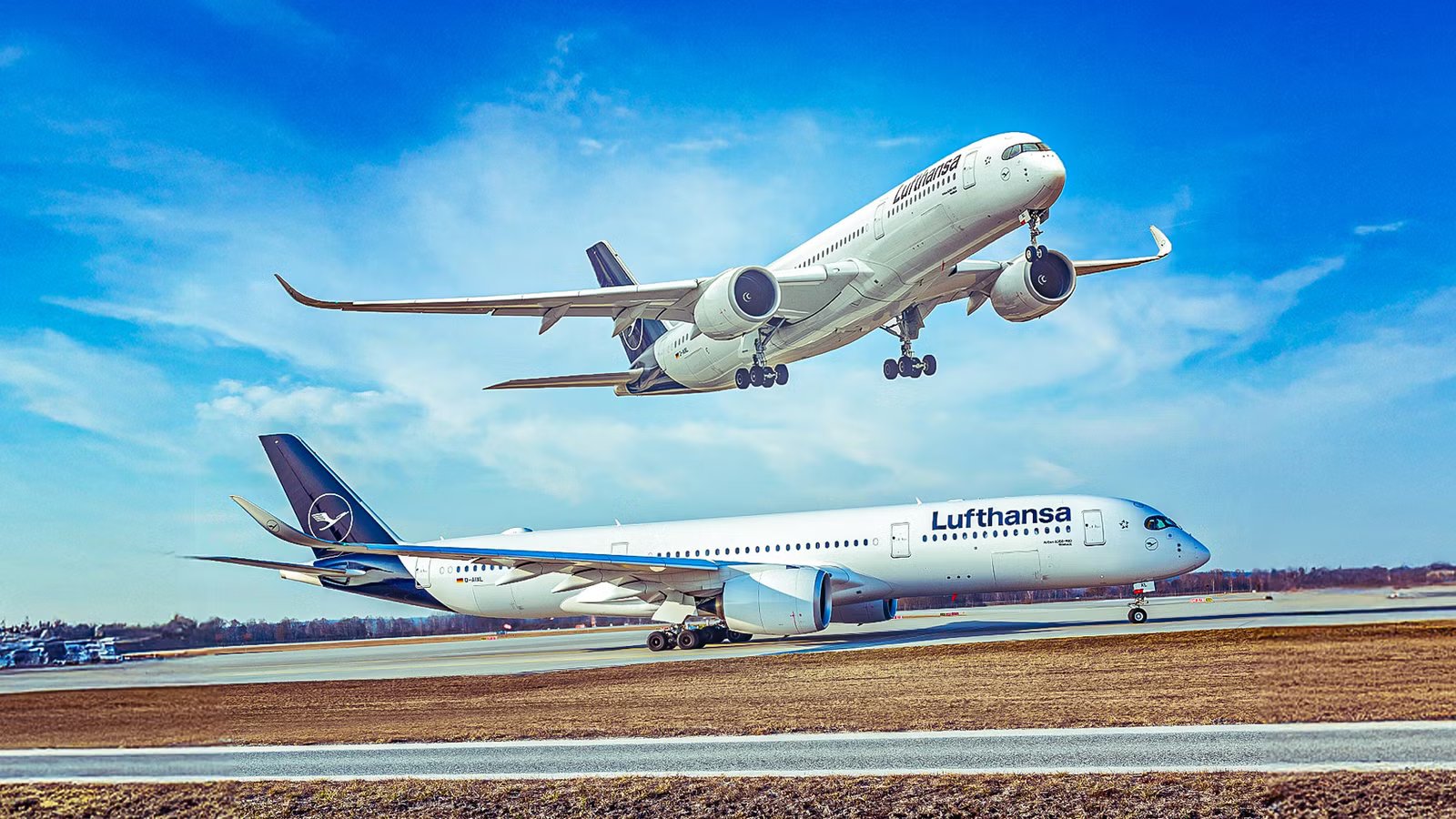
A Munich-bound  Lufthansa flight departing from
  Denver International Airport (DEN) came to a screeching halt after attempting to take off from the Colorado airport runway. The aircraft, an Airbus A350-900, had reached a total ground speed of around 173 knots when the aborted takeoff was undertaken.
Those onboard have taken to social media to relay the experience, with one traveler on Reddit, under the pseudonym CargiverSeparate498, noting that the pilot decided to abort takeoff at the very last second due to strong tailwinds. Due to the speed at which the aircraft was already traveling, the abrupt halt almost damaged the wheels, and the brakes allegedly were close to catching on fire.
LH481 To Munich Comes To A Complete Halt

Further reports on the flight identify that the aircraft then sat on the taxiway for around six hours. Passengers were eventually being disembarked by stairs onto the taxiway to awaiting buses. The airport fire brigade team is also on site, with videos shared on X of them surrounding the aircraft.
Due to the speed the aircraft had reached before it was decided to abort takeoff, it is very lucky that the aircraft’s landing gear was able to handle the immense pressure that would have been created. The brakes could have likely burst into flames. Operating the flight was an A350-900 that bears registration D-AIVD, and remains on the apron at DEN.
Simple Flying reached out to Lufthansa for comment and further context on what occurred on March 20 at Denver; the airline did not immediately respond by the time this article was published.
Flightradar Identifies The Final Moments Before The Incident

Using data from Flightradar24, Simple Flying can identify that the aircraft had arrived from Munich to Denver as LH480 on Friday, March 20. The plane had departed from  Munich Airport(MUC) at 12:41 pm (almost an hour behind its scheduled departure of 11:50 am). The aircraft had operated a nine-hour and 50-minute journey to Denver, touching down at 3:31 pm, just four minutes ahead of its scheduled arrival time of 3:35 pm.
The aircraft completed its turnaround and was set to depart from Denver at 5:20 pm. Pushing back shortly after 5:27 pm, the aircraft appears to have made its way to Runway 7/25 (12,000 feet / 3,658 meters) and had commenced its acceleration to depart from Denver heading in a westerly direction.
Due to circumstances yet to be confirmed by the carrier (however, passengers reporting due to strong tailwinds), the aircraft appears to come to an abrupt halt near the end of the runway. No injuries to anyone on board have yet to be reported; it is likely that the aircraft experienced some damage following the incident. Simple Flying will update this article as more information about the flight comes to light.

Stranded Overnight: Lufthansa Passengers Not Allowed To Deplane A320neo After Airport Closes
All the airport’s bus drivers had gone home.
Aircraft Details: D-AIVD

Ch-aviation data shows that the aircraft at the center of the incident, A350-900 bearing registration D-AIVD (pictured), is a seven-year-old Airbus widebody that joined the Lufthansa fleet after a short stint with Philippine Airlines. The aircraft, which joined Lufthansa in April 2022, is named Duisburg, after a city on the junction of the Rhine and Ruhr rivers in western Germany.
The A350-941 took its first test flight back on January 7, 2019, under French Airbus registration F-WZNA and was later delivered to Philippine Airlines on a lease from Goshawk Aviation under Filipino registration RP-C3507. The aircraft was later stored in January 2021, in the depths of the COVID-19 Pandemic, before the lease was transferred to Lufthansa on April 28, 2022. Further aircraft characteristics in the table below:
|
Current Registration |
D-AIVD |
|---|---|
|
Serial Number (MSN) |
280 |
|
Hex Code |
3C66C4 |
|
Configuration |
|
|
Engines |
Two x Rolls-Royce Trent XWB-84 |
|
Type |
Airbus A350-941 |
Lufthansa operates multiple weekly flights between Denver and Munich, and the next flight is set to depart on Saturday at 5:37 pm. This flight is operated by D-AIVA, and would be expected to support the number of displaced passengers from the flight affected the day prior, given that no flight data identifies that a replacement service is yet to be scheduled.