dailynewsnblog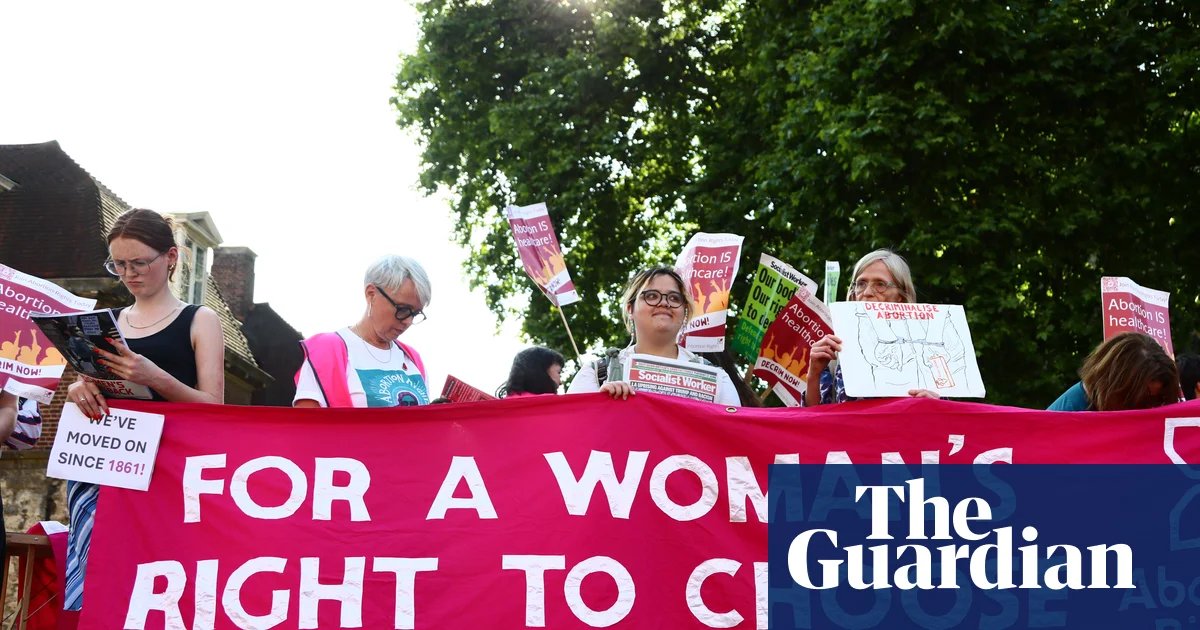
Women who have been arrested, investigated and convicted under abortion legislation in England and Wales “must not be left behind” if the law is changed to prevent women being criminalised in future, campaigners have said.
Last summer, the House of Commons voted to end the criminalisation of women who terminate their pregnancies outside the legal framework, through a new clause in the crime and policing bill.
The House of Lords will consider its own series of amendments to the legislation on Wednesday, including two that would end active police investigations into suspected illegal abortions and pardon women who have already been criminalised.
“When I heard how the system has treated these women and girls when they are at their most vulnerable, and how they may have to explain this every time their [disclosure and barring service] check gets renewed, it was clear this cruelty had to be stopped,” said the Lib Dem peer Elizabeth Barker, who has put forward one of the amendments.
“Although there are far fewer who have been convicted, that conviction is a life sentence – it prevents them getting jobs, and even when renewing their car insurance every year they’ll have to explain they have a lifelong criminal record.”
Becca was 19 and working as a healthcare assistant in a hospital in the north of England when she realised she was pregnant. She had had no signs of pregnancy over the prior months. She was still wearing her normal dress size and had even been at the seaside in a cropped top the weekend before. As such, Becca assumed she had only just conceived.
Deciding she wanted a termination, she went to a clinic and saw a doctor who gave her abortion pills. But when she did not experience the bleeding she had been warned to expect, she called NHS 111, who advised her to go to A&E.
“I told them 100% the truth of what was going on, and what I had done, and how long I thought I was,” she said.
Eventually, Becca was taken for a scan. “And I remember just seeing my partner’s face drop and all the nurses around me’s faces drop,” she said. “I was like ‘Oh my God, what’s happened?’ and the sonographer said: ‘I’m really sorry you’re six months pregnant.’
“It was just such a humongous, big, big shock,” she said. Within an hour she had given birth to her son Harry.
Becca’s mother, Anne, said: “She was still living at home and there was honestly no way you could tell [she was pregnant]. She looked absolutely normal. So there was no indication at all that she was further along than she thought she was.”
Because Harry had been born at 28 weeks, he was moved to a hospital that was better equipped to deal with premature babies, and then, as he got stronger, he was moved to a third hospital. “And that is the hospital that ended up calling the police on us,” Becca said.
A few weeks after Harry was born, Becca was at home. As her pregnancy had come as such a surprise, she had never had a baby shower or a gender reveal, so her mother and aunt had been out to buy decorations to put up. A day later, the police knocked at her door.
“We sat down and that was when they told me I was under arrest for attempted child destruction. I didn’t even know what that meant,” she said.
“They were telling me that they would do me a favour by not coming in a marked police car and not putting me in handcuffs and not wearing uniform. And I just remember thinking: ‘I don’t care what you’re doing, you’re arresting me, I don’t care how nice you’re being about it.’”
During questioning, police asked Becca whether she might have stolen the drugs from her workplace or whether her boyfriend had forced her to take them. “And it was just like: ‘What are you talking about? I’ve told the truth from the moment I called 111 and asked for help,’” she said.
While Becca was arrested at home, her partner was arrested several miles away, at the hospital where he had been visiting their son. Their electronic devices were confiscated by the police.
They were later told by social services they were not allowed any unsupervised contact with their son. This went on for several months, and it was not until 15 months later that the police investigation was dropped.
However, the arrest still has implications for Becca, now 21, that will last for decades to come. Abortion offences are classed as violent crimes, so even without a conviction, the fact of an arrest can still be disclosed on a disclosure and barring service check.
If Becca were to look for a new job, she said: “You don’t want to have to tell such a traumatic event to a random stranger who’s going to be your boss.”
If the law was changed so that her arrest records could be erased, “I think it would just be almost like a release from it. We could just be able to live a normal life, because it’s having an impact on job applications and plans for the future.”
Anne said: “She’s thinking of training to be a nurse or a midwife, and all of that, I mean it’s possible now, but it’s going to be awkward because she’s going to have to declare it. If that’s gone, she can just carry on just like any 21-year-old making plans.”
“It would just be such a relief for everyone,” Becca said, “such a weight off everyone’s shoulders and maybe the last step in it being behind us.”
Nikki Packer, who was last year cleared of carrying out an illegal abortion, said she thought about her experience often, “and the police investigation and the trial were by far the worst part. The time women are spending under investigation is ruining lives.
“This is why the decrim vote in the Lords must pass on 18 March, and the police must step back and show some accountability.”
“The lasting effects on myself and other women placed under investigation aren’t something I can simply ‘get over’,” Packer added. “The current law is ancient, it’s time it reflects modern society.”
Dr Alison Wright, the president of the Royal College of Obstetricians and Gynaecologists, said the college was calling on peers to follow the House of Commons and support clause 208, “ensuring that women are no longer at risk of investigation or prosecution for decisions about their own healthcare”.
“It is also vital that the harm already caused is addressed. That is why we are also urging peers to support amendment 426B, which would pardon women previously prosecuted under outdated and unjust abortion laws. Women who have faced investigation or conviction should not have to continue living with the consequences of this archaic legislation.”
Heidi Stewart, the chief executive of the British Pregnancy Advisory Service, said:
“Pardoning these women and expunging the records of investigations would recognise the profound injustice of criminalising abortion in the first place. If the law is to be finally brought into line with modern values, the women who have been harmed by this legislation must not be left behind.”