dailynewsnblog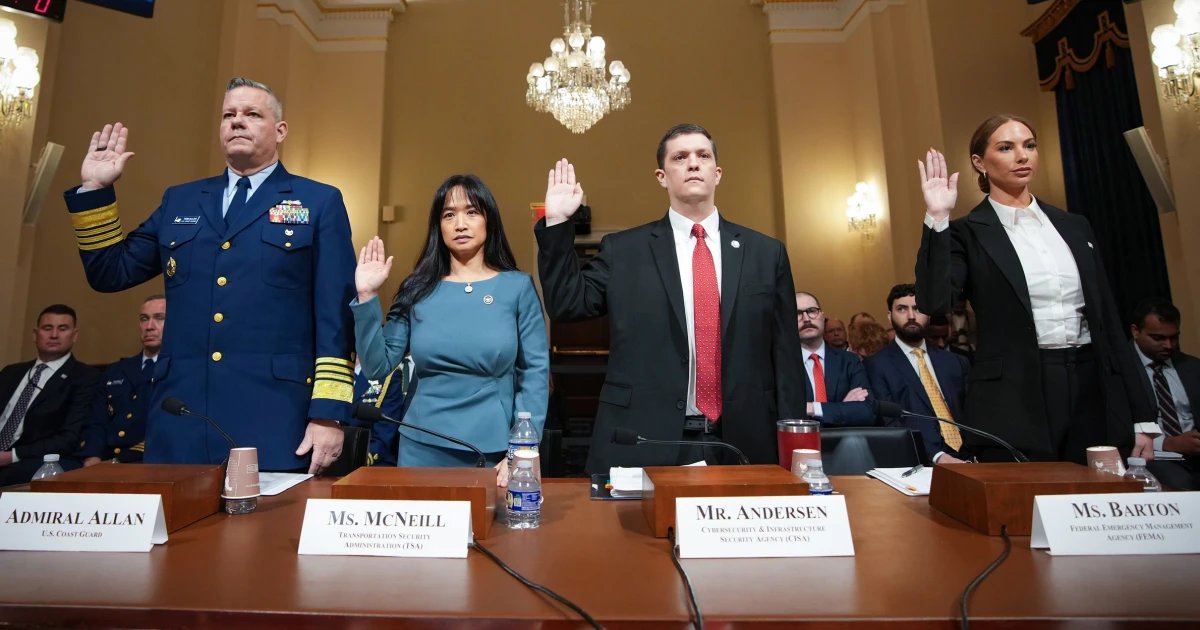
Already, FEMA training courses for disaster preparedness and anti-terrorism preparedness have been postponed, she said. Some 40,000 people, many local officials and first responders, are affected by the absence of the courses, she said.
Nicholas Andersen, acting and deputy director of DHS’s Cybersecurity and Infrastructure Security Agency, said about 60% of its workforce is furloughed or unable to work.
Andersen said while the agency is continuing to focus on cyberthreats, what has been scaled back or paused is the work to reduce systemic risk over time, make proactive assessments, coordinate planning, engage partners and strategic initiatives.
“The result is simple: risk is accumulating across the system,” he said.
The Coast Guard has not had enough funding to operate and pay its workers for 85 of the past 176 days, said Admiral Thomas Allen, Coast Guard vice commandant. The Coast Guard, part of the U.S. military, has ceased many preparations for FIFA and can’t pay over 5,000 utility accounts, “putting us in imminent danger of widespread shutdowns to critical infrastructure,” Allen said.
The agency has halted issuance of more than 16,000 Merchant Marine credentials and has a backlog that grows by 300 a day, he said. Merchant Marines operate U.S.-certified commercial ships.
“We know through experience, it will take us about two-and-a-half days to recover from every day we are in a shutdown,” Allen said.
Lawmakers blamed each other’s political party for the most recent shutdown, which has halted parts of DHS funding while the White House and Congress tangle over immigration and voting laws.
Rep. Lou Correa, D-Calif., told the committee he has asked Congress’s management office to withhold his paycheck until federal workers are paid, and he has asked his colleagues to follow suit.
“Do we really want to end this shutdown or not?” Correa said.