dailynewsnblog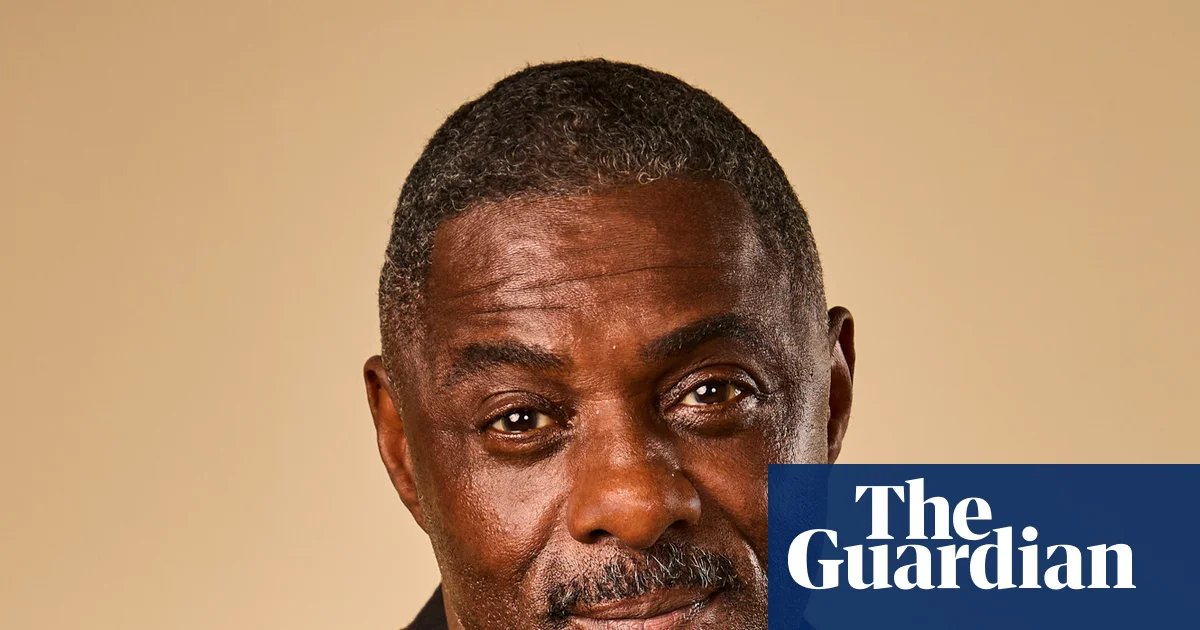
The annual London book fair wrapped on Thursday, marking the end of three days that saw 33,000 people connected to the book industry – agents, publishers, authors, among others – gather at Olympia to make deals and discuss the state of the publishing world, and its future. Here’s our roundup of the biggest deals, trends and takeaways from the fair.
The starriest book deal of the week was a new thriller series co-authored by Idris Elba, featuring an MI6 field operative who gets deployed to Mauritius to investigate an attempted murder. Elsewhere, rights were scooped for Alex Ferguson’s first autobiography in 13 years, broadcaster Mishal Husain’s debut children’s book, and the story of designer Paul Smith’s life.
It was a strong week for fantasy and romcom, with acquisitions including journalist Moya Lothian-McLean’s “sharp, sexy romantic comedy”, Matchmakers, and two adult fantasy books by Shannon Chakraborty, acquired for a seven-figure sum. Topics driving nonfiction deals included GLP-1s (Federica Amati’s The Appetite Reset), sober curiosity (Hangxiety by Millie Gooch) and assisted dying (Fight to the Death by Paul Brand).
The government’s National Year of Reading was a major talking point across the fair’s dozens of talks and panels. The Publishers Association’s Dan Conway shared its origins: in late 2024, he was sitting in a windowless room in the House of Lords with Penguin chair Gail Rebuck when she suggested the idea. Campaign director David Hayman gave an update on progress: they’ve so far recruited 16,000 of the targeted 100,000 volunteers. Rebuck encouraged international publishers in attendance to launch similar campaigns in their own countries using the UK’s “playbook”. Yet, a note of realism came from Rosemary Thomas of the National Literacy Trust: “Behaviour change doesn’t happen in a year,” framing the campaign as a “launchpad” rather than a fix-all.
Some of the knottiest and most pressing questions facing contemporary publishing were debated at English PEN’s literary salon, with one such panel exploring whether US-style book censorship is spreading to the UK. While there’s anecdotal evidence of librarians increasingly facing removal requests, particularly of LGBTQ+ titles, a lack of data makes assessing the magnitude of the problem difficult. In the UK, it tends to be individuals – parents, carers, and “increasingly” headteachers – who are posing book ban challenges, “rather than organised groups as in the US, such as Moms for Liberty”, Alison Hicks told audiences. The associate professor in library and information studies at UCL conducted a small qualitative study on book banning in the UK.
Louis Coiffait-Gunn, CEO of the Chartered Institute of Library and Information Professionals, underlined the need for better evidence. There’s a sense of “rising censorship as the UK catches a cold from America’s current ailments. But we do rely too much still on a few deeply worrying anecdotes.” He spoke alongside Juno Dawson, the author of This Book Is Gay, among the most-banned titles in the US, and Faber associate publisher Louisa Joyner.
Another PEN talk focused on rollbacks on diversity, equity and inclusion in publishing. Selina Brown, who started the Black British Book festival in 2021, said that she is seeing fewer books by Black authors being presented in pitch meetings with publishers each year. “Some of the major publishers have even said, ‘We don’t have any books for you this year.’ They would never turn around and say, ‘We’ve got no white books.’ That would be mad.” Brown spoke of “deeply embedded” stereotypes in the industry, that “certain communities are hard to reach – I’ve been told indirectly that, ‘Black people don’t read.’”
Author Nikesh Shukla said that many books published in the wake of the 2020 murder of African American man George Floyd were rushed out “without much editorial work” or support for writers. Some authors writing on racism “maybe felt like they had to pivot to writing a book that met a moment when they might just have been wanting to write a sci-fi book, or a picture book about friendship, or what have you”.
The impact of authoritarianism on publishing was also a focus for English PEN. Arabella Pike, publishing director at William Collins, said that “books are the absolute opposite” of authoritarianism. She has defended books including Putin’s People by Catherine Belton and Tom Burgis’s Kleptopia from intimidatory SLAPP action (strategic lawsuits against public participation).
Pike has also published Looking at Women Looking at War by Victoria Amelina, who was killed by a Russian missile in 2023 in Ukraine. She told audiences that after the full-scale invasion of Ukraine began, HarperCollins decided to continue selling books in Russia, unlike some other major publishers, on the basis that it was “incredibly important” for Russian people to have access to factchecked books that aren’t “distorted by censorship”. She also spoke about abuses of the English legal system by oligarchs with “very deep pockets”, and said that defamation laws “are hideously in need of reform”.
Kit Fan, an author who renounced his Chinese citizenship, said that authoritarian leaders “are shit-scared of these things called books”. The “first thing” totalitarian governments do is “burn all the records”. Dictators are “frightened of these things, because they know that however many books they burn, how many people they try to prosecute, these words, these stories, these poems are transmitted from one person to another”.