dailynewsnblog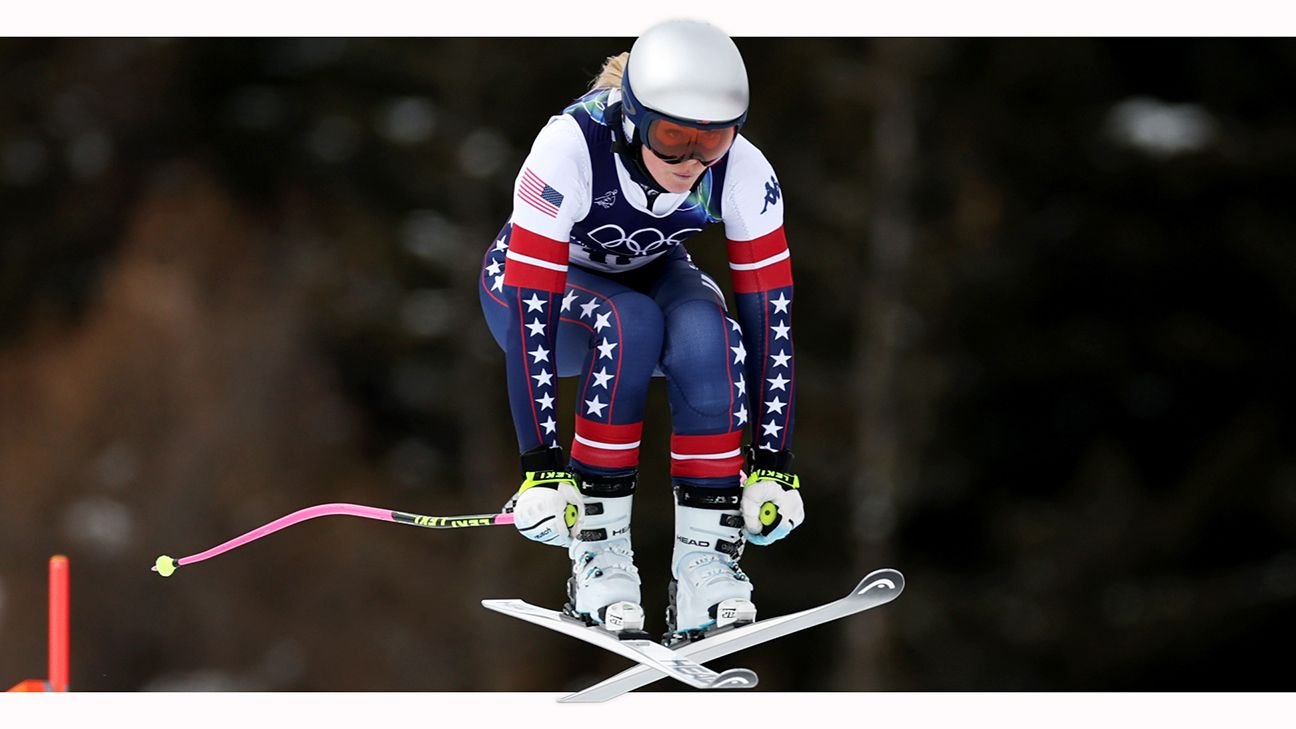
-

Alyssa Roenigk
Multiple Authors
LINDSEY VONN HAS waited a long time for this. After Thursday’s downhill training was canceled due to heavy snowfall and Friday’s practice was delayed more than 90 minutes by fog, Vonn pushed out of a start gate for the first time this Olympics.
The 10th skier to drop, she skied smoothly and confidently and led through most of the course before making a couple of errors over the rollers at the bottom and finishing with the 11th-best time of the day. Her run was remarkable for how unremarkable it was.
Just three days earlier, Vonn announced that she would still compete at these Olympics despite completely tearing the ACL in her left knee a few days before. Making it through a training run in front of the world would prove to her and everyone else that she is fit to compete Sunday.
“This felt like race day to me,” her coach Aksel Lund Svindal said Friday. “You know her history. She’s gone hard at times when people have told her she probably shouldn’t be in the start gate.”
Vonn has been in this position before. The story of these Olympics is the story of her career: long streaks of unparalleled success interrupted by injury — often just before or during an Olympics.
At the 2006 Games, she crashed in a downhill training run, was airlifted from the mountain and returned two days later to finish eighth. In 2010, she suffered a deep shin bruise she called the most painful injury of her life. She won the downhill. In 2014, she missed the Games with a partial ACL tear, and in 2018, she skied with a chunk of cartilage dislodged in her right knee.
She wanted this time to be different. She came into this season as strong as she’s been in a decade. She was pain-free. And she was winning again.
But ski racing is risky, and Vonn skis on the edge. “Because I push the limits, I crash, and I’ve been injured more times than I would like to admit — to myself, even,” she said Tuesday.
10:22
Lindsey Vonn on grief, growth and her second chance at ski racing
Lindsey Vonn reflects on the physical and emotional pain that shaped her final Olympics, the self‑discovery that followed retirement, and the joy and confidence fueling her return to ski racing.
“I’ve been working really hard to come into these Games in a much different position [than in years past],” Vonn said. “I know what my chances were before the crash, and I know my chances aren’t the same as it stands today. But I know there’s still a chance, and as long as there’s a chance, I will try.”
Vonn will take her chance at the downhill on Sunday at her fifth Olympics. She said she is not in pain and her knee feels stable. She posted videos of herself doing squats and speed workouts in the gym this week and took a second training run Saturday, where she was more than two seconds faster than the day before. Svindel said he saw symmetry in her skiing and that her left- and right-footed turns looked equally strong.
Although this isn’t how Vonn imagined her final Olympics starting, it’s hard to think of a more fitting place for the 41-year-old to end her ski racing career. She made her first World Cup podium in Cortina as a teenager in 2004, and her 12 World Cup wins here are more than any other skier has earned at a single venue.
“I never thought I would be in this position,” Vonn said in late October. She was in New York ahead of the World Cup season and unaware of how the next few months would go — that she would win the first downhill race of the year or that by the time she arrived in Cortina, the world would be wondering once again if she could even race.
But had she known what lay ahead, Vonn likely would have said something similar to what she did Tuesday: Her return isn’t about wins or losses, but rather about showing up in the start gate and trying. She is not letting this injury derail her second chance at ending her career on her terms.
“If it had been anywhere else, I would probably say it’s not worth it,” Vonn said. “But for me, there’s something special about Cortina that always pulls me back, and it’s pulled me back one last time.”
BY ANY MEASURE, even without this comeback, Vonn’s career has been spectacular. When she retired at 34, she had more World Cup wins, 82, than any woman and the second most in history, after Swedish great Ingemar Stenmark’s 86. Vonn’s American teammate, Mikaela Shiffrin, has since surpassed both skiers, with 108 World Cup wins and counting, but Vonn still holds the record for the most downhill wins by any skier, male or female. She is also the only American woman to win gold in the downhill at the Olympics.
But she didn’t retire on her terms.
Instead, Vonn’s body made the decision for her. She suffered a devastating string of injuries, underwent multiple ACL and MCL repairs and skied through constant pain. By the 2018 Olympics in Pyeongchang, she could barely bend her right knee or straighten it entirely.
A year later, she competed in her final world championships. Ahead of her last race, knowing how much pain she was pushing through, Vonn’s longtime coach, Erich Sailer, who died last August, told her, “What’s 90 seconds in a lifetime?” She earned bronze and said goodbye to the sport. “When I said I was retired, I was retired,” Vonn says. “I really, truly built my life outside of skiing in a meaningful way.”
In retirement, she embraced being a beginner. She tried car racing, rodeo roping and wrote a book. She shared about her adventures with her beloved rescue dogs, her mental health and her time with family and friends. Experiencing life beyond the isolated world of elite ski racing provided her better perspective and built her self-confidence off skis.
In August 2022, Vonn lost her mother, Linda, who died after a yearlong battle with ALS. Her mother’s life inspired how Vonn lived. Her death influenced Vonn’s decision to return to racing.
“My mother in general, her attitude has always inspired my comebacks,” Vonn said in October. “Her passing makes me realize even more that life is short. I’m given this opportunity and I can’t take that for granted.
“And if I fail, who cares?” she said. “I’ve already won everything. Someone asked me if not being successful at the Olympics would tarnish my legacy. No, because I tried. My legacy is not about winning, it’s about trying.”
Vonn underwent a partial knee replacement in April 2024, and within a month, she could straighten her leg fully and perform exercises she hadn’t done in years. She started to dream.
Knowing the next Winter Games were in Cortina gave her a goal, and she returned to the sport as a better skier than when she retired. “I’m generating speed off my right side, which I haven’t in a very long time,” Vonn said in October. “My right-footed turn is my best turn. I don’t know the last time that’s been the case.” That will be crucial here in Cortina as she adapts to a new injury to her left knee.
Vonn also added 12 pounds of muscle ahead of this season and increased her overall strength and agility, all of which — along with a knee brace — will help stabilize her injured knee. In August, she began working with Svindal, a two-time Olympic champion for Norway who retired the same month she did in 2019.
So far this season, Vonn has finished on the podium in five of five World Cup downhill races and won two, in addition to earning two podiums in three Super-G races.
Vonn said yes to this comeback for two simple reasons: because she can, and because she believes she can win, especially in Cortina. Despite the injury, both things are still true. She knows this course. She knows where and how to push its limits and she said Tuesday that when she’s in the start gate, she won’t be thinking about her knee. She’ll be thinking about skiing fast.
“I love everything about the Cortina track,” Vonn said last year. “I understand it well. In downhill, it’s all about seeing the fall line and being able to carry speed. I know the places where I can make a mistake and where I can’t, the places I have to accelerate. Overall, I have a great feel for what it takes to ski fast there.”
If VONN BELIEVES in anything, it’s second chances.
In the summer of 2025, less than a year after she announced her return, Vonn’s sister suggested she adopt a new companion to travel the World Cup circuit with her. “She said, ‘You’re much happier when you have a dog with you,'” Vonn said.
Vonn was still mourning the loss of Lucy, her Cavalier King Charles spaniel who traveled everywhere with her, even sitting next to her at dinners and in Olympic news conferences. But in August, she started looking. She scrolled through listings on an adoption website and on the very last page, she saw him: a Cavalier King Charles spaniel puppy with a cute brown face cleaved by a white hourglass stripe. And he already had the perfect name: Chance.
“I was like, ‘This is poetic,'” Vonn said. “This is my boy. This is my second chance.”
Chance has been by her side all season.
In October, she took him on his first international trip to a training camp in Chile, and he’s been traveling with her nonstop since. Vonn carries her mom and Lucy with her, too, racing in a helmet featuring their initials, as well as the first initial of seven others she’s lost in recent years: her grandparents, Sailer and another beloved rescue dog, Bear. She calls the group her “angel army.”
After she won her first World Cup downhill race in nearly seven years in December, Vonn posted a photo of Chance on the couch in her hotel room in St. Moritz next to her trophies. “This weekend was amazing in so many ways,” she wrote. “All the work that was put in over the past year is coming together … The best is yet to come.”
No matter what happens in the downhill Sunday, Chance will surely be waiting for Vonn in her hotel room with a wagging tail and unconditional support.
“This is all icing on the cake,” Vonn said this week. “I never expected to be here. I felt like this was an amazing opportunity to close out my career in a way that I wanted to. Hasn’t gone exactly the way I wanted, but I don’t want to have any regrets.”
This season, Vonn allowed herself to dream of Olympic gold again. Although her injury has made winning the downhill an uphill battle, she still believes it is possible. On Sunday, she’ll remember the advice Sailer gave her in 2019: What’s 90 seconds in a lifetime?