dailynewsnblog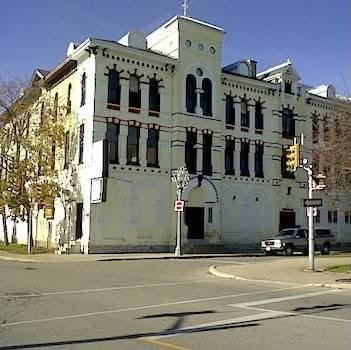

Ontario’s Paranormal Investigators.
From O’Neill House to Oxford Hotel: A Legacy of History, Baseball, and Hauntings
(Facebook) By Don Riffel
Nestled in the heart of Woodstock, Ontario, at the corner of Finkle and Simcoe streets, stands a building that has witnessed nearly a century and a half of Canadian history. Built in 1880 as The O’Neill House, this iconic structure—now known as The Oxford Hotel—has served as a testament to the region’s rich heritage, hosting travelers, dignitaries, and legends while quietly accumulating stories that transcend the ordinary. Today, as the building undergoes renovations, its spectral residents continue to make their presence known, refusing to be silenced by the passage of time or the sounds of construction.
The O’Neill Family: Founders of a Legacy
To understand the origins of this historic building, one must first meet the family that gave it their name. James O’Neill and Mary Jeffrey O’Neill were Irish Canadian innkeepers who, in 1880, constructed what would become one of Woodstock’s most enduring landmarks. The O’Neills were part of the wave of Irish immigration that shaped 19th-century Canada, bringing with them the traditions of hospitality and community that would define their establishment.
James O’Neill was more than a businessman; he was a community figure who recognized Woodstock’s growing importance as a regional hub. In the 1870s and 1880s, Woodstock was experiencing significant growth. The railway had arrived decades earlier, transforming the town from an agricultural settlement into a thriving commercial center. By 1880, with a population of approximately 5,000 and serving as the administrative heart of Oxford County, Woodstock needed quality accommodations to serve business travelers, agricultural exhibitors, and tourists.
The O’Neills commissioned the construction of a three-story yellow brick building at the corner of Market Square (now 28 Finkle Street/453 Simcoe Street), directly across from Market Square and the Town Hall. The timing was strategic—positioned at the center of Woodstock’s civic and commercial life, The O’Neill House would become integral to the town’s social fabric from its very first day.
The Woodstock Wonder: Tip O’Neill’s Early Years
While James and Mary O’Neill established their hotel, their son James Edward “Tip” O’Neill was developing skills that would make him one of the most celebrated athletes in Canadian history. Born on May 25, 1858, in (n)earby Springfield, Upper Canada, young Tip was the second eldest of four sons and three daughters. When the family moved to Woodstock and opened their hotel, Tip was entering his formative years.
The O’Neill House became the cradle of baseball greatness in an unexpected way. The hotel featured a spacious ballroom on its upper floors—a common amenity in Victorian-era hotels, used for social gatherings, dances, and community events. It was here, in the ballroom of his parents’ hotel, that Tip O’Neill honed the batting skills that would earn him international fame.
According to historical accounts, Tip practiced his curveball in the hotel’s lobby, leaving an indelible mark on the building’s history. The building nurtured one of baseball’s greatest talents, a connection that would forever link the O’Neill name to sporting glory.
Tip O’Neill’s connection to the hotel extended beyond childhood practice. His older brother, John O’Neill, managed the family hotel for a time, and when John passed away suddenly in 1889, Tip left his baseball career to attend the funeral in Woodstock, demonstrating the strong family bonds tied to this building.
The O’Neill House Years: 1880-1895
During its first fifteen years, The O’Neill House established itself as Woodstock’s premier hostelry. The Victorian-era building, with its elegant Italianate architecture featuring tall windows, decorative brickwork, and prominent location, signaled respectability and prosperity. The hotel served multiple functions essential to community life: it housed traveling salesmen who circulated through Oxford County, provided venues for political meetings and social gatherings, and offered accommodations for visitors drawn to Woodstock’s agricultural fairs and commercial opportunities.
The O’Neill House hosted its share of notable guests during this period. Most famously, Oscar Wilde, the Irish poet, playwright, and author, stayed at the hotel during his 1882 lecture tour of North America. Wilde, then at the height of his fame as an aesthete and wit, brought international cultural cachet to the O’Neill establishment. The hotel also reportedly hosted Sir John A. Macdonald, Canada’s first Prime Minister, though records of this stay are less documented.
The hotel’s bar and dining facilities served as informal business venues where deals were struck over meals and drinks. Political life in Woodstock frequently intersected with The O’Neill House—campaign meetings, election night gatherings, and debates drew partisan crowds to its rooms. In an age of intense party loyalty and vigorous political engagement, these events were central to community life.
James and Mary O’Neill operated their hotel through the 1880s and into the 1890s, witnessing their son Tip’s rise to baseball stardom. Tip made his major league debut in 1883 with the New York Gothams (later the Giants), and by 1887, he had achieved baseball immortality with the St. Louis Browns, winning the Triple Crown and setting records that still stand today. His .435 batting average in 1887 remains the second-highest in major league history.
The Transition to The Oxford Hotel: 1895 and Beyond
In 1895, the O’Neill family sold their hotel to Charles Arthur Pyne, who rechristened it “Hotel Oxford.” This name change marked the beginning of a new chapter while honoring the building’s connection to Oxford County. The transition represented the natural evolution of a thriving establishment, as the O’Neills moved on and new proprietors brought their vision to the historic building.
The name would later evolve to “The Oxford Hotel,” by which name it is known today. The building continued to serve as Woodstock’s social and commercial hub, adapting to changing times while maintaining its Victorian character.
The early 20th century brought new notoriety to the hotel. In 1924, the “Human Fly,” a performer who walked across building walls and was “all the rage across Canada and the United States,” performed his daring act on the exterior walls of The Oxford Hotel, drawing crowds and cementing the building’s reputation as a place where remarkable events occurred.
The hotel also played a role in one of Canada’s most infamous criminal cases. Reginald Birchall, the “Belleville Strangler” who was convicted of murder and executed in 1890, had connections to the hotel, and it served as a meeting spot for media during his sensational trial. This association with high-profile criminal proceedings added a darker shade to the building’s historical palette.
The Shades of Green Era: 1990s
The Oxford Hotel’s history took another turn in the 1990s when the building became home to Rumours nightclub on the main floor and Shades of Green country bar downstairs. This era represented a different chapter in the building’s long life, transforming it from a traditional hotel into an entertainment venue that served a new generation of Woodstock residents. The Shades of Green country bar, in particular, became a well-known establishment in its own right, adding another layer to the building’s complex identity.
Architectural Continuity and Historical Layers
The physical structure of The Oxford Hotel deserves particular attention, for its architecture serves as a repository of memory. The building’s Italianate design, with its high ceilings, elaborate woodwork, and spacious rooms, creates an atmosphere distinct from contemporary construction. The very materials—solid wood, plaster, brick—absorb and retain impressions of the past in ways that modern synthetic materials do not.
The building’s layout—staircases, landings, alcoves, and the famous ballroom where Tip O’Neill practiced—creates spaces where past and present seem to coexist. Guests in 1880 navigated the same basic floor plan that visitors encounter today, though furnishings and décor have evolved. This architectural continuity creates the conditions for historical haunting, for the sense that the building remembers what happened within its walls.
The Lady in White and Room 312
At some point in The Oxford Hotel’s long existence, the accumulation of history began to manifest in ways that defied conventional explanation. While the exact moment when the hotel transitioned from merely old to actively haunted is difficult to pinpoint, by the late 20th and early 21st centuries, The Oxford Hotel had developed a reputation that extended beyond its historical significance.
Room 312 has gained notoriety as the most haunted location within the hotel, drawing paranormal enthusiasts and thrill-seekers from far and wide. Visitors have described eerie encounters with a female ghost believed to be a woman who tragically died in that very room—the legendary “Lady in White.” Witnesses report feelings of an unseen presence, unusual cold spots, and whispers in the night. The room, steeped in a personal tale of loss, has become a focal point for those intrigued by the paranormal.
The story of the Lady in White has transcended mere ghostly anecdote, becoming woven into the fabric of Woodstock’s cultural identity. She represents the tragic beauty that often accompanies tales of the supernatural—a spirit caught between worlds, her story echoing through the corridors long after her physical departure.
Whispers in the Halls: Reported Paranormal Activity
Reports of paranormal activity at The Oxford Hotel are numerous and often chilling. Guests and staff have frequently recounted strange experiences that defy logical explanation. Ghostly apparitions, unexplained noises, and peculiar disturbances have become the fabric of the hotel’s identity, sparking discussions around the supernatural.
Throughout the hotel, unexplained phenomena abound. Guests have frequently noted the sound of children laughing and playing, although no children were present—a phenomenon that continues to this day. Just recently, renovation crews checking on the hotel reported hearing the sound of children in the hallways. Despite conducting thorough checks, no evidence of children was found, adding yet another layer to the hotel’s mystique.
Others have experienced lights flickering unexpectedly and objects moving without apparent cause. These odd occurrences stir curiosity and evoke questions about the lingering spirits that could inhabit the hotel, contributing to its formidable reputation as a haunted destination.
The Basement’s Dark Secret
The hotel’s basement holds its own chilling tale, reputedly haunted by the spirit of a former employee who died under mysterious circumstances. Staff members have shared eerie accounts of sensations of being watched and sightings of shadows moving within the dimly lit space. This aspect of the hotel adds to its legend, as many speculate on the connection between the former employee and the lingering energy in the building.
These stories circulate among locals and visitors alike, enhancing The Oxford Hotel’s standing as an eerie site rich with narratives waiting to be explored. The basement serves as a reminder that not all of the hotel’s spirits reside in the guest rooms above—some linger in the depths, in the spaces where light rarely reaches.
Paranormal Investigations and Enduring Legacy
Paranormal investigations have played a significant role in shaping The Oxford Hotel’s reputation as a haunted location. Investigators have visited to document the unexplained occurrences, collecting evidence that strengthens the claims of ghostly presences. This interest not only invigorates the hotel’s lore but also attracts visitors eager for encounters with the supernatural.
The hotel has become a sought-after destination for those intrigued by the supernatural, ensuring that its tales of history and mystery will echo through the ages. From the O’Neill family’s hospitality to the Lady in White’s tragic presence, the building continues to accumulate layers of meaning.
A New Chapter: Renovations
The Oxford Hotel is currently under renovations, marking a new chapter in its long history. New owners are working to transform the building while honoring its past, with plans to preserve its historic character while adapting it for modern use.
The developers are committed to preserving the building’s historical integrity. “On the exterior of the building, we’re going to leave it with the original brick,” they have explained. “We’ve already put in all the brand-new windows, we’ve kept the curvature of all of the lintels on the windows. Everything is about restoration, not new build.”
The developers have worked closely with the Woodstock Museum, Woodstock Historical Committee, and the City of Woodstock to conserve pieces from the original structure. Their commitment extends to Room 312, which will be preserved as part of the building’s haunted legacy, ensuring that the Lady in White’s domain remains intact even as the building transforms.
“The Oxford Hotel”: A Song Inspired by History
I am proud to share that I have created a song inspired by The Oxford Hotel’s haunted legacy. As a paranormal investigator, songwriter, and photographer, I channeled my deep-rooted fascination with the supernatural into this musical piece, which reflects not only the essence of the hotel but also the emotions it evokes among visitors.
The song, penned in July 2024, has been months in the making, blending my experiences investigating the paranormal with an artistic vision that aims to honor the stories embedded within these historic walls. The track pays tribute to the Lady in White and the countless other spirits who have made The Oxford Hotel their eternal home.
The song has been posted on social media, allowing fans of music, history, and the paranormal to experience the haunting melody that reverberates through the hotel’s storied past. This project represents my commitment to exploring the intersection of art and the supernatural, bridging the gap between past and present through creative expression.
It invites listeners to imagine the Lady in White gliding through the halls of Room 312, to hear the laughter of children who are not there, and to feel the presence of history that permeates every corner of this remarkable building.
The O’Neill Legacy: Tip’s Enduring Fame
No account of The Oxford Hotel would be complete without acknowledging the enduring legacy of Tip O’Neill. Though he left Woodstock to pursue baseball stardom, his connection to the hotel and the community remained strong throughout his life. After his playing career ended in 1892, he moved to Montreal, where he worked as an umpire, scout, and businessman. He passed away suddenly on December 31, 1915, from a heart attack, and was buried in the family plot at St. Mary Cemetery in Woodstock.
Tip O’Neill’s legacy lives on through the Tip O’Neill Award, presented annually by the Canadian Baseball Hall of Fame to the Canadian-born ballplayer judged to have excelled in individual achievement and team contribution while adhering to baseball’s highest ideals. He was posthumously inducted into the Canadian Baseball Hall of Fame in 1983 and Canada’s Sports Hall of Fame in 1994.
The building where he practiced his swing now stands as a monument not just to baseball history, but to the O’Neill family’s contribution to Canadian culture. From innkeepers to sports legends, the O’Neill story is woven into the very fabric of the building.
From its construction in 1880 as The O’Neill House through its transformation into The Oxford Hotel, through the Shades of Green era and into the present day, this building at 453 Simcoe Street has demonstrated a remarkable capacity to endure and adapt. It has been a family home, a baseball training ground, a celebrity hostelry, a crime scene landmark, a nightclub destination, a paranormal hotspot, and soon, a renewed space for the Woodstock community.
The Oxford Hotel remains a place where the veil between worlds seems thin, where the footsteps of history echo alongside the whispers of those who never truly left. Whether you come for the history, the hauntings, or the hope of encountering the Lady in White herself, The Oxford Hotel offers an experience that transcends the ordinary. It stands as proof that some places are more than brick and mortar—they are repositories of memory, emotion, and energy that refuse to fade.
As renovations continue and new creative expressions like “The Lady in White” song bring fresh attention to this haunted landmark, one thing remains certain: the spirits of The Oxford Hotel are not ready to check out. The O’Neill family’s legacy, Tip’s baseball greatness, and the Lady in White’s tragic presence all continue to make their presence known, ensuring that this historic building will never be just another address in Woodstock.