dailynewsnblog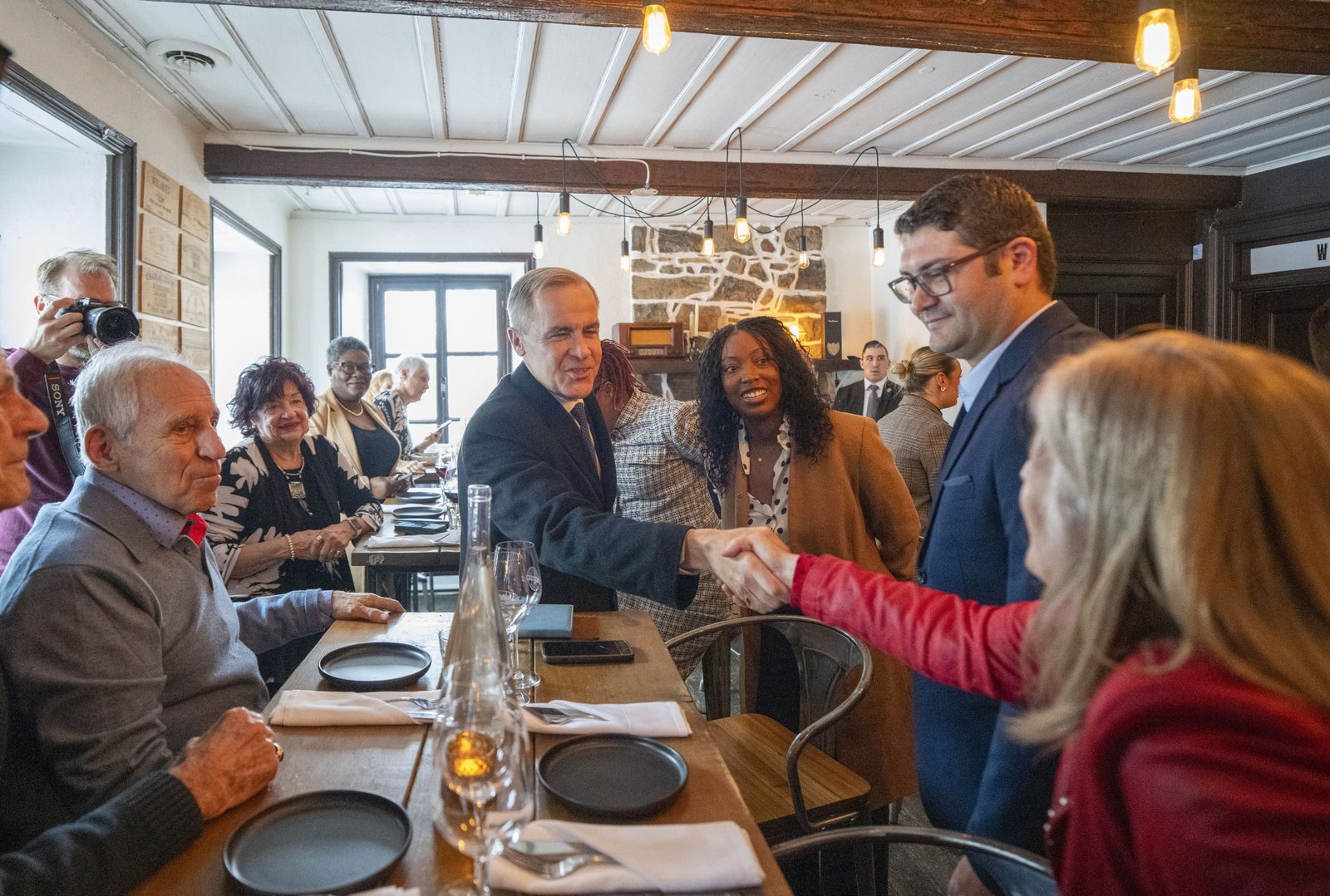
A look ahead at the week in federal politics.
With regular House of Commons programming on pause until next week, the countdown is on to the now imminent triple-decker byelection test that could give Prime Minister Mark Carney and his team a razor-thin stand-alone majority — but only if all three of the vacant seats currently up for grabs stay in the red column when voters head to the polls next Monday.
As it stands, two of the three ridings — University – Rosedale and Scarborough Southwest, which were most recently held by now former finance minister Chrystia Freeland and her Trudeau-era cabinet colleague, Bill Blair, respectively — are widely expected to remain Liberal, but the third — the Montreal suburb of Terrebonne — is still too close to call.
Although historically safe territory for the Bloc Québécois, rookie Liberal hopeful Tatiana Auguste managed to eke out a one-vote win over one-term incumbent Nathalie Sinclair-Desgagné last spring, triggering a months-long legal battle that ultimately led to the Supreme Court of Canada declaring the results to be null and void due to concerns over a misprinted return address that could have caused a small — but, given Auguste’s margin of victory, potentially critical — number of mail-in ballots to be returned.
While province-wide polls have consistently shown an uptick in support for the Liberals since the election, those numbers aren’t always reflective of the riding-level dynamics on the ground — and as iPolitics’ own Aya Dufour reported last week, the Bloc Québécois are framing the vote as a referendum on the proposed high-speed rail line between Quebec City and Toronto.
During an appearance with Sinclair-Desgagné last week, Bloc Québécois leader Yves-François Blanchet “renewed his party’s criticism of Liberal efforts to fast-track the project, slamming them as undemocratic, especially the removal of the right to a hearing for properties being expropriated along the corridor,” Dufour notes.
“Blanchet told voters that no matter what their view is on the proposed high-speed train, the Bloc Québécois is the party to vote for. ‘Are you against it, and want to express that? Nathalie and the Bloc Québécois will work for you,’ he said. ‘Or, on the other hand, if you are supportive of it, and it seems a lot of you somewhat supportive, but need clear information, a respect for property rights, and for it to be done well? Then Nathalie and the Bloc will speak for you.’”
For her part, Auguste has also had a steady stream of high-profile Liberals join her on the hustings over the last few weeks, including Industry Minister Mélanie Joly, Finance Minister François-Philippe Champagne and Intergovernmental Affairs Minister Dominic LeBlanc.
Over the weekend, Carney posted photos from his mid-February visit to the riding, and encouraged supporters to take advantage of the four-day advance polling period, which began last Friday and ends on Monday evening.
“Get out there and vote for Tatiana Auguste, so we can build Québec strong and build Canada strong — together,” he added.
In any case, as the clock ticks down to that make-or-break vote in Terrebonne, hundreds of duly registered Liberals are set to converge on Montreal for the party’s biennial convention, which will get rolling on Thursday and continue through Saturday afternoon.
Over the course of the three-day meet-up, participating Liberals will consider the pros and cons of up to two dozen proposed new policy resolutions that, as per the party website, “were submitted by Registered Liberals and prioritized through Regional, Provincial, and National Comment and Prioritization periods,” and are now set to be debated during back-to-back closed-door workshop sessions (Friday) and, depending on the outcome of those discussions, could be put to a vote during the main plenary session (Saturday a.m.).
Among the pitches to secure a spot in the priority queue:
- Two separate proposals in support of moving away from the first-past-the-post electoral system — a push for the party to support either ranked ballots or run-off elections to ensure candidates “receive at least 50 per cent plus one vote,” and another in support of establishing a “citizens’ assembly (or comparable independent, cross-regional body) to design and recommend the most suitable form of Proportional Representation for Canada, with expert input and regional balance.”
- A plea for the party to “urge the Government of Canada (to) invoke disallowance on any Provincial legislation that proactively invokes the Notwithstanding clause before court challenges are exhausted”
- A call to “modernize the Canada Health Act for the 21st century” with a “data-driven transformation to replace outdated systems with innovative, digitally
connected, patient-focused models” - A proposal to “impose an age restriction of 16 years on access to all AI chatbots and other potentially harmful forms of AI interaction,” as well as a separate call for a similar age limit to protect youth from “social media harms”
- A proposed framework for a Canadian Artificial Intelligence Act that would include “risk-based regulation” as well as more vigorous “oversight and enforcement,” as well as the creation of a “non-partisan panel of inquiry” to investigate “threats to our democracy from disinformation and misinformation”
“A resolution is not considered an official party policy unless it has earned majority support at the policy plenary on the national convention floor,” the party notes.
Unlike his Conservative counterpart earlier this year, Carney isn’t facing a leadership review, but he and his advisors will undoubtedly be keeping tabs on the overall mood before he takes the stage to rally what is likely to be an exceptionally friendly crowd.
Out and about on the ministerial circuit: Before reuniting with the rest of the extended big-L Liberal family in Montreal later this week, a full contingent of Team Carney front benchers are set to fan out across the country to promote their government’s agenda-in-progress.
First up: Industry Minister Mélanie Joly heads to Repentigny, Que., to share the details of fresh federal support for more than one hundred small and medium-sized businesses “whose operations are being affected by tariff pressures,” according to the advisory, during a morning appearance alongside her fellow Quebec Liberals Tim Watchorn and Madeleine Chenette. (Tuesday a.m.)
Meanwhile, Foreign Affairs Minister Anita Anand is booked in for a keynote speech at an “exclusive event” hosted by the Greater Vancouver Board of Trade, while elsewhere in the region, Fisheries and Oceans Minister Joanne Thompson drops by a North Vancouver, B.C. salmon hatchery to provide an update on renewed support for the Pacific Salmon Strategy Initiative. (Tuesday a.m.)
According to the party website, Anand will also mingle with local Liberal supporters during an evening reception at a “private residence” in New Westminster, B.C., with all proceeds from the $500 ticket price earmarked for the New Westminster — Burnaby — Maillardville Federal Liberal Association. (Tuesday p.m.)
Later this week, Natural Resources Minister Tim Hodgson will unveil new funding to boost “clean energy and economic growth” during a morning event in Toronto. (Wednesday a.m.)
Also on deck: A full slate of infrastructure funding reveals by local cabinet ministers, including Secretary of State (Canada Revenue Agency) Wayne Long in Quispamsis, N.B., Citizenship and Immigration Minister Lena Metlege Diab in Halifax, N.S., Secretary of State (Rural Development) Buckley Belanger in Regina, Sask., Emergency Management Minister Eleanor Olszewski in St. Albert, Alta., Veterans Affairs Minister Jill McKnight in Vancouver and Crown-Indigenous Relations Minister Rebecca Alty in Hay River, N.W.T. (Tuesday p.m.)