dailynewsnblog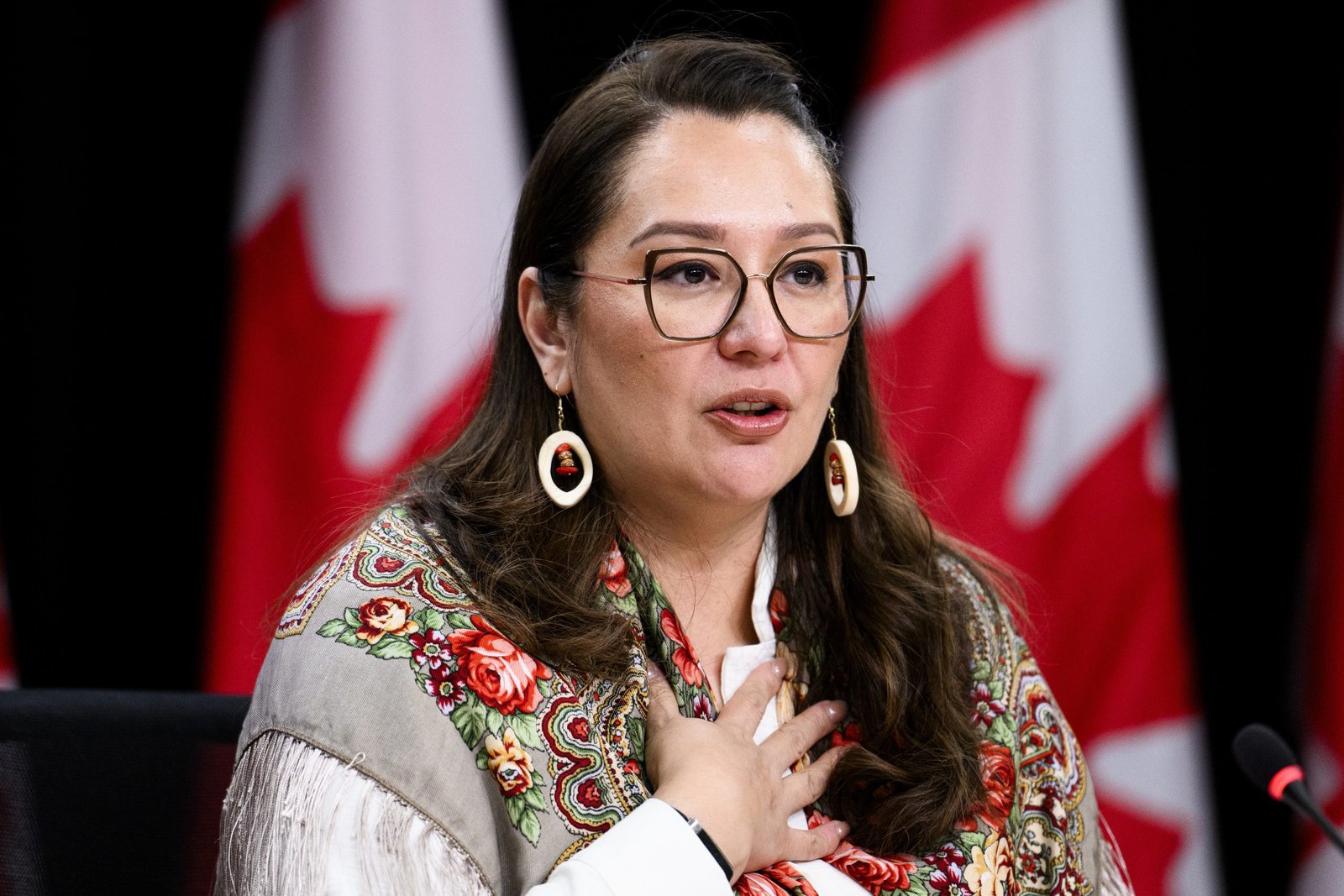
The rule denies Indian status to people who had a non-First Nation parent and grandparent, and has been criticized as a colonial policy that allows Ottawa to determine who qualifies as Indigenous and designed to limit the government’s obligations to status peoples.
The House of Commons has started its study of government legislation aimed at ending gender inequities in the Indian Act but it’s unclear if the Liberals will support Senate amendments eliminating the so-called second-generation cut-off.
The rule denies Indian status to people who had a non-First Nation parent and grandparent, and has been criticized as a colonial policy that allows Ottawa to determine who qualifies as Indigenous and designed to limit the government’s obligations to status peoples.
Bill S-2 was introduced in the House in December after passing in the Senate with amendments that would end the cut-off policy.
The amendments passed over objections from senators representing the government, who called for more consultations with rights-holders.
But critics accused the government of using the consultations as a delay tactic, with other changes in S-2 facing a court-imposed deadline of this spring.
During third reading debate in the Upper Chamber, Sen. PJ Prosper said waiting for separate legislation was risky in a minority Parliament, with the threat of an unexpected election call always looming.
“What happens to the children affected by the cut-off if the government fails before consultations are concluded? What happens to the children if the government cannot pass stand-alone legislation in time?” he asked.
“In that way, these amendments, with the one-year coming-into-force delay, act as a fail-safe in these uncertain and unpredictable times.”
S-2 bill is still awaiting second reading in the House, but the chamber’s Indigenous and northern affairs committee began their study this week on issues related to the Indian Act registration.
Lori Doran, director general of individual affairs at Indigenous Services, told the committee on Tuesday the government is currently collecting submissions on the second-generation cut-off, which will then be reviewed by a panel of First Nations experts to assess their “legal viability and other impacts.”
That would then be packaged into a guide for consultations at a series of First Nations-led events that would start in the spring, she said.
Doran said some of the options floated to replace the second-generation cut-off include a one-parent rule, First Nations jurisdiction to decide on status or the use of DNA testing.
Several First Nations groups have publicly called on the government to support the Senate changes, including the Assembly of First Nations, which advocates on behalf of over 630 communities.
At a special assembly in Ottawa in December, AFN chiefs voted to support Senate changes to Bill S-2 to end the cut-off policy, with some chiefs warning that many First Nations would lose all status members in coming decades without changes to registration requirements. If a First Nation loses all its status members, their reserve territory would become Crown land.
Indigenous Services Minister Mandy Gull-Masty responded that she needed more time to consult before making a decision.
Gull-Masty’s office said the minister was unavailable on Friday.
Appearing on Thursday before the House Indigenous committee, AFN National Chief Cindy Woodhouse Nepinak called the second-generation cut-off a “blood-quantum rule rooted in colonial thinking” that was designed to “reduce Canada’s obligations by steadily decreasing the number of people entitled to Indian status.”
“The rule treats First Nations identity as something that can be diluted and eventually erased. It does not reflect First Nations understandings of belongings and places the power to decide who is Indian enough with the federal government.”
Kyra Wilson, the grand chief of the Assembly of Manitoba Chiefs, told the committee the second-generation cut-off meant her own child isn’t entitled to register under the Indian Act.
She urged MPs to support Senate amendments to S-2 but said individual First Nations should make their own decisions on who qualifies as citizens.
“Our nations have always known who our people are, and it is time for Canadian law to recognize and respect this.”
Conservative MP Billy Morin, a former chief of Enoch Cree Nation who sits on the committee, said the government has indicated that it “intends to delay” work on eliminating the cut-off, noting that bureaucrats refused to tell MPs their timeline for completing consultations.
In a statement to iPolitics, Ontario Regional Chief Abram Benedict called on Ottawa to “work directly with First Nations to create a framework that allows them to fully control their own membership, free from restrictive federal oversight, with decisions recognized as authoritative for all purposes.” He said this would require a “sustainable funding base” that would allow First Nations to “properly develop and maintain citizenship laws and protocols.”
He added that the Chiefs of Ontario supported amendments to the Indian Act that “aim to address its longstanding inequities and remove discriminatory language that should never have existed.”
The second-generation cut-off was brought in through amendments to the Indian Act in 1985. Those changes ended the practice of enfranchisement, whereby First Nations people who wanted to own land, vote or enjoy other rights had to give up their status.
People who were enfranchised lost the right to be recognized as members of their First Nation and to live on reserve.
Women who married a non-status person would also lose their status prior to the 1985 reforms.
But those changes didn’t allow people whose ancestors were enfranchised to obtain status or pass it down to their descendants.
The Liberals introduced legislation in 2022 to repeal this rule but it died on the order paper when Parliament was prorogued in early 2025.
As originally drafted, Bill S-2 was virtually identical to the previous legislation.
A B.C. Supreme Court ruling last summer found the existing rules violated the Charter and gave the government until the end of April 2026 to pass legislation to end the practice.
The House will sit for six weeks before the deadline.
Among the other changes, S-2 would allow women that were automatically transferred to their husbands’ First Nation to rejoin their natal First Nation.
It also removes references to First Nations’ persons with a disability that have been deemed offensive and outdated and creates a process to apply to be removed from the Indian Register.
That process, known as deregistration, may be a necessary step for someone who wants to enrol in an American tribe. It could also be used if someone wishes to change their registration to Métis.
Unlike enfranchisement, people who deregister retain the right to Indian status without impacting subsequent generations.
Under the current wording, these changes would all go into effect once S-2 becomes law.
Changes that would end the second-generation cut-off would come into force 12 months later.