dailynewsnblog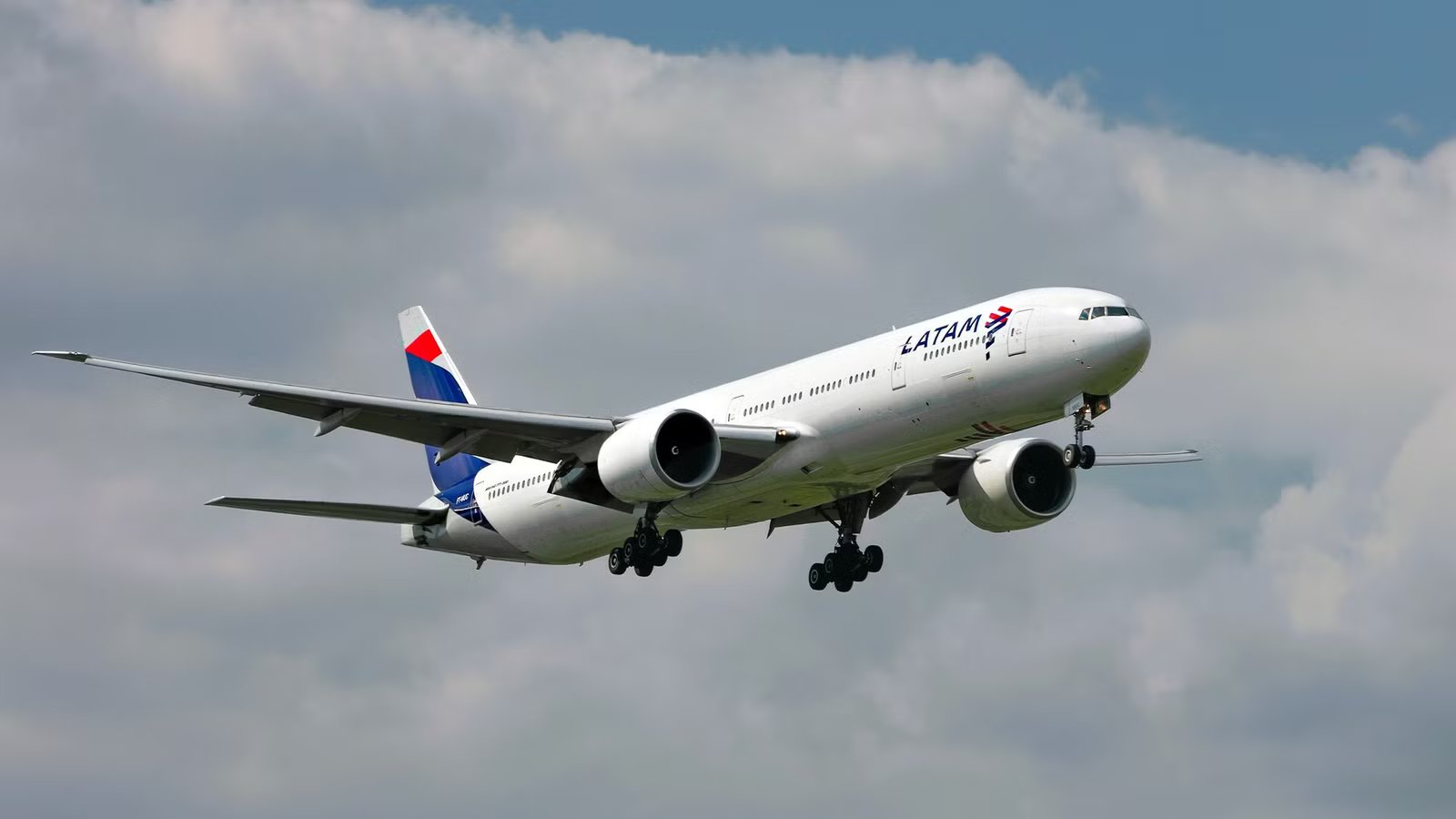
A LATAM Brasil aircraft operating a flight from São Paulo’s Guarulhos International Airport (GRU) to Lisbon’s Humberto Delgado Airport (LIS) was involved in an unusually late, high-speed rejected takeoff on Sunday evening. Videos circulating online show the Boeing 777-300ER beginning to rotate with the nose landing gear off the runway, before the crew lowered the nose and applied maximum braking, bringing the jet to a stop near the far end of the runway.
Because the stop appears to have occurred after rotation began, investigators will be focused on precisely when the reject decision occurred relative to key takeoff speeds, what warning or performance cue triggered it, and whether runway remaining and brake energy margins were compromised. The incident has echoes of another LATAM 777 incident in 2024 in which the aircraft sustained a tail strike, with the findings of that investigation just released earlier this month.
The Incident Detail: What We Know So Far

Flight LA8146 is the earlier of two overnight nonstops that LATAM Brasil operates from São Paulo to Lisbon. On Sunday, the flight was carried out by a 13-year-old Boeing 777-300ER, registration PT-MUH, with 410 seats onboard. Following a one-and-a-half-hour departure delay, the aircraft pushed back from its gate at Terminal 3 shortly after 07:00 PM and lined up on the 3,700 meter (12,140 feet) Runway 10L.
Once the aircraft began its takeoff roll, it reached a ground speed of around 178 knots based on video timelines and tracking data. Then in an instant, a chain of events unfolded that could have easily led to disaster. The aircraft began to pitch up, with the nose wheels leaving the ground, before the crew forced the aircraft back onto the runway and began heavy braking and reverse thrust. The aircraft was miraculously able to slow safely and vacate the runway at the very end, stopping on a parallel taxiway.
After the aircraft halted, video and images showed severe tire damage consistent with a maximum-energy rejected takeoff, and brakes glowing red-hot and emitting smoke. The aircraft was immediately attended by airport emergency services, which is standard after a high-speed stop because overheated wheels and brakes can pose a fire risk. Passengers were later deplaned and returned to the terminal, and the aircraft was removed from service pending inspection.
While investigations have begun, there was no immediate indication as to the technical or operational trigger that led to the very late take-off rejection. The airline released only a curt statement confirming the incident:
“LATAM Airlines Brasil informs that the aircraft operating flight LA8146 (Guarulhos-Lisbon) this Sunday (February 15th) aborted its takeoff. The procedure was carried out safely and is the protocol foreseen for this type of situation.”
Why This Incident Was Particularly Dangerous

On commercial airliners, crews have a set of reference speeds that define when a takeoff should be continued versus rejected. V1 is the decision speed. Up to V1, a rejected takeoff can be expected to stop within the available runway under the performance assumptions used for dispatch. Past V1, the takeoff is generally continued because there may not be enough runway remaining to stop safely. So absent a set of indications that the aircraft simply cannot fly at all, it will take to the air, even with issues such as engine or landing gear failure.
VR, which comes at or after V1, is the rotation speed when the pilot begins raising the nose to lift off. This São Paulo event appears to have occurred after rotation began (so after both V1 and VR had passed), an especially narrow window to reject a takeoff. Indeed, aborting a takeoff after V1 is so hazardous that there are very few documented incidents of it occurring. Some of the few notable examples include:
|
Notable Examples Of Rejected Take-Offs After V1 |
||||
|
Date |
Airline |
Airport |
Aircraft |
Incident |
|
1992 |
TWA |
New York JFK |
L-1011 |
The captain rejected takeoff just seconds after rotation; the aircraft overran the runway and burned, but all were evacuated safely. |
|
2008 |
Private |
Columbia, SC |
Learjet 60 |
The pilot flying rejected takeoff after V1, leading to a runway overrun and destruction of the aircraft with the loss of 4 lives. |
|
2009 |
Emirates |
Melbourne |
A340-500 |
The pilot rejected takeoff above V1. The aircraft slowed and came to rest at the end of the runway. A few passengers had minor injuries. |
|
2014 |
US Airways |
Philadelphia |
A320-200 |
Takeoff was rejected after rotation, creating a hard touchdown. The aircraft ran out of runway, causing damage to the undercarriage, but no injuries were reported. |
|
2014 |
Private |
Bedford |
Gulfstream G-IV |
A late reject after V1 led to a runway overrun and crash, resulting in 7 fatalities for passengers and crew on board. |
|
2017 |
Ameristar |
Willow Run |
MD-83 |
The takeoff was rejected about 12 seconds after V1, resulting in a runway overrun but only minor injuries to those on board. |
The reason that a rejected takeoff after V1 is so dangerous is that kinetic energy rises with the square of speed, so very late rejects dramatically increase brake energy demand, the risk of tire failure, and the likelihood of an overrun or runway excursion. At the same time, once rotation begins, the aircraft is transitioning from ground roll to flight controls, making directional control and structural loads far more complex. That is why after-V1 or after-rotation rejects are treated as exceptional events requiring strong justification.
So what happens next? Authorities have initiated an investigation, and will typically focus on the cockpit voice and flight data recorders to pinpoint the exact callouts and system cues that triggered the reject, the aircraft’s speed and runway remaining at the moment the stop was initiated, and whether any warning indicated the aircraft was unsafe to fly.
They will also examine brake energy and wheel well temperature data, the condition of tires and brake assemblies, thrust settings, and takeoff performance inputs (weights, flap configuration, assumed temperature, and any alerts) to determine whether the event was a justified high-speed reject or the result of an error chain that should have been caught earlier in the takeoff sequence.

100-Ton Weight Miscalculation By Pilots Caused LATAM Boeing 777 Accident In Milan
A critical performance miscalculation on a heavily-loaded LATAM 777 led to an abnormal takeoff.
Echoes Of The Milan Tailstrike

The São Paulo rejected takeoff is already being discussed alongside another recent takeoff-phase event involving a LATAM Boeing 777-300ER. This was a substantial tail strike on departure from Milan Malpensa Airport (MXP) on July 9, 2024, while operating LA8073 to São Paulo. Italy’s investigation authority, ANSV, later reclassified the occurrence from a serious incident to an accident based on the extent of damage.
According to ANSV’s published report and contemporaneous reporting, the Milan event was driven by a major takeoff performance data error. Investigators found that the crew underestimated gross take-off weight by roughly 220,000 lbs (100,000 kg) during performance calculations, producing invalid or unusable take-off speed outputs. Despite an FMC message indicating that valid V-speeds were not available, the takeoff proceeded.
Rotation was subsequently initiated at a speed more than 30 knots below what would have been required for the actual weight and conditions, and the aircraft struck its tail during the attempt to lift off. The final report indicates 720 meters (2,360 feet) of runway scraping. The crew were able to return and land safely after fuel dumping, but the aircraft sustained substantial damage requiring detailed inspection and extensive repair.