dailynewsnblog
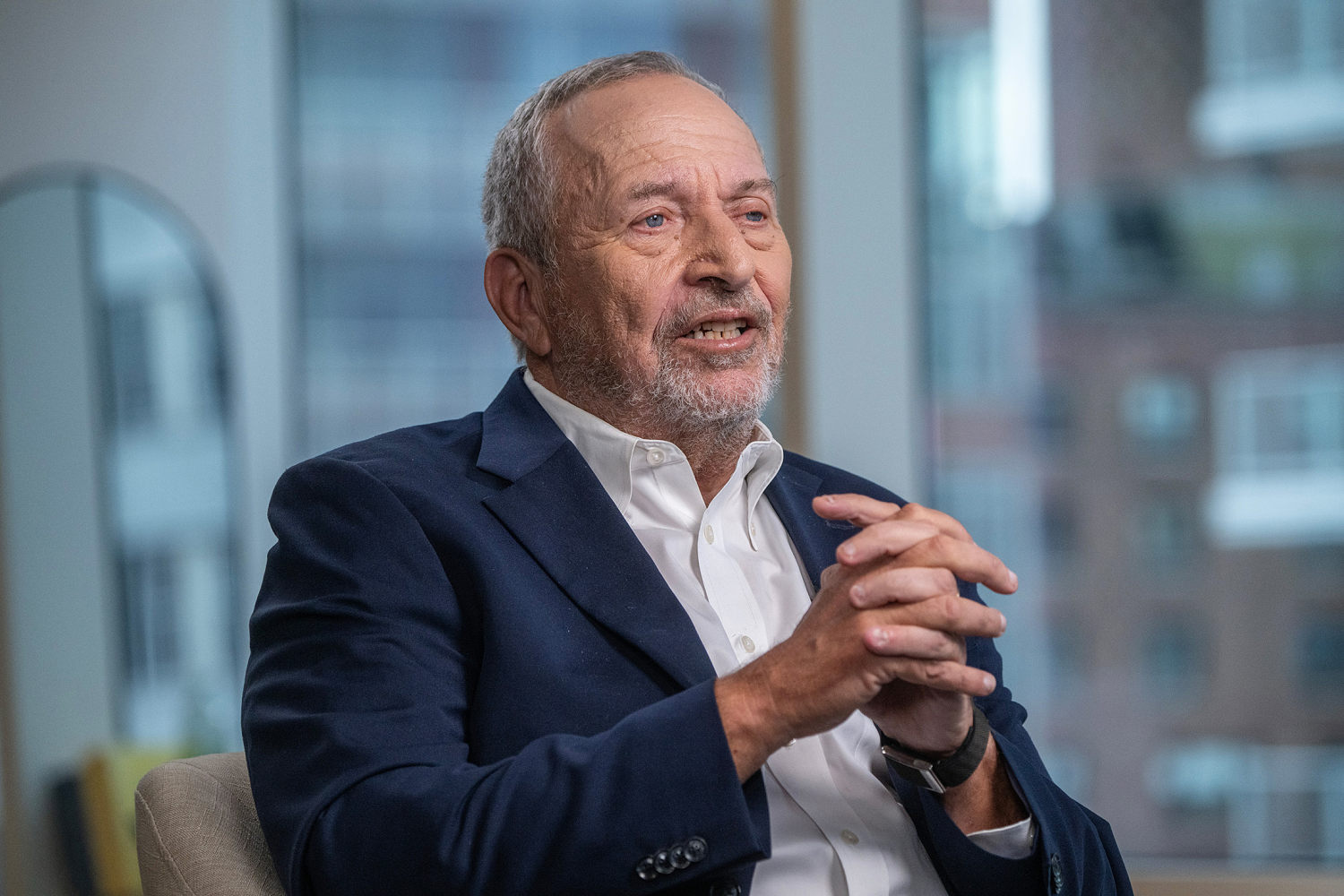
Larry Summers, the former treasury secretary and noted economist, announced Wednesday he plans to resign from his role as a tenured professor at Harvard University — a move that comes amid growing scrutiny of his ties to convicted sex offender Jeffrey Epstein.
“I have made the difficult decision to retire from my Harvard professorship at the end of this academic year,” Summers said in a statement. “I will always be grateful to the thousands of students and colleagues I have been privileged to teach and work with since coming to Harvard as a graduate student 50 years ago.”
“Free of formal responsibility, as President Emeritus and a retired professor, I look forward in time to engaging in research, analysis, and commentary on a range of global economic issues,” he added.
Summers also resigned from his leadership position as co-director of the Mossavar-Rahmani Center for Business and Government, Harvard University spokesman Jason Newton confirmed in an email.
Summers’ connection to Epstein was long established, but a cache of emails released by the Justice Department last year showed the two men were closer than had been publicly known. Summers has not been accused of participating in Epstein’s alleged criminal enterprise.
The two men communicated as recently as 2019, more than a decade after Epstein pleaded guilty to soliciting prostitution from a minor. They continued to correspond until July 5, 2019, a day before Epstein was arrested and charged with sex trafficking of minors.
Summers has been on leave from his teaching duties since November while Harvard investigates links between faculty members and Epstein, who died in federal custody in 2019 while awaiting prosecution on sex-trafficking charges.
The celebrated economist served as Harvard’s president from 2001 to 2006 before he was named a “University Professor,” the school’s highest faculty rank.
Summers previously said he planned to retreat from “public commitments,” including his position on the board of directors at OpenAI, following the House Oversight Committee’s release of more than 20,000 documents that included his extensive email correspondence with Epstein.
“I am deeply ashamed of my actions and recognize the pain they have caused,” Summers said in a statement on Nov. 17. “I take full responsibility for my misguided decision to continue communicating with Mr. Epstein.”
In one set of emails, Summers — who has been married to the academic Elisa New since 2005 — sought Epstein’s advice on his romantic interest in a woman he described as a mentee. Epstein, in turn, described himself as a “pretty good wing man” for Summers.
In another email, Summers lamented that men who “hit on” women may face repercussions in the modern workplace.
The scrutiny on the email records led to other revelations, including that Summers and New “made a brief visit of less than a day” to Epstein’s private island in the Caribbean during their honeymoon in 2005, according to a statement from Summers’ spokesman, Steven Goldberg.
It would not have been easy for Harvard to oust Summers, who was President Bill Clinton’s treasury secretary and a top economic adviser to President Barack Obama. Summers’ tenured position effectively gave him a form of permanent employment in academia.
Harvard’s provost office says on its webpage that professors can be removed “only for grave misconduct or neglect of duty” by the Harvard Corporation, the school’s highest governing body. It was not clear whether Summers’ conduct met that standard.
The release of the emails roiled Harvard. In interviews last year with NBC News and Harvard’s student-run newspaper, The Crimson, a group of faculty members and students decried Summers’ correspondence with Epstein.
“Epstein is no longer alive, but his legacy is alive and well, and his friends are still in high places,” Harvard undergraduate student Lola J. DeAscentiis told NBC News.
In recent months, Harvard faced mounting pressure to cut ties with Summers, including from Sen. Elizabeth Warren, D-Mass, who once taught at Harvard.
“If he had so little ability to distance himself from Jeffrey Epstein even after all that was publicly known about Epstein’s sex offenses involving underage girls, then Summers cannot be trusted to advise our nation’s politicians, policymakers, and institutions — or teach a generation of students at Harvard or anywhere else,” Warren said last year.
Summers’ resignation closes a chapter on his relationship with an educational institution where he received his Ph.D. in economics in 1982. The following year, when Summers was just 28, he became one of the university’s youngest-ever tenured professors.
He pivoted away from academia in the 1990s and went into public service, working under two Democratic presidential administrations, before returning to Harvard in 2001 as president.
Summers’ tenure at the top of Harvard was often clouded by controversy. He faced fierce pushback after giving remarks in 2005 at a closed-door economic conference speculating that women may lack an “intrinsic aptitude” for science and engineering.
He apologized and insisted his remarks had been “misconstrued.” The furor ultimately became too intense to surmount. He resigned from the presidency in February 2006.
Four months later, Summers was appointed to the faculty again as a “University Professor,” a distinction afforded to only a handful of luminaries. He held that title for nearly 20 years.