dailynewsnblog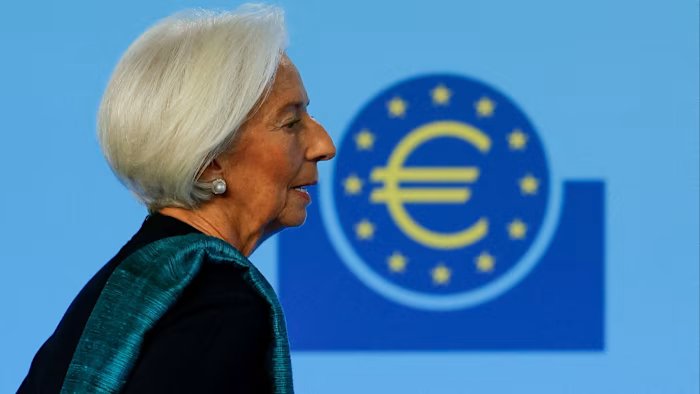
Good morning, happy new year and welcome back. In today’s newsletter:
-
ECB president Christine Lagarde’s pay is 50% higher than disclosed
-
UK financial regulator closes 100 probes to focus on high-impact cases
-
Several people killed after Iranian protests turn violent
-
Should you really leave the UK to avoid inheritance tax?
We begin with European Central Bank president Christine Lagarde, whose full pay is more than 50 per cent higher than her disclosed salary, according to a Financial Times analysis.
What we know: The head of Europe’s monetary authority earned a total of about €726,000 in 2024, according to the FT’s calculations, some 56 per cent higher than the “basic” salary of €466,000 disclosed by the ECB in its annual report.
This means Lagarde earns nearly four times more than the chair of the US Federal Reserve, Jay Powell, whose salary is set by federal law and is currently capped at $203,000.
Why it matters: While Lagarde’s full pay is modest compared with the chief executives of large EU companies, the analysis exposes how limited salary disclosure remains at the ECB.
The central bank is not subject to the same strict rules as listed companies in the bloc, which must give a “full and reliable picture of the remuneration” of each of their directors. Olaf Storbeck has the exclusive story.
-
More Europe news: The region is so far behind the US in digital infrastructure that it has “lost the internet”, Belgium’s cyber security chief has warned.
Here’s what else we’re keeping tabs on today and over the weekend:
-
Economic data: S&P Global releases manufacturing purchasing managers’ indices for France, Germany, Italy, Spain, the Eurozone, the UK and the US.
-
South Korea-China relations: South Korean President Lee Jae Myung travels to Beijing on Sunday for a four-day state visit that includes talks with Chinese leader Xi Jinping.
Five more top stories
1. The UK’s Financial Conduct Authority has closed 100 investigations without taking enforcement action. The unprecedented cull of legacy cases highlights a strategic change at the regulator, with the focus set on fewer but higher-impact cases.
2. Several people have died and dozens have been arrested after protests in Iran turned violent, according to local media, the first fatalities in days of demonstrations over economic distress. Read the full report.
3. Up to 40 per cent of luxury goods were sold at a discount in 2025, hitting profits as shoppers question the value of designer products after years of price rises. More consumers are turning to outlet stores rather than paying full price for branded goods in boutiques.
4. Counties close to London, such as Hertfordshire and Surrey, have been most affected by Labour’s move to raise VAT on private school fees, data has shown. Most of England, however, has not experienced an exodus of private school pupils to the state sector due to the increase in the levy.
5. Pizza night in the UK is shifting from the high street to the supermarket aisle, as shoppers choose upmarket take-home options that promise a slice of Italy for less than the cost of a takeaway. The shift comes as chains shut outlets and grapple with falling profits.
The Big Read

China plans to reinforce its dominance of global manufacturing despite deflation at home and heightened tensions with other trading partners. But what are the costs of doubling down on its export-led growth model?
We’re also reading . . .
-
Lab monkeys: Prices for the research animals in China are set to climb to their highest level since the Covid-19 pandemic, driven by surging demand from the biotech sector.
-
London IPOs: After hopes of a resurgence in 2025 fell flat, the City is hoping a number of flotations will revive the market this year. Here is what’s in the pipeline.
-
UK inheritance tax: Advisers say more clients are leaving the country to take advantage of residency rules and avoid the levy. Alice Ross asks if it is a wise move.
-
Battling tunnel vision: Cognitive blind spots are undermining our ability to see the world as it is, rather than as we would like it to be, writes Gillian Tett.
Chart of the day
Confronted by mutinous backbenchers, dire poll ratings and predictions of a battering in May’s local elections, Sir Keir Starmer has every reason to brace himself for a grim 2026. But can the UK economy, which is heading for lower inflation and borrowing costs, provide the UK prime minister with any relief?

Take part in a live Ask an Expert Q&A with Roula Khalaf, editor of the FT, on January 8. Submit your questions on what will shape 2026.
Take a break from the news . . .
The Bayeux Tapestry will return to England for the first time in more than 900 years. The 70-metre embroidered comic strip, a thrilling depiction of war and political transformation, was probably stitched by nuns in Canterbury in the 1070s and installed in Bayeux Cathedral in 1077. Jackie Wullschläger tells us about the British Museum’s 2026 blockbuster.