dailynewsnblog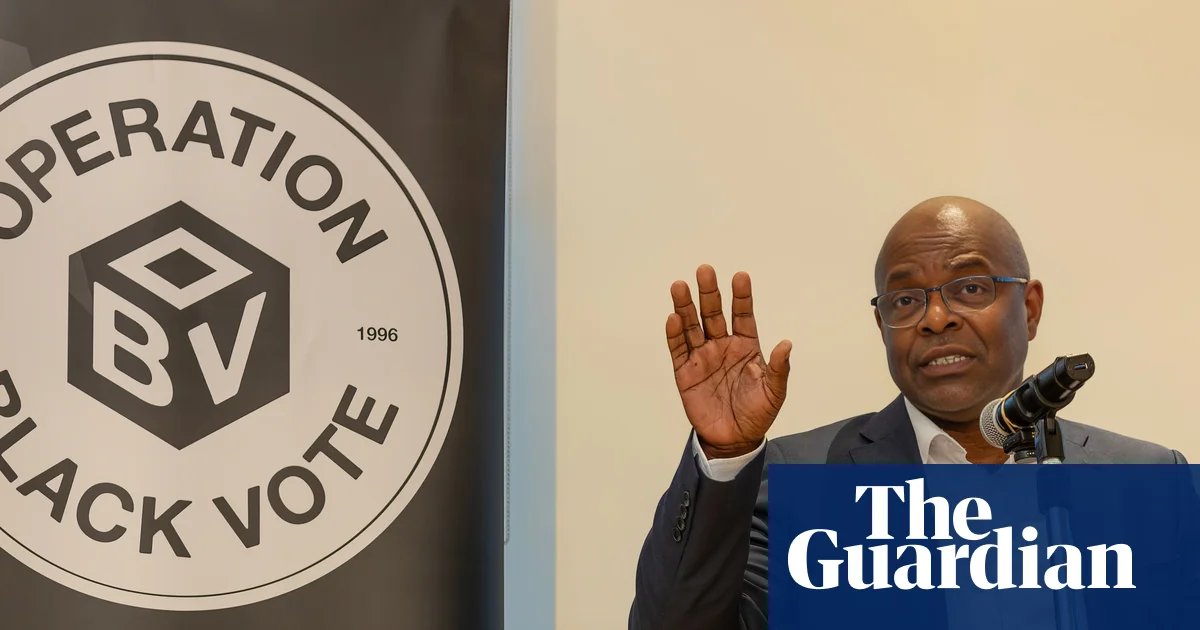
Labour is in “deep trouble” with Black voters, a former government adviser has warned, saying the party is at risk of being seen as “accepting the normalisation of racism”.
David Weaver, who is the chair of Operation Black Vote (OBV), said the government’s plans to restrict juries would “heighten, normalise and embed” racial disproportionality in the justice system and that Black voters were saying: “We don’t know what Labour stands for any more.”
In November, Keir Starmer vowed to “stand up to racism”. But the “moral panic” over migration and slow progress on tackling racial pay gaps and the Windrush scandal meant sentiment was low, Weaver said.
“We’re not happy,” he added. “When they’re away from power, Labour will go alongside Black communities. But the closer their proximity to power, the more they revert to type. And we had real hopes of them coming into government.
“Even people that are being reasonable and saying: ‘It’s hard for a government coming in and taking over what they’ve inherited’, are seeing a government accepting the normalisation of racism, [a government] thinking: ‘Well, we don’t have to think about them, because we’re going to get their vote anyway’.”
Black voters were more likely than any other voters to back Labour in 2024. But Weaver said the party risked losing support in marginal constituencies from Black voters who felt the party was “accepting the normalisation of racism”.
Weaver said there had been a “lack of urgency” on the equality (race and disability) bill, which proposes tackling pay gaps by making companies with more than 250 staff publish salary data.
He also warned that Labour’s plans to restrict jury trials would intensify disproportionality. “It’s an attack on the democratic principle – you’ve got to have public oversight over state power, [or] the fundamental tenets of democracy are themselves challenged,” he said.
“And there’s the racial reality. We are disproportionately stopped and searched, arrested, charged and remanded, we are given longer sentences. Only 1% of judges in England and Wales are Black. So if juries are replaced with judge-only trials, then what happens is overwhelmingly white.”
OBV has campaigned since 1996 to tackle racial disparities through greater Black representation in public life and political participation, working with US civil rights leaders such as the late Rev Jesse Jackson, whose funeral Weaver flew out to this month.
In the US, Black Americans who marched after George Floyd was killed in 2020 have shifted focus to community organising, self-care, education, enterprise and corporate boycotts – intentionally “resting” from mass protest, wary of state violence.
In the UK, Weaver said, the focus was also shifting to “meaningful” grassroots activism as Black voters felt “really let down by Labour” and “not inspired by any of the others”, meaning parliamentarians would have to work harder for Black votes.
Weaver said in the last general election, the nonpartisan OBV had a “really difficult time persuading people who hadn’t registered to vote … I think Labour find themselves in deep trouble”.
He added: “We’re finding our communities are thinking about what we can do on the local level to make a difference to our lives. In the past, we were able, when national elections were taking place, to go into areas at short notice and rally communities about how your vote makes a difference successfully. We’re not able to do that any more.
“Our new approach has been to work on regional levels, encouraging people to become councillors. We’re looking at younger people, at leadership pipelines, moving away from just trying to get people in parliament.”
In an era where a vocal minority of UK politicians from ethnic minorities were enabling the hard right, Weaver said he felt “representation without equity and ethical leadership is futile”.
He added:“There’s a level now of almost deliberate ‘Black-adding’ we call it, that means the worst elements of institutionalised racism get legitimacy because Black people or people of colour are doing it now.”
The Ministry of Justice was approached for comment.