dailynewsnblog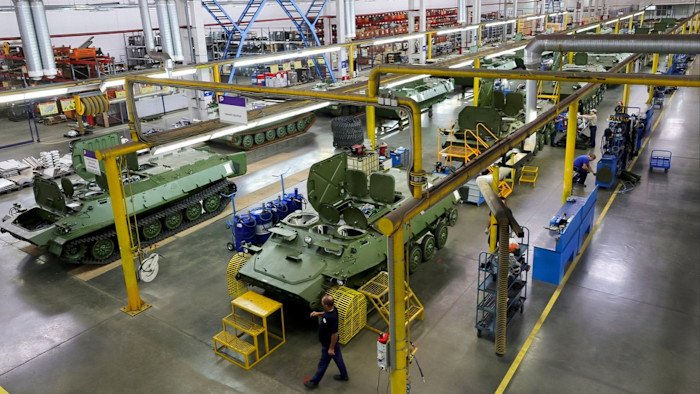
Stay informed with free updates
Simply sign up to the EU trade myFT Digest — delivered directly to your inbox.
Kyrgyzstan is ready to challenge the EU in court if the bloc imposes sanctions on the Central Asian state over its alleged exports to Russia, a senior minister has said, in the first big test of Brussels’ ability to prevent key equipment leaking through its sanctions regime.
The European Commission has proposed a ban on selling Kyrgyzstan certain goods that could have military uses, as Brussels alleges Kyrgyz companies are violating sanctions by re-exporting them to Russia, according to documents seen by the FT.
But Daniyar Amangeldiev, first deputy chair of Kyrgyzstan’s cabinet, told the FT the former Soviet republic is working hard to comply with western sanctions. He said that Brussels had not outlined what steps Bishkek could take to demonstrate its compliance and avoid sanctions.
“This decision will have consequences for our image. If such a decision is made, we will be ready to challenge it in court,” he said, adding that Kyrgyzstan has “evidence that we took action” while Brussels “did not propose appropriate mechanisms for us to comply with”.
“There must be rules for us to follow. If the rules have not been formulated, how can we play by them?” he asked.
The EU documents say Kyrgyzstan has been re-exporting so-called dual-use goods, such as machine tools and electronics that are used in weapons and drones. Any ban would be the EU’s first secondary sanctions on a country and the first use of its anti-circumvention powers.
The documents say Kyrgyz imports of common high-priority items from the EU have grown almost 800 per cent since Russia’s full-scale invasion of Ukraine in 2022. Meanwhile, the country’s exports to Russia are 1,200 per cent higher, the files say, demonstrating “a continuing and particularly high risk of circumvention”.

Amangeldiev said a large part of the growth in imports was due to a handful of very large, high-value deals with European countries, for example for the construction of hydropower plants in the country.
He acknowledged instances of goods transiting Kyrgyzstan and ending up in Russia, but said the country was committed to preventing this. As a result, he argued, sanctions should continue to target individual violations and not the country as a whole.
“We are not in favour of adding fuel to this conflict. Therefore, we are categorically opposed to the trade in goods that are prohibited,” Amangeldiev said. He said Bishkek had shared a package of documents with the EU in February, detailing its efforts, but Brussels had not, for example, explained how to clear the names of sanctioned Kyrgyz banks.
Western capitals have accused Kyrgyzstan of helping Russia circumvent restrictions on its financial sector and have sanctioned several entities, including the Kyrgyz issuer of a rouble-pegged stablecoin with very high transaction volumes.
EU officials say Bishkek has frequently given assurances it has tightened controls but the enforcement is lacking.
EU sanctions envoy David O’Sullivan has been in talks with the Kyrgyzstan government for several months. On a visit to Bishkek on Thursday, he told reporters: “We are not asking Kyrgyzstan not to have trading relations with Russia. We only ask that that trading relationship does not involve the deliberate circumvention of our sanctions.”
The EU’s 20th package of sanctions was blocked by Hungary after Kyiv stopped supplying it with oil through the Druzhba pipeline, damaged by the Russians.
Adding country-level sanctions to those measures was intended to demonstrate the EU is serious about cracking down. However, it will not be without cost, said Lina Aburous, a sanctions expert at consultancy Forward Global in Brussels.
“The EU is not prepared for retaliation,” she said, arguing the EU should instead give incentives to countries to co-operate. “It needs to provide alternatives like better market access.”
Amangeldiev said country-level sanctions would deal a severe reputational blow to Kyrgyzstan and stymie its development.
“We are a relatively small economy overall, and we cannot afford such an image,” he said.
The country’s economy is geared around trade, he added. “We are a cross-border country. We stand at the junction, as it were, on the historic Silk Road,” he said.
It has also long been dependent on Russia. A substantial share of the population is sustained by remittances from Kyrgyz migrants in Russia.
“We have historical ties with the Russian Federation, trade ties,” he said. They leave the country “between a rock and a hard place”, the minister said, forced to walk a difficult geopolitical tightrope.