dailynewsnblog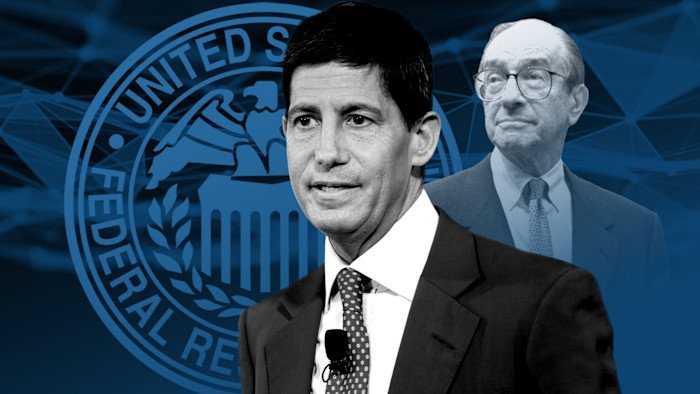
Kevin Warsh, the former Federal Reserve governor who Donald Trump has nominated to head the US central bank, has, like other candidates in the race to succeed chair Jay Powell, claimed that American interest rates ought to be lower.
A big reason why, Warsh says, is an AI boom that he believes is “the most productivity-enhancing wave of our lifetimes — past, present and future”, leaving the Fed space to cut rates without stoking inflation.
The Fed nominee believes he can afford to take a chance on those productivity gains in the same way former chair Alan Greenspan did in the 1990s.
“[Greenspan] believed based on anecdotes and rather esoteric data that we weren’t in a position where we needed to raise rates,” Warsh said in an interview with Sadi Khan, chief executive of Aven Financial, in December. “As a result we had a stronger economy, we had more stable prices.”

Warsh’s view is shared by Trump administration officials, including Treasury secretary Scott Bessent, who, like the president, wants to see steep rate cuts fast.
“It’s clear that we are at the nascent stages of a productivity boom, not unlike the 1990s,” Bessent told CNBC earlier this month, adding that viewers ought to read former Washington Post journalist Bob Woodward’s Greenspan biography about “how he correctly let the economy run hot”.
Greenspan’s productivity masterstroke dates back to September 1996, when he entered the Fed’s boardroom intent on convincing his colleagues to delay a rise in interest rates many of them desired.
He told the Federal Open Market Committee that productivity was growing faster than the official data showed.
“Many people were completely unconvinced, he started talking about aspects of the productivity increase in ways that people found really difficult to understand,” Janet Yellen, then head of the San Francisco Fed, told the FT.
But he was “absolutely right”, she added. Eventually Yellen, who later became Fed chair, and all but one of the FOMC backed Greenspan’s productivity bet and kept borrowing costs on hold, with a commitment to raise them should inflation eventually emerge.

Thirty years on, Warsh believes he can repeat the maestro’s move.
Powell, the man Warsh is set to replace, has also suggested he believes at least some of the AI hype. “If you look back, wave after wave after wave, there will be some disruption, but ultimately technology increases productivity, which is the basis for rising wages,” the Fed chair said in January.
On Wednesday evening, Fed governor Lisa Cook appeared to agree, saying: “Growing evidence shows that AI has the power to significantly boost productivity.”
Vincent Reinhart, a former Fed official who attended FOMC meetings, agreed there was a “convincing direction of travel” that AI would increase productivity and lower inflation over time.
But Reinhart, now chief economist at BNY Investments, cautioned that while the technology was “certainly tilting up the path for expected output”, it was “not adding much to productivity right now”.
Many economists believe the AI boom is boosting demand, rather than expanding the US economy’s supply capacity. They point to soaring capital investment and the stock market gains that are benefiting the richest Americans and driving up spending.

“If it turns out that there’s going to be a bunch of spending now and you’re not going to get the benefits [on productivity] for a while, then that’s probably going to create a little bit of pressure on inflation,” said Anil Kashyap, a professor of economics at the University of Chicago’s Booth School of Business.
Warsh predicts the AI boom will upend the world of work quickly, with the best companies doing “things that are unimaginable” within a year.
As a fellow at Stanford University’s Hoover Institution, he has had a front-row seat in the evolution of the AI industry.
His mentor Stanley Druckenmiller said Warsh’s time running private-equity investments — which primarily involved tech companies — at the billionaire’s family office meant he was well placed to judge the impact of the technology on the economy.
“He’s got a great network out there,” Druckenmiller told the FT, referring to Silicon Valley. “And because he doesn’t just know the top down but the weeds of the speed of AI and the terms of disruption, I think he just has a better understanding than a normal macroeconomist.”
But some economists warn it will take far longer than Warsh claims to judge whether AI proves to be the game-changer claimed by Silicon Valley or it turns out to be the damp squib predicted by others, including Nobel Prize winner Daron Acemoglu, who has written that “neither economic theory nor the data” match tech optimists’ bullishness.
“I just don’t see the evidence being in place yet,” said James Knightley of Dutch bank ING. “That’s not to say it won’t happen — it may come through in time. But it’s not going to be a revolution over the next two years, without real pain in the labour market.”
Warsh may not have that long. Should the Senate confirm him in time, the prospective Fed chair will take over in mid-May — placing him under immediate pressure to deliver big interest rate cuts from the current range of 3.5-3.75 per cent in the run-up to November’s midterm elections.
Fed officials’ latest policy forecasts suggest they will cut US borrowing costs just once this year, leaving the benchmark rate hovering above 3.25 per cent, higher than the 1 per cent level the president says he wants.
Those who were in the room during the September 1996 vote say Greenspan relied on data, not anecdotes, to persuade the committee.
If Warsh wants to convince present-day rate-setters of an AI-induced productivity boom, then he will need to do the same.
“Greenspan’s hunch was backed up by digging in, digging underneath and finding things that other people hadn’t found,” said Don Kohn, a former Fed vice-chair who attended as the FOMC secretary.
“He’s a very data-driven guy. It wasn’t just an assertion — wages were rising, profits were high and inflation was low — there was already a puzzle to solve.”
Yellen said: “Greenspan did an enormous amount of research on his own. He really tried to make the case using a lot of economic data.”