dailynewsnblog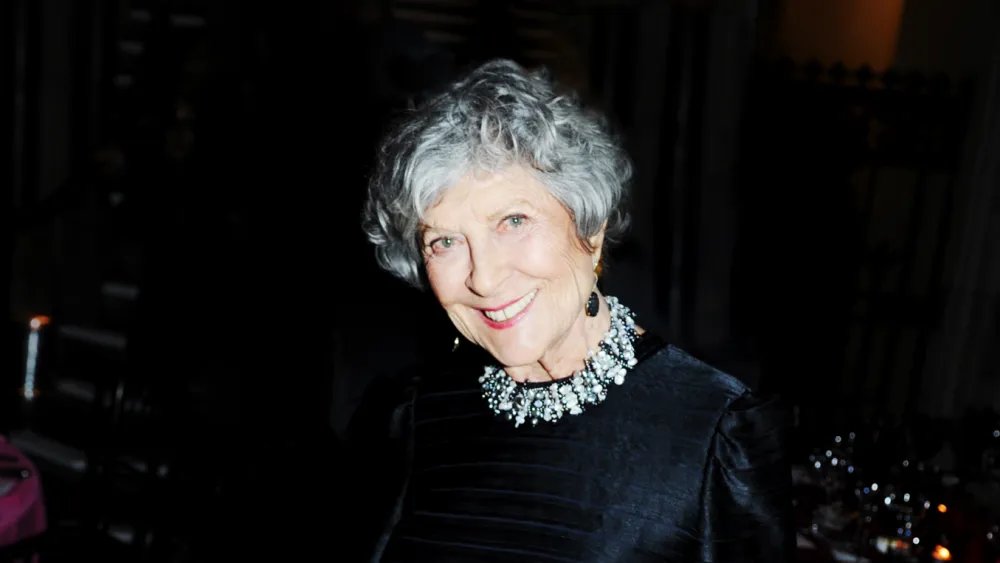
Joan Burstein, the pioneering British retailer who championed designers including John Galliano, Alexander McQueen and Hussein Chalayan when they were still students plus introduced Ralph Lauren, Giorgio Armani and Calvin Klein to the U.K., turns 100 on Saturday and is still full of fashion opinions.
Burstein, who’s celebrating the big day with her family at home in Ibiza, told WWD that while Galliano “still has it,” times have changed since she founded Browns, the pioneering multibrand retailer, in 1970.
“There isn’t the same talent as in the 1980s and 1990s,” she said. “Today the designers are doing their own thing. It isn’t the same as when Yves Saint Laurent, Sonia Rykiel and others had their signature, and dressed their customers from head to toe.”
She added: “It doesn’t mean there isn’t talent — it just doesn’t last as long. I would love to discover real new talent.”
Burstein, known affectionately in London as “Mrs. B,” was born on Feb. 21, 1926. She and her husband, the late Sidney Burstein, started their retail adventure with a market stall in London before opening Browns on South Molton Street.
It quickly became the go-to store for women, and eventually men, who loved fashion and were willing to experiment with new names from New York, Milan and Paris. Over the years, the Browns mix included Walter Albini for Callaghan, Karl Lagerfeld for Chloé, Armani, Jil Sander, Calvin Klein and Comme des Garçons, which were still relatively small when she bought their collections.

Joan Burstein and John Galliano at Burstein’s 90th birthday at Claridge’s.
Jabpromotions/WWD
Other designers and entrepreneurs, including Paul Smith, Manolo Blahnik, Liz Earle, and Richard James, cut their teeth at Browns, designing, buying, or working on the shop floor.
The Bursteins ran their shop with a sense of derring-do, determination — and a willingness to defy convention. Mrs. B not only had a gimlet eye for talent, she had the utmost respect for her customers.
In the early days of the store, when clients included Julie Christie, Linda McCartney and Claire Bloom, Burstein said her aim was to “dress all those beautiful young people, to make them aware of how they could look, how they could love their clothes. I think I just wanted to make people happy as well as [attracting] customers. I wanted them to feel joyous when they walked out of Browns with their possessions,” she said in an interview with WWD.
She would always tell her salespeople never to let anybody out of the shop “not looking good in what they’ve bought. We weren’t selling on commission. You need to give pleasure to your customer, and your customer gets pleasure from you,” she added.
Burstein could certainly teach today’s retailers a few things, and given her enduring enthusiasm for the business, maybe she still will.