dailynewsnblog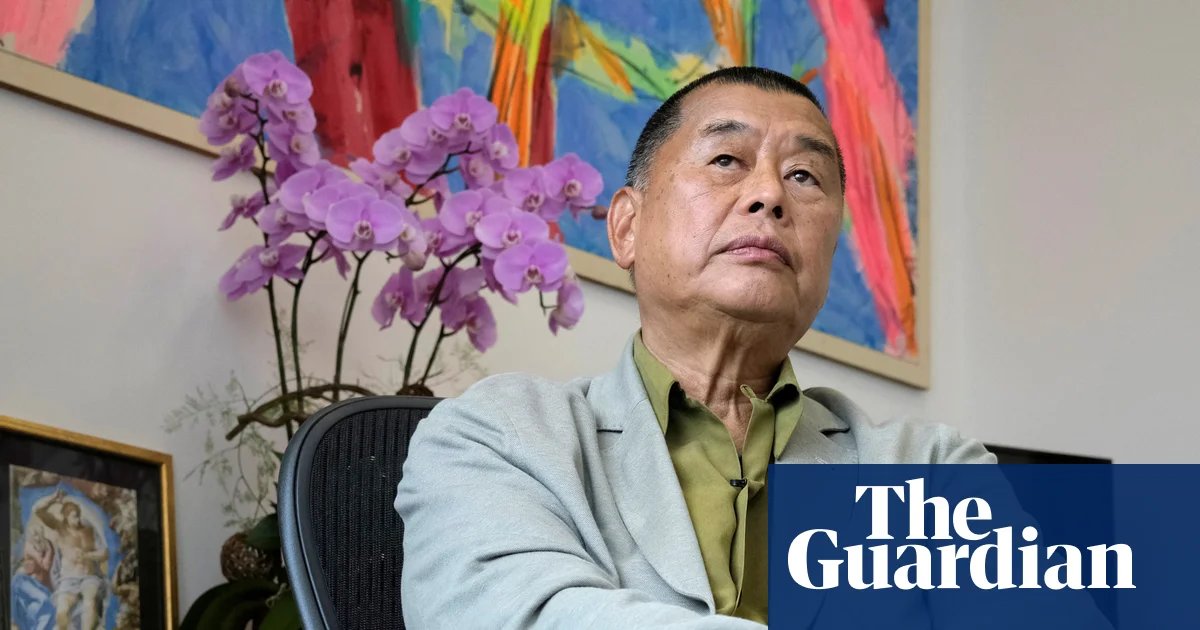
Long-awaited verdicts in Hong Kong pro-democracy media tycoon Jimmy Lai’s national security trial will be delivered on Monday, one of the city’s most closely watched rulings since its return to Chinese rule in 1997.
The Apple Daily founder has pleaded not guilty to two counts of “conspiracy to foreign collusion” under the security law, which carry a maximum penalty of life in prison, as well as one count of “conspiracy to publish seditious publications”.
The case has grown into a wedge between Beijing and many western nations, with Donald Trump reportedly calling for Lai’s release during a meeting with Chinese leader Xi Jinping in October.
On Monday, there was a large police presence – uniformed and in plain clothes – outside the West Kowloon district court, as well as a large media gathering. The queue for the public appeared smaller than on previous key moments, such as the day Lai gave testimony, and big days for other cases like that of the Hong Kong 47, which drew hundreds of people.
Two supporters in the queue held bright red apples, to represent the now-shuttered Apple Daily newspaper which Lai founded and which stands as his co-accused.
Lai turned 78 last week and once described himself as a “born rebel”. He loudly defied the Chinese Communist party for years, while amassing millions from his clothing and media empires.
He became a prime target after Beijing imposed the sweeping national security law on Hong Kong in 2020, a year after huge and sometimes violent pro-democracy protests in the finance hub.
High court judges Esther Toh, Alex Lee and Susana D’Almada Remedios will begin delivering their verdicts at 10am local time (2am GMT).
If found guilty, Lai will likely be sentenced at a later date and can appeal against the outcome.
A Chinese foreign ministry spokesperson said on Friday that Beijing “firmly supports” Hong Kong in “safeguarding national security in accordance with the law and punishing criminal acts that endanger national security”.
Lai is a British citizen, and the British prime minister, Keir Starmer, has been under pressure from human rights and press freedom groups to secure his release.
Lai has been in jail since 31 December 2020 and the state of his health is bitterly contested by his family and the Hong Kong government.
He most recently appeared in court in August, when he was prescribed medication and fitted with a heart rate monitor after lawyers said he had experienced heart palpitations.
Lai gave spirited courtroom testimony and was quick to respond to, and even bicker with, prosecutors and judges.
His daughter Claire told Agence France-Presse last week that Lai, a diabetic, had “lost a very significant amount of weight” and showed decay in his nails and teeth.
The Hong Kong government said on Friday that Lai had received “adequate and comprehensive” medical services and that “no complaints” had been raised.
Authorities also confirmed that Lai had been held in solitary confinement, but said that “has all along been made at his own request”.
Prosecutors accused Lai during the trial of being the mastermind in a conspiracy involving Apple Daily’s senior management, citing 161 items the outlet published.
They alleged those items, which included op-eds with Lai’s byline and online talk shows he hosted, were deemed seditious under a colonial-era law because they “excited disaffection” against the government.
Prosecutors alleged some of the items also breached the later national security law because they asked foreign countries to impose “sanctions or blockade” or take “hostile activities” against Hong Kong or China.
Lai was grilled for days over his political connections in the US, Britain and Taiwan, including a 2019 meeting with then-US vice president Mike Pence.
Prosecutors separately accused Lai of being the mastermind and financial backer of the protest group “Stand with Hong Kong, Fight for Freedom”, which allegedly lobbied for sanctions against China.
Lai countered that he had never tried to influence other countries’ foreign policies on Hong Kong and China through his overseas contacts.
He also distanced himself from violence and separatism, saying that Apple Daily represented Hongkongers’ core values such as “rule of law, freedom, pursuit of democracy, freedom of speech, freedom of religion, freedom of assembly”.
Apple Daily was forced to close in 2021 after police raids and the arrests of its senior editors.
With Agence France-Presse