dailynewsnblog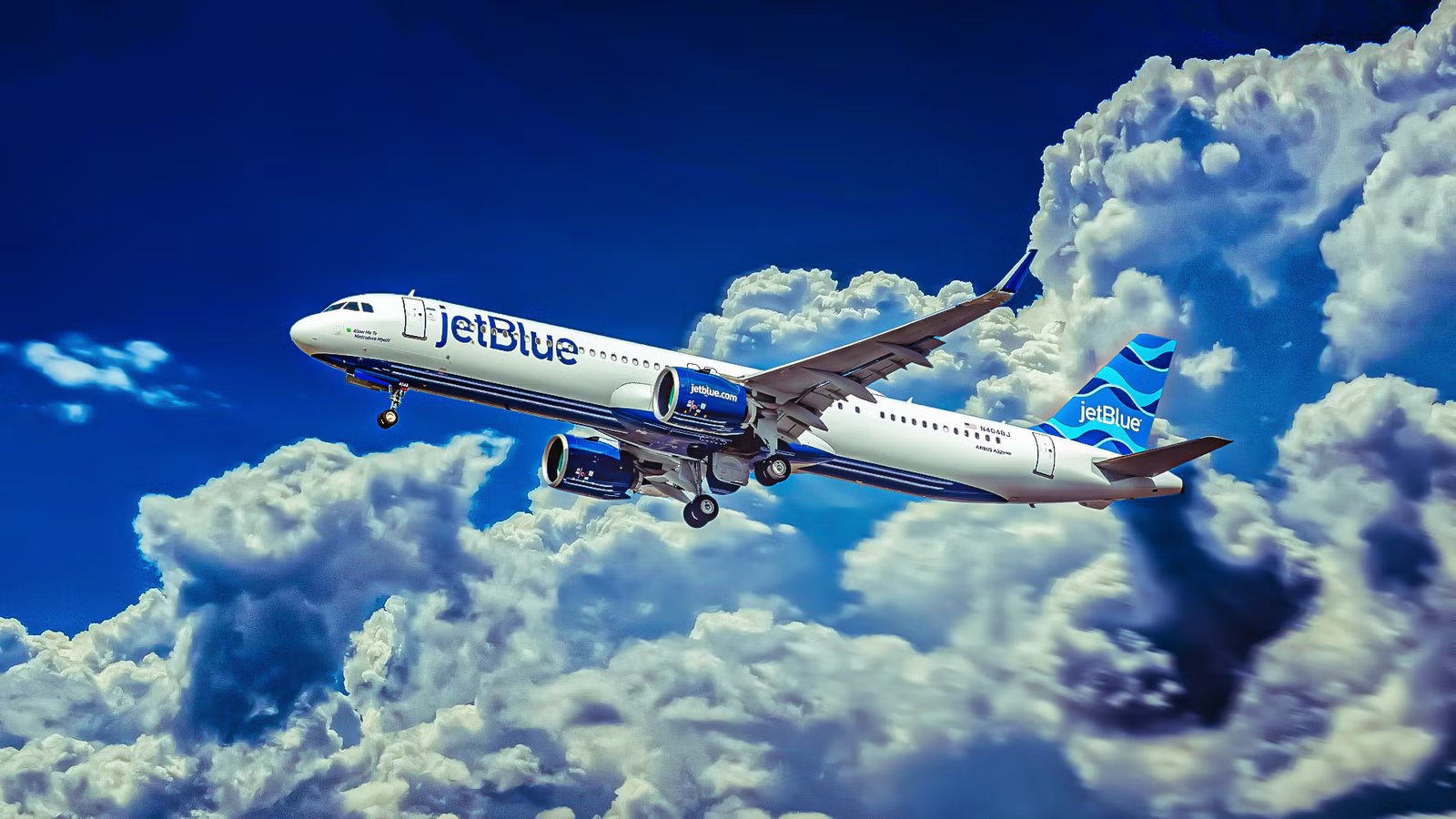
For several years now, JetBlue Airways has been showing its commitment to long, nonstop route offerings. Nowhere is that more evident than in its expanding roster of nonstop flights operated with the Airbus A321LR. In 2026, the airline’s long‑range narrowbody jets are at the heart of some of its most ambitious long‑haul services yet, connecting the US East Coast directly with top European destinations without the need for a widebody aircraft. These routes not only showcase the A321LR’s impressive capabilities but also reflect JetBlue’s strategy to carve out a stronger presence in the highly competitive transatlantic market, offering passengers premium comfort and convenience on flights that stretch well beyond traditional narrowbody distances.
With seasonal and daily flights scheduled across the Atlantic, the airline is showcasing the A321LR’s ability to operate on true long-haul routes while still delivering JetBlue’s signature inflight experience. As the airline continues to refine its network strategy and expand its reach, understanding the role of the A321LR offers insight into both the technological advances in modern aircraft and the evolving demands of global air travel.
A321LR Advantage

The Airbus A321LR (Long Range) is a game-changer for JetBlue, enabling nonstop flights that were previously only feasible with widebody aircraft. Built on the popular Airbus A321neo platform, the A321LR extends the range to 4,000 nautical miles, allowing JetBlue to operate nonstop transatlantic routes from its East Coast hubs. This extended range opens direct connections to major European cities, providing travelers with more convenient options while avoiding the time and hassle of layovers. Its fuel-efficient engines and lighter airframe make it ideal for long-haul operations, offering the airline lower operating costs per seat compared to traditional wide-body aircraft on similar routes.
Beyond its impressive range, the A321LR offers significant advantages in aircraft design and passenger experience. Its advanced Sharklet wingtips, new-generation engine options (Pratt & Whitney or CFM Leap), and optimized aerodynamics reduce fuel burn and extend operational efficiency over long distances. The cabin is designed for versatility, allowing airlines to install multiple configurations of premium and economy seating while maintaining comfort on long flights. Additionally, the aircraft features quieter engines and improved air circulation, contributing to a more pleasant environment for passengers on extended journeys. The A321LR gracefully demonstrates how modern narrowbody aircraft can effectively handle routes that were once reserved for larger widebody jets.
Focusing back on the airline, the A321LR positions JetBlue competitively against legacy carriers operating transatlantic routes with larger aircraft. By using a single-aisle aircraft on long-haul flights, JetBlue can serve secondary airports, offer more frequent schedules, and tap into niche markets with lower risk. The combination of extended range, operational efficiency, and cabin versatility makes the A321LR the backbone of JetBlue’s strategy for its longest nonstop routes, allowing the airline to expand its international footprint while maintaining the comfort and service standards it is known for.
Planned 2026 Routes

In 2026, JetBlue continues to deploy its Airbus A321LR on some of the longest and most strategically important sectors in its network, primarily across the North Atlantic. The aircraft links key East Coast gateways such as  New York JFK Airport and
  Boston Logan International Airport with major European capitals and high-demand leisure destinations. The list of longest flights has many familiar city names, like London, Paris, Amsterdam, and Madrid. These routes push close to the upper range limits of the A321LR, particularly during winter operations when winds can extend flight times westbound.
Seasonal flying also plays a key role in the 2026 schedule. Although summer-focused destinations such as Edinburgh and Dublin are well-suited to the A321LR’s economics, JetBlue will operate these routes on the A321neo and A321ceo, respectively. These routes are comparable in length to many of the A321LR’s standard trips, but are operated on different equipment. The table below highlights JetBlue’s ten longest A321LR city pair routes in 2026 by distance. These sectors represent the upper end of where the aircraft consistently operates in commercial service.
|
Longest JetBlue A321LR Routes In 2026 (Cirium) |
|||
|---|---|---|---|
|
Origin |
Destination |
Total Flights |
Average Distance (miles) |
|
BOS |
MXP |
148 |
3,810 |
|
MXP |
BOS |
148 |
3,810 |
|
BCN |
BOS |
191 |
3,650 |
|
BOS |
BCN |
191 |
3,650 |
|
CDG |
JFK |
365 |
3,635 |
|
JFK |
CDG |
365 |
3,635 |
|
AMS |
BOS |
344 |
3,457 |
|
BOS |
AMS |
344 |
3,457 |
|
JFK |
LHR |
730 |
3,452 |
|
LHR |
JFK |
730 |
3,452 |
|
BOS |
CDG |
365 |
3,449 |
|
CDG |
BOS |
365 |
3,449 |
|
BOS |
MAD |
191 |
3,411 |
|
MAD |
BOS |
191 |
3,411 |
|
BOS |
LHR |
365 |
3,265 |
|
LHR |
BOS |
365 |
3,265 |
|
BOS |
SFO |
7 |
2,704 |
|
SFO |
BOS |
8 |
2,704 |
|
BOS |
LAX |
1 |
2,611 |
|
LAX |
BOS |
2 |
2,611 |

How Far Can The Airbus A321XLR Fly?
Unprecedented range meets efficient design.
JetBlue A321LR Experience

Flying on JetBlue’s A321LR isn’t just about getting from point A to point B. The airline has designed it to be a comfortable and connected journey, even on long nonstop flights. The Airspace by Airbus cabin interior onboard these aircraft brings a sense of openness and calm to the narrowbody layout, with customizable lighting, larger overhead bins, and redesigned sidewalls that enhance perceived space and comfort for everyone onboard. These elements help the aircraft feel less like a traditional single-aisle plane and more like a thoughtful long-haul environment.
One of the most noticeable features onboard is the two-class cabin configuration. Up front, JetBlue’s premium Mint product on the A321LR includes fully lie-flat suites with direct aisle access, giving long-haul flyers a business-class experience that rivals many widebody offerings. Behind that, the Core economy cabin is arranged with just over 100 seats, which is far fewer than many standard long-haul jets. This translates to more personal space and one of the most generous legroom profiles in the transatlantic economy market. Across both cabins, passengers enjoy free high-speed WiFi, live TV, and seatback entertainment options, keeping you connected and entertained from takeoff to landing.
|
JetBlue A321LR Cabin Configuration (AeroLOPA) |
|
|---|---|
|
Cabin |
Seat Count |
|
Mint Studio |
2 |
|
Mint |
22 |
|
EvenMore (Economy) |
24 |
|
Economy |
90 |
JetBlue’s attention to passenger comfort challenges the traditional perception of single-aisle flying. On lengthy transatlantic missions, the combination of lie-flat comfort, generous personal space, and gate-to-gate connectivity creates an atmosphere that competes, if not rivals, larger twin-aisle aircraft. JetBlue is proving that long-haul comfort is no longer exclusive to widebody fleets.
JetBlue Fleet Overview

As of early 2026, JetBlue Airways operates one of the most modern and efficient narrowbody fleets among US carriers, having completed its transition to an all-Airbus lineup following the recent retirement of its Embraer E190 regional jets. This shift means every aircraft in active service belongs to either the Airbus A220 or A320 Family, a strategy that simplifies maintenance, training, and operations while improving fuel efficiency and passenger comfort across the network.
|
JetBlue Fleet (ch-aviation) |
|
|---|---|
|
Aircraft |
Total |
|
A220-300 |
60 |
|
A320-200 |
129 |
|
A321-200 |
63 |
|
A321neo |
26 |
|
A321LR |
11 |
At the core of JetBlue’s fleet are Airbus A320-series jets, including the classic A320-200 and multiple variants of the A321. The A321 family forms the backbone of JetBlue’s longest nonstop routes, offering the range and capacity to serve markets that once required widebody aircraft. Beyond these, JetBlue has a growing number of Airbus A220-300 aircraft in service. This smaller and highly efficient aircraft is handling more domestic and shorter international routes to Canada and the Caribbean.
Looking ahead, JetBlue’s fleet plan includes continued deliveries of the A220-300 to replace older jets and support network expansion, while additional A321neo aircraft are expected to join in future years to further extend long-range capabilities and enhance operational flexibility. The result is a modern, Airbus-centric fleet mix optimized for both domestic efficiency and long-haul potential.

JetBlue’s 10 Busiest Transatlantic Routes By Flights
The carrier is making increasing headway into the European market.
Global A321LR Operations

Globally, the A321LR has rapidly become a workhorse for long-range narrowbody flying, with airlines around the world tapping its extended range and efficiency to serve routes once the exclusive domain of widebody jets. Beyond JetBlue’s transatlantic services, carriers such as Icelandair are using the A321LR to link Reykjavík with multiple European hubs and North American cities.
Other operators are also pushing the aircraft’s capabilities into new long-haul markets.  Air Astana has launched one of the world’s longest narrowbody flights from Almaty to London, showcasing the A321LR as a true long-haul player. Additionally, airlines across regions are adding the A321LR to their fleets for both regional expansion and international growth. Some are using it to open secondary long-haul routes that are too thin for larger aircraft, while others plan to use future deliveries to connect previously underserved city pairs.
Across Europe, North America, and Asia, the A321LR’s combination of long-range performance, fuel efficiency, and passenger comfort has made it an attractive option for airlines seeking flexibility. From transatlantic leisure and business routes to innovative long-haul services in emerging markets, the global footprint of the A321LR highlights its pivotal role in the evolving landscape of long-distance narrowbody operations.
Final Thoughts

JetBlue’s longest nonstop routes with the Airbus A321LR in 2026 highlight how dramatically the economics and passenger expectations of long-haul travel have evolved. By pairing an extended narrowbody range with a premium-focused onboard product, the airline has proven that transatlantic sectors no longer require widebody aircraft to deliver comfort or profitability. The A321LR’s efficiency allows JetBlue to serve competitive European markets with the right amount of capacity, while still offering lie-flat seating, strong connectivity, and a modern cabin environment.
Looking ahead, the A321LR represents more than just a fleet type, it reflects a broader shift in global aviation toward right-sized, long-range aircraft capable of opening new city pairs. As JetBlue continues refining its transatlantic strategy and prepares for future long-range fleet additions, its A321LR network stands as a clear example of how single-aisle aircraft are reshaping the long-haul landscape.