dailynewsnblog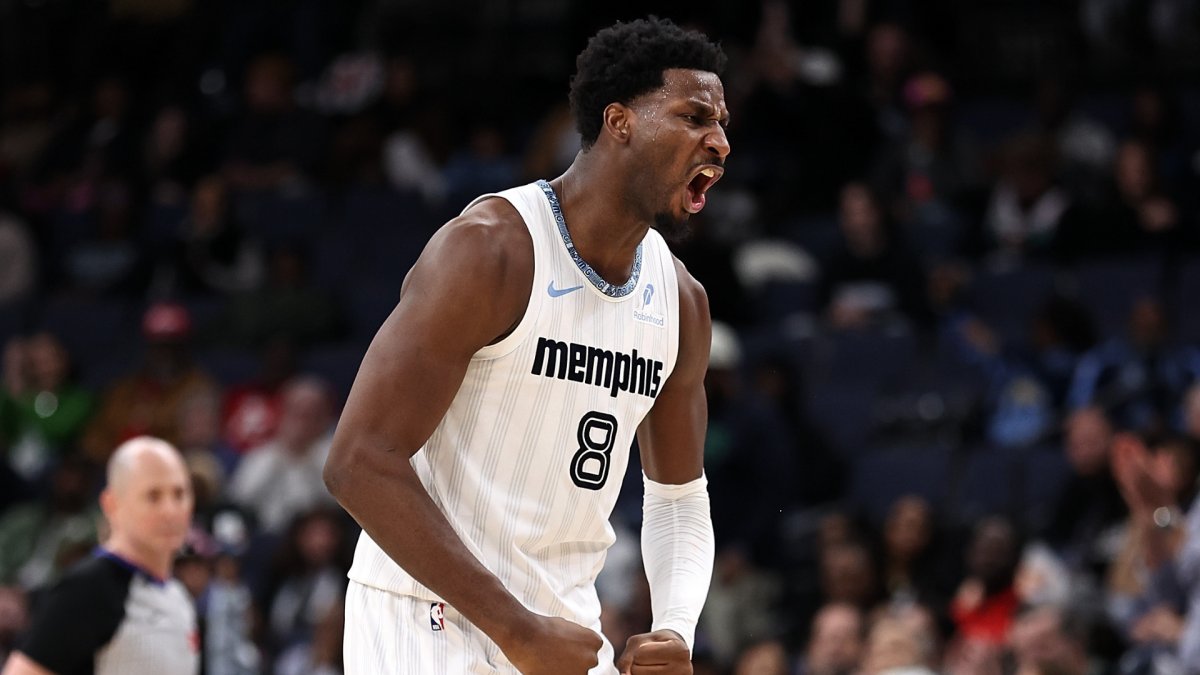
The Memphis Grizzlies and Utah Jazz gave us our first major surprise of the trade deadline on Tuesday. Jaren Jackson Jr., the former All-Star and Defensive Player of the Year, is headed to Utah along with John Konchar, Vince Williams and Jock Landale in exchange for Walter Clayton, Taylor Hendricks, Kyle Anderson, Georges Niang and three first-round picks, according to ESPN. Those first-round picks, according to Jake Fischer, are as follows:
- The most favorable 2027 pick between the Jazz, Timberwolves and Cavaliers.
- The Lakers 2027 first-round pick, top-four protected.
- The Suns’ 2031 first-round pick, unprotected.
While Trae Young was the All-Star to move in this deadline cycle, that deal was effectively a cap dump. This is our first genuine blockbuster of the 2025-26 season, one that drastically alters the course of the next several years for two Western Conference teams moving in different directions. So let’s dive into the deal and assign grades for both teams.

Utah Jazz: B
It was four offseasons ago that the Jazz traded away Donovan Mitchell and Rudy Gobert and kickstarted a rebuild that is still ongoing. At a certain point, enough is enough. While Utah is still near the bottom of the Western Conference standings, there is quite a bit of evidence suggesting that they are ready to turn things around. Keyonte George has been one of the breakout stars of the season. The Jazz have turned away all efforts from opposing teams to steal Lauri Markkanen, suggesting they’re no longer interested in a long-term tank. Will Hardy is among the very best coaches in the NBA, and their defense was already due for a rebound next year when rim-protector Walker Kessler returns from the torn labrum that ended his season. It was time. You can’t tank forever.
Now, Utah’s league-worst defense will be led by one of the NBA’s best rim-protecting duos. While teams have long dreamed of using Jackson as a stretch-five and maximizing their offensive firepower, he has always functioned best as a power forward next to a bigger center. Jackson is a great defender, but not a strong rebounder or especially bulky in the post. This partnership should maximize Jackson defensively and make up for the defensive limitations of Utah’s group of younger perimeter players. If nothing else, their projected starting five next season is massive. The 6-foot-4 George should be their shortest starter, with the 6-foot-9 Ace Bailey now at shooting guard.
The pick volume here looks significant, but won’t impede the Jazz all that much. Remember, two of those picks are in 2027, projected as one of the weaker drafts in recent memory, and the third is originally from Phoenix in 2031. That means that once next year’s draft passes, Utah will once again have full control over its next seven drafts. The Jazz spent their surplus on Jackson, but still functionally have most of their own picks to work with.
The big question here is that pesky, top-eight protected pick the Jazz owe the Thunder this year. As of right now, Utah is in the No. 6 slot in the lottery and likely feeling relatively safe. Does adding Jackson change things? Will the team have to find reasons not to use him down the stretch? Considering the Jazz have been fined for violating the player participating policy in the past, it would certainly be in character for them, and let’s just say they haven’t exactly put their best foot forward lately. Silly season is approaching, and keeping the 2026 pick is paramount. If the Jazz lose it, this trade looks a whole lot worse. We just shouldn’t expect Utah to let that happen.
There are certainly questions here. What will it cost to keep Kessler as a restricted free agent? Suddenly, the Jazz have two max players in Markkanen and Jackson, and George is eligible for a rookie extension this summer as well. That’s no financial crisis, but it’s going to soak up most of their flexibility moving forward. That’s a risky place to be given Jackson’s history of injuries. He’s headed into his age-27 season next year. That’s a bit older than the rest of the core outside of Markkanen.
But there are very few players who do what Jackson does. Big men who can shoot and protect the rim are worth their weight in gold. Now the Jazz have one, and they frankly needed him to make up for their limitations on the perimeter. Utah still has a ways to go to reach the championship picture, but don’t be surprised to see them Jazz surge up the Western Conference standings like the Spurs did this year or the Rockets last. The training wheels are coming off here. The Jazz want to start winning next season, and now they have the tools to do it.

Memphis Grizzlies: B+
A rebuild has been inevitable in Memphis from the moment the Grizzlies traded Desmond Bane over the summer. Now, the Grizzlies find themselves in a somewhat similar situation to where the Jazz were when they gave up Mitchell and Gobert in 2022: sitting on a goldmine of future draft assets. That means a great deal to Memphis, because the Grizzlies are one of the best draft-and-develop teams in the NBA. They hit a home run with Cedric Coward last year. They’ve found gems in every range of the draft. Now, in addition to those picks, they’ll get a look at Hendricks, a recent lottery pick himself, and Clayton, who’s flashed a good deal of promise in his rookie season for the Jazz.
Really, though, this trade comes down to the picks. There’s quite a bit of variability within them, so let’s talk about each.
- The 2027 Lakers pick, just by virtue of belonging to Luka Dončić’s team, is probably not going to be great. However, we don’t know how aggressive the Lakers are going to be this offseason with a strong 2027 free-agent class looming. There’s a world in which the Lakers go all out this offseason, are among the best teams in the Western Conference and this pick is in the 20s. There’s also a world in which the Lakers are patient, wind up in the Play-In Tournament in a loaded conference, and hand the Grizzlies a pretty interesting choice.
- The 2031 Suns pick is the crown jewel here. Yes, Phoenix is playing very well right now, but five years is a long time. Devin Booker will be 34 during the 2030-31 season. The Suns have virtually no control over their own picks between now and then. If things go south, they go south in a way the Suns aren’t really equipped to recover from. Booker is not Giannis Antetokounmpo. Nobody is trading a haul for him in his 30s. He’s owed almost $70 million for the 2029-30 season. You could argue he’s just a bad contract.
- The swing pick is that 2027 pick that is the most favorable between Utah, Cleveland and Minnesota. The Wolves and Cavs, at least, figure to be quite good. The Jazz are more of a mystery. The Grizzlies are betting that the West is so good that they’ll likely still struggle to reach the postseason. The Jazz are betting they’ll be good enough not to regret losing that pick. It’s too early to say where that coin lands. Don’t sleep on the “most favorable” language here, either. Calamity can befall any team. If Cleveland or Minnesota gets bitten by the injury bug, especially in the flattened lottery era, this pick starts to look a whole lot more interesting.
So it’s too early to say for certain how good these picks are. What we can say with reasonable certainty is that the Grizzlies will make the best possible use of them. Even the seemingly weak 2027 class works in their favor. Think about how many draft classes have been described as bad in the past. Wasn’t 2020 supposed to be? It produced Anthony Edwards, Tyrese Haliburton, LaMelo Ball, Tyrese Maxey and a plethora of strong role players. How about 2013? Giannis Antetokounmpo and Rudy Gobert came after the lottery ended. Even 2024, regarded as a historically weak class, has produced rookies who look a whole lot better now than they did 18 months ago. I’d be thrilled to have Stephon Castle or Alex Sarr.
When we talk about weak draft classes, what we’re really talking about, most of the time, is uncertain draft classes. Just because there isn’t one obvious megastar at the top doesn’t mean the class as a whole is weak. If anything, this uncertainty works in favor of teams like Memphis, that historically draft well even with late picks. Their scouting staff is better equipped to make sense of an unusual class than most, and the Grizzlies have shown a willingness to be aggressive for specific prospects that they want. Last June’s trade up for Coward is exactly why this deal makes sense. They had to give up a future first-round pick, but they got a potential star in Coward. Giving Zach Kleiman the ability to maneuver around a draft board should work out reasonably well.
There’s still an elephant in the room here. That’s Ja Morant. Plainly, there is no longer any reason to pretend he has any trade value. The Grizzlies got so much back for Jackson and Bane that they can afford to rip the band-aid off and trade Morant for the sort of cap dump that Atlanta got for Trae Young. It’s not even clear that such an offer is out there. But this era of Grizzlies basketball is over. It’s time to fully turn the page. Kleiman seemingly recognized that with the Jackson and Bane trades. Now, he’ll have to find someone to take Morant off of his hands as well.
Assuming he can do so, the Grizzlies are now a blank slate. And that’s where the last piece of this deal comes into focus. The Grizzlies, thanks to this trade, now have a $28.8 million trade exception. It is the biggest in NBA history, according to Bobby Marks. That exception makes the Grizzlies, without question, the most powerful cap facilitator of the 2026 deadline. They now have the ability to take on a very big contract, and be paid handsomely in draft picks to do so. That will only give the Grizzlies more ammunition for this rebuild. It’s probably going to take a few years of pain, but ultimately, this front office has earned the benefit of the doubt. They built a contending core in Morant, Jackson and Bane. It just couldn’t stay healthy. Remember, the Thunder went through the entire failed Kevin Durant era before they landed on the potential dynasty they have now. Sometimes a smart front office needs to learn from its first trip through the contender cycle so it can get things right on its second try.