dailynewsnblog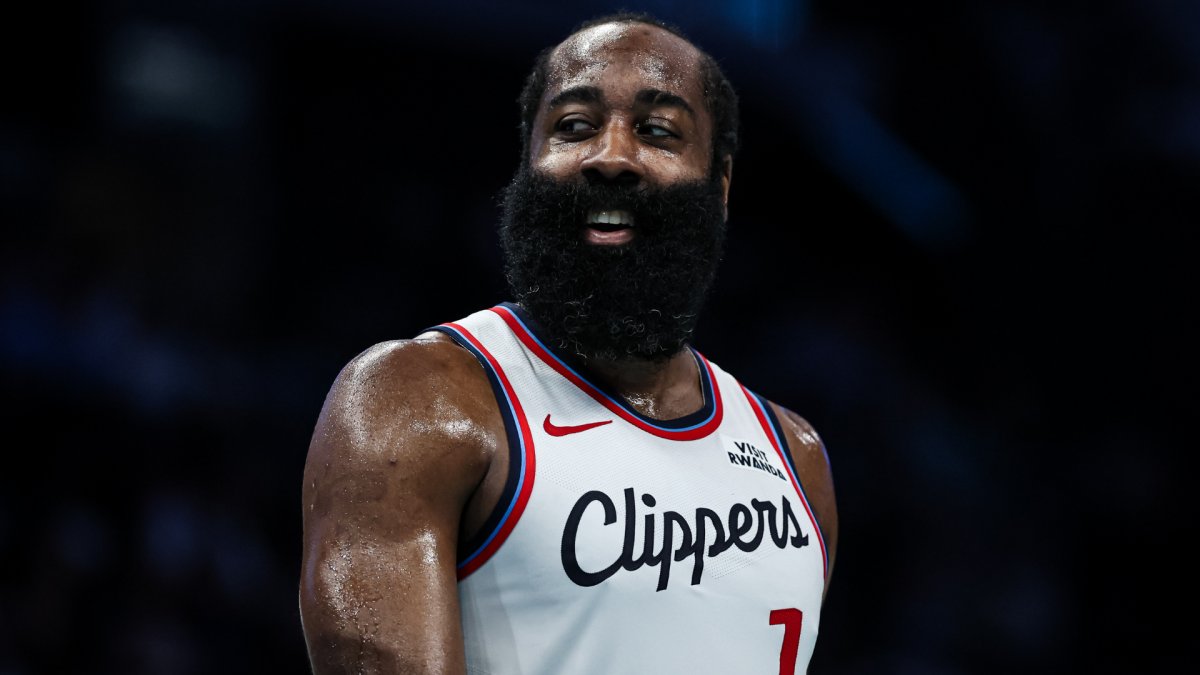
When news broke that James Harden was traded to the Cleveland Cavaliers in exchange for Darius Garland on Tuesday night, the headlines immediately started to write themselves. When the going gets tough, Harden gets going.
As in, somewhere else. This time it’s Cleveland… after it didn’t work out with the Clippers… after he blew his way out of Philadelphia… after he bounced on Brooklyn. Early exits — from teams, from the playoffs — are going to be part of Harden’s legacy, and certainly his post-Houston track record, on paper, warrants such criticism.
This is where I remind you, however, that Houston did happen. Harden did stay with one team for eight years fighting the good fight against one of the great dynasties the NBA has ever seen. In the eye of the superteam storm, Harden went at the Warriors as an effective one-man offense year after year after year.
That was part of the problem, of course, but the point is he never looked for anything that would’ve constituted an easy way out in the 2010s. Rather, he chose the hardest route possible, each season signing right back up for the same bloody fight against the same basically unbeatable opponent in the same behemoth conference believing he could eventually prevail.
And he nearly did. Were it not for Chris Paul’s ripped hamstring in 2018, there’s a good chance Harden has a ring and all of these post-Houston sojourns (if they even would’ve played out the same way in the first place) become footnotes in what would be a vastly different career bio.
Instead, this game of musical teams he has played over the second half his career is starting to overshadow all the amazing stuff he did in the first half. We’ll see how these last few chapters play out, beginning in Cleveland, but if it all were to end right now Harden would have three main bullet points in his bio.
- One of the greatest scorers of all time.
- One of the most egregious foul baiters of all time.
- Serial sell out who never won a ring.
There’s no debating the first one. The second one is a big part of this conversation, because let’s be honest, it’s easy to hate Harden. He’s one of the most annoying superstars the league has ever known. He comes off as the epitome of selfish basketball. He plays meme-level defense. He dupes referees into phantom fouls. Charisma is not a crutch on which Harden can lean. His math game is boring, and the numbers have looked pretty ugly on a lot of postseason occasions. It paints a loser picture if that’s what you want to see, and a loser jumping teams is even worse than a winner doing it.
But that’s perceptions talking. The realities of Harden’s last three exits are, at the very least, a lot more layered than we’re going to make them out to be. Yes, he forced his way out of Philly and burned a bridge with Daryl Morey as he left, but his tenures in L.A. and Brooklyn included major dramas Harden played no part in creating. Kawhi’s money might have actually grown on trees. Kyrie Irving, one of Harden’s Big Three teammates, wasn’t suiting up for the Nets. What was he supposed to do, stay out of loyalty?
Loyalty’s in the dollar, kid. And in the end, that’s the only thing Harden has been chasing since he left Houston. This isn’t about a ring. It’s about a contract extension. One he knew he wasn’t going to get from the Clippers. One he thought he was going to get from the 76ers. One he hopes he’s going to get from the Cavaliers.
You might call that a ridiculous priority for a guy who’s already made $375 million dollars playing basketball. I would probably agree with you on that front. But still, this isn’t as much about an unhappy basketball player as we want it to be. It’s about money. As almost everything in this world is.
If Harden sees a chance to score another contract in the dwindling days of his Hall of Fame career, like almost every athlete in history, he’s going to do it. If the 76ers had given him that, he’d still be there. If the Clippers had signaled a desire to remain in the Harden business beyond 2027, he’d probably still be there.
But in this case, the team wanted this trade more than the player did. And why not? The Clippers just flipped a 36-year-old Harden for a 26-year-old Garland, who, when healthy, is an All-Star point guard that would normally cost multiple draft picks to acquire. This is not a case of a superstar at the height of his leverage forcing a team into something it didn’t want to do.
James Harden-Darius Garland trade grades: Clippers clearly come out ahead of Cavaliers in All-Star swap
Sam Quinn

The bigger question is why the Cavaliers did want to do it, and again, even if there is no recent evidence that the teams who have brought Harden in have wound up better for doing so, there’s a logical answer. And that answer is this: Every situation is different. That’s why we should judge all of these Harden exits on their own, rather than as a pattern. They were all unique. They weren’t all his doing. Even if, when the time finally came, he was a brat on his way out.
In Cleveland’s case, the Cavs are thinking short term. They’re not building around Harden. They might not even give him the extension he wants. But for this season, which carries with it a golden opportunity to win the East and compete for a championship, Harden is averaging 25 and 8 while Garland is hurt and uncertain to return to full health before the postseason.
In the immediacy, the Cavs got better on Tuesday. In the long run, so did the Clippers. And in the end, that’s why this deal got done. Because it worked for both sides. Not because James Harden demanded that it happen.