dailynewsnblog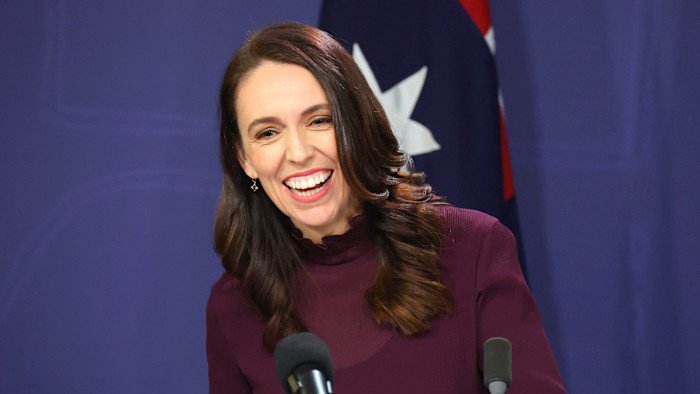
Unlock the Editor’s Digest for free
Roula Khalaf, Editor of the FT, selects her favourite stories in this weekly newsletter.
Former New Zealand prime minister Jacinda Ardern’s announcement this week that her family was relocating to Sydney came as little surprise in her home country — hundreds of thousands have already moved “across the ditch” to Australia.
Ardern, who held a fellowship at Harvard after standing down three years ago, was spotted house hunting in Sydney’s affluent northern suburbs, making her the latest in a wave of her compatriots to choose Australia over New Zealand as the latter’s economy has veered towards recession.
That exodus has renewed fears of a “brain drain” and skills shortage in New Zealand. About 66,300 New Zealand citizens left their country in the year to December, taking the total to almost 200,000 in the past three years — more than half of them moving to Australia, according to immigration data.
Australia’s foreign office estimates the country is now home to about 670,000 New Zealanders, compared with a population at home of 5.3mn. By contrast, about 75,000 Australians live in New Zealand.
In a statement, a spokesperson for Ardern said her family was “basing themselves” in Australia “for the moment” for work, without specifying.
Chris Muir, a New Zealander who emigrated to Australia in 1998 and works in medical sales, was returning from Dunedin recently when he encountered a group of young men at the airport. They were also leaving New Zealand, some without a plan or job.
“They said it couldn’t be any worse,” Muir said. “If New Zealand was a crowded house, it isn’t anymore. That’s the brain drain right there.”
Hundreds of thousands of New Zealanders began moving across the Tasman Sea in the 1970s, taking advantage of loosened work and travel restrictions.
But a gloomy economic picture, rising cost of living and a lack of job opportunities in the wake of the Covid-19 pandemic have accelerated that trend.
Unemployment is 5.4 per cent while underemployment is at 13 per cent, both figures the highest since 2020. Growth has contracted in each of the four quarters to September, while inflation — which hit a peak of 7.3 per cent in 2022 — has remained high.
“I think the only thing cheaper over there now is beer,” Muir said of New Zealand.
Meanwhile, New Zealand’s overall population has risen, thanks to an influx of immigrants from countries including Fiji, India and the Philippines as Wellington opened the doors to low- and unskilled workers amid a post-Covid jobs crisis.
The country has also pitched itself as a “bolt-hole” for wealthy foreign investors who have sought to take advantage of a loosened “golden visa” scheme.
Ronil Singh, regional director of recruitment company Robert Half in New Zealand, said skilled blue-collar workers in New Zealand were attracted by substantially higher wages in Australia.
While the gap for white-collar workers is likely to be narrower, about 5 to 10 per cent, Australia offers better career opportunities, more generous pension contributions and family allowances, he added.
Singh said the loss of experienced senior workers was a real concern as New Zealand tries to “turn the ship around” on the economy. He noted one client, a banker, who was in the process of moving to Adelaide.
“It is definitely a brain drain,” he said.
Sharon Zollner, chief economist for New Zealand at ANZ Bank, said outflows could start to reverse this year as Australia’s central bank raises interest rates to cool its own economy while conditions such as rental costs ease in New Zealand.
But she cautioned that business surveys suggested New Zealand may not be over its own inflationary bump as companies raise wages to retain staff, which could affect the outlook for the Reserve Bank of New Zealand.
“The country’s speed limit might be less than the central bank thinks, which could lead to inflationary pressure and part of that would be the effect of the skills drain to Australia,” she said.
She added that Australia was “unashamedly poaching” skilled workers.
“It used to be a joke that a good recession would clear out the cowboys, who would move to Queensland, but now it’s nurses, police and soldiers,” she said.