dailynewsnblog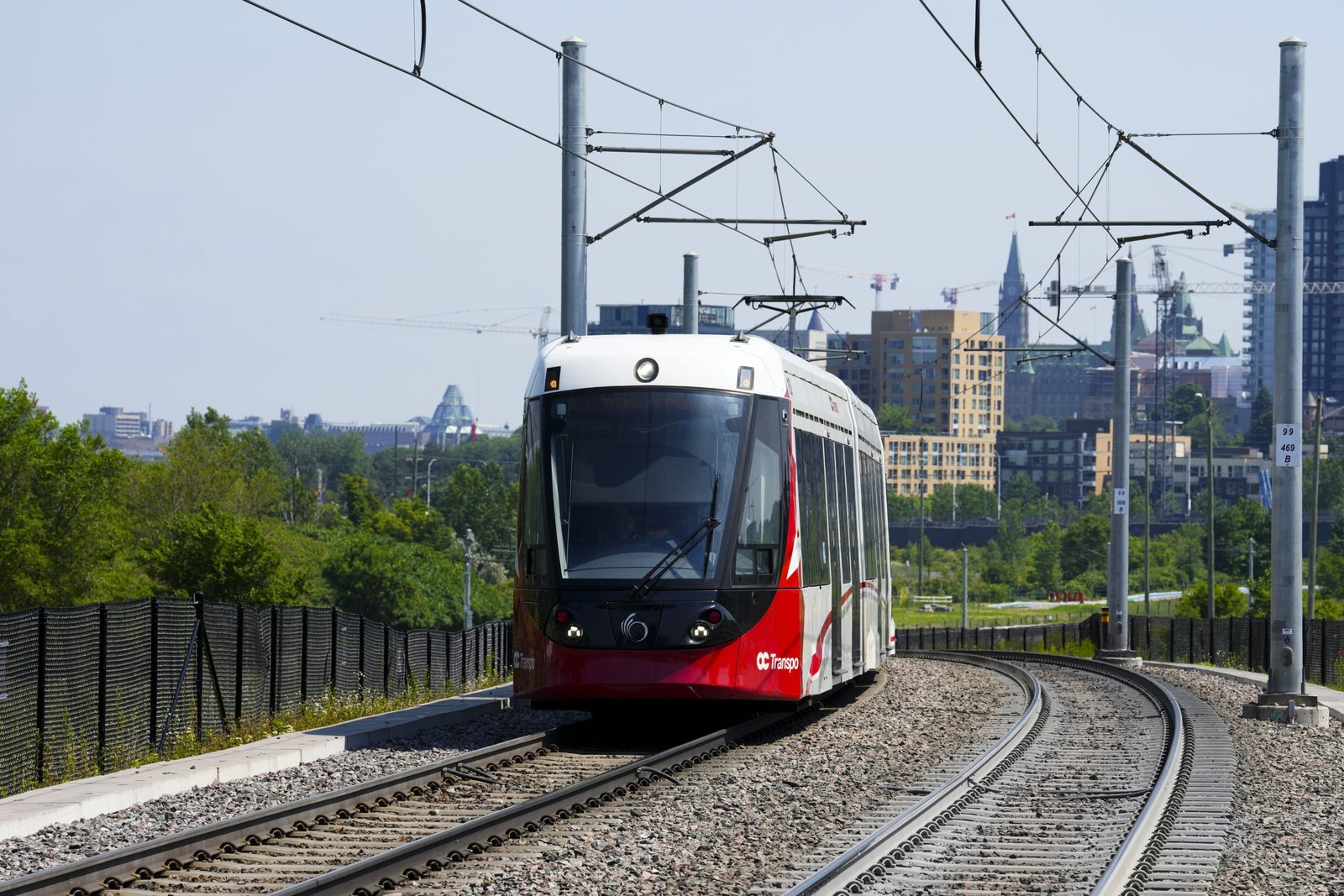
Ottawa is still rebuilding trust in its light rail system four years after a public inquiry revealed governance failures and contracting problems, even as the city pushes ahead with a multi-billion-dollar expansion.
Welcome back to Adjournment Proceedings, our weekly long read series. We publish a new edition every Friday. In this week’s edition, we look at what lessons — if any — have been applied from Ottawa’s light rail public inquiry. Missed a week? Take a look through our archives here.
When Laura Shantz first moved to Ottawa in 2001, she was in awe of the city’s public transit system.
“We had what was considered one of the best transit systems in all of North America,” said Shantz, a board member of the Ottawa Transit Riders, a transit advocacy group.
Shantz, who grew up in a town without a public transit system, said OC Transpo buses were efficient. The buses came frequently, and the stops were spread out across the city that made it just walkable enough.
By the time the city launched the light rail system, Shantz said she was “pleasantly surprised.” The train cars were a little crowded, and no handle bars were installed yet, but she got around just fine.
The novelty of Ottawa’s first light rail system was fleeting. It was soon plagued by incidents of derailment, shutdowns, and delays.
Now, when asked how she would describe the LRT experience, she said it’s been “fraught.”
“When things go well, it can be a really great experience. It can be quick, easy, no worries about being stuck in traffic, but when things go wrong, they often go really wrong,” Shantz said.
2022 Public Inquiry Flashback
In 2022, the province launched a public inquiry into Ottawa’s troubled light rail system after years of derailments, shutdowns and safety concerns.
Led by Justice William Hourigan, the inquiry’s commissioner, the final report issued 103 recommendations, concluding that the system’s failures were caused not by a single technical issue, but by a combination of unproven technology, complex contracts and governance failures.
Hourigan also found senior city officials withheld key information from councillors about the system’s final testing phase, limiting council’s oversight of the project.
Experts say the lessons from Ottawa’s experience extend beyond a single transit system.
Transit funding in Canada
Challenges faced within Ottawa’s light rail system shouldn’t be looked at as a unique case, said Matthias Sweet, associate professor at the School of Urban & Regional Planning at Toronto Metropolitan University.
Sweet said Ontario dramatically expanded its role in transit infrastructure in the mid-2000s through policy reforms, including Metrolinx creation. It brought new levels of funding to major projects, but he said institutions are still adapting to that larger role.
“If you look historically, even just within the British North America Act, the federal government actually doesn’t have an explicit role in things like light rail, transit of any kind, or in urban areas,” he said.
They traditionally controlled ports and border crossings, which has been interpreted as airports and bigger infrastructure investment.
“It’s challenging from a system perspective, because as you can imagine, it takes time to build the capacity for planning,” Sweet said.
When it comes to mega-infrastructures in Canada, these projects are often financed through a public-private partnership model, or P3. It’s a model where governments contract a private consortium to design, build, finance and sometimes maintain major infrastructure projects.
Instead of having the government manage each step separately, the private partner takes on project risks, including construction costs and delays. Contractors are usually paid once the infrastructure is delivered and meets performance standards.
While P3, ideally, can help keep projects on time and on budget by shifting risk to the private sector, the public inquiry report found that the complex structure and risk allocation under the model made it harder for the city to detect and address technical problems before the system launched.

“Public-private partnerships are complex, and the thing is that municipalities don’t have a lot of experience in negotiating them,” said David Amborski, a professional urban planner and professor at TMU’s School of Urban and Regional Planning.
Amborski pointed to Toronto’s Eglinton Crosstown Light-Rail Transit line, another major transit project built under a P3 model, which has faced years of delays and disputes between Metrolinx and the private consortium responsible for the construction. The project has also seen costs rise significantly beyond initial estimates.
Josipa Petrunic, president and CEO of Canadian Urban Transit Research & Innovation Consortium, said it’s an inherently Canadian creation, but the problem really lies in the “adversarial approach” to contracting.
“This is a call of culture we have in Canada,” Petrunic said.
She explains that the problems often stem less from technology or financing models, but more from how governments and contractors manage relationships and decision-making.
“There is a lot of ego and pride that gets embedded in some of these procurements with people who are smart, but they are ultimately public bureaucrats demanding of the private sector.”
She stressed that once public figures start replacing approaches with collaboration and understanding, and meeting halfway with the private sector to see what’s feasible rather than demanding, P3s start to work.
However, both Petrunic and Amborski noted that there are still major transit projects that were successful under the P3 model. They pointed to Waterloo’s Ion light rail.
Waterloo’s Ion light rail began operation in 2019 and spanned 19 km, with a total of 19 stations.
“They managed their deadlines well and they managed their communications with the public really well,” Petrunic said.
Riders and Trust
Four years after the public inquiry, some riders say the system is slowly improving, but OC Transpo remains in a trust-building mode. Petrunic said earning that trust back really heavily leans on “communicating regularly.”
Petrunic said rebuilding trust after years of disruptions depends heavily on communication with riders about service reliability and system changes.

On Thursday, the transit committee reported that O-train ridership increased by 2.4 per cent from the previous year, currently sitting at 70.6 million.
The committee also reported that the O-train reliability, which measures service delivery, regularity and punctuality, is at 95.7 per cent.
In February, the city council voted to support a provincial legislation that would grant transit special constables new powers when it comes to people using drugs on trains and buses and inside stations to enhance riders’ safety and security.
Just last week, transit officials announced that O-train’s east extensions to Orléans reached a construction milestone, and are currently in their testing period.
The Test
The next phase of Ottawa’s rail network may ultimately determine whether those lessons were learned.
As the city prepares to expand the O-Train through its Stage 2 project, which involves three extensions to the existing rail network, including links to the east and west, and the Trillium Line expansion to the south, officials say they have implemented new governance measures and testing requirements have been introduced following the inquiry.
A report to the transit committee from September also showed the scale of the expansion. As of early 2026, the city has spent roughly $4.5 billion on the Stage 2 project. The project’s contingency fund now totals $366.8 million, with nearly $275 million already committed.
Officials also warned that further delays could place additional pressure on the budget.
For Shantz, the question now isn’t just about why the system failed, it’s about how the city moves forward.
“Even if we did buy a lemon, this is our lemon, we have to live with it,” Shantz said.
“We can’t just rip it up and start from scratch. We have to figure out a way to make it work.”