dailynewsnblog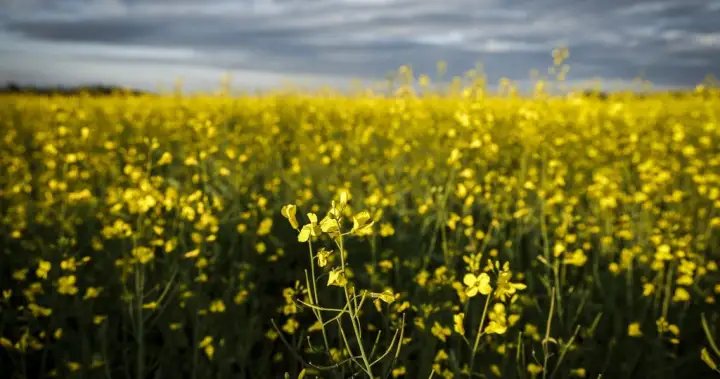
Saskatchewan producers are welcoming Canada’s new trade deal with China, saying it’s likely to provide some relief for the province’s agriculture industry.

Farmers in Saskatchewan woke to the news that the federal government reached a deal with Bejing early Friday morning to slash tariffs on a number of Chinese electric vehicles in exchange for China dropping duties on agriculture products.
China will lower tariffs on Canadian canola seed to a combined rate of approximately 15 per cent from 84 per cent by March 1.
Canada also expects canola meal, lobsters, crabs and peas to no longer be subject to Chinese “anti-discrimination” tariffs from March to at least the end of the year.
Canada imposed a 100 per cent tariff on Chinese electric vehicles and a 25 per cent import tax on steel and aluminum over the last two years.
Last year, China responded by hitting Canada with a 100 per cent tariff on various agricultural products, including canola oil and peas, plus a 25 per cent levy on pork and seafood products. The country has also imposed a 76 per cent tariff on Canadian canola seed, though the prime minister’s office said that figure was closer to 84 per cent when combined with other duties in place.

Get daily National news
Get the day’s top news, political, economic, and current affairs headlines, delivered to your inbox once a day.
Bill Prybylski, the president of the Agricultural Producers Association of Saskatchewan, said the deal is a “good start” for growers.
“From a producer’s perspective, this is just positive news,” said Prybylski, adding the deal comes at an ideal time for farmers looking to get an idea of how much to plant this spring.
“It just gives producers some comfort that if they put the canola seeds in the ground and get some decent yields, that there will be an opportunity to realize a profit from our canola crops,” he said.
Chris Davison, president and CEO of the Canola Council of Canada, shares similar sentiments to Prybylski that the deal boosts confidence among local canola growers.
“It’s really about providing that predictability and confidence going forward that there’s going to be some more outlets, some more demand signals for the crop that farmers are producing,” said Davison.
But while the deal addresses tariffs on canola meal and seeds, the deal made no mention of canola oil, which is subject to a 100 per cent tariff.
According to Prybylski, the remaining tariffs on canola oil can affect the price of the other canola products.
“If the crushers aren’t able to generate a profit from the oil, they’re not willing to pay maybe as much for the seed when they buy it from the producers. So it all it all does eventually affect the producers,” said Prybylski.


Canadian pork was also left out of the deal, which is facing a 25 per cent duty.
Saskatchewan is the fourth largest producer of pork in Canada, according to Sask Pork.
“You can’t hit a home run in the first meeting, but we’re building on this and hopefully we’ll see a lot of positive and good traction in the next few months,” said Steve Seto, Sask Pork communications and marketing director.
Premier Scott Moe was in the room where the deal happened and tells Global News that the talks were positive and collaborative.
“Not only does this restore trade that was existing but it definitely provides a very foundation for us (to) build additional trade opportunities with not only a country like China, but many Asian countries in the area,” Moe said.
While producers are soaking in the optimism of the deal, they stress that they will be keeping a close watch on its longevity and the work to be done to get the rest of the agricultural tariffs either lessened or removed.
“There’s clearly more work to do to make sure that these measures that are put in place are complete and are on an ongoing or a permanent basis,” said Davison.
“That’s what we’re gonna be working to do moving forward.”
—with files from the Canadian Press
© 2026 Global News, a division of Corus Entertainment Inc.