dailynewsnblog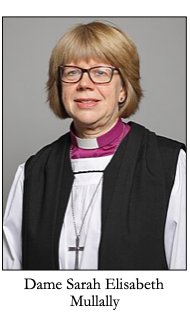

If I were a Christian, I would be an Anglican. I was, after all, baptized and confirmed in the Anglican faith. However, having never believed in a god, which is something of a prerequisite I believe, I am neither Anglican nor Christian.
Nonetheless, because of my background I retain some small interest in the affairs of the Church of England. I was, therefore, pleased to see that it had, for the first time in its history, enthroned a woman as the Archbishop of Canterbury. The holder of this exalted position is the most senior cleric, head of the church and spiritual leader of some 85 million souls in the Anglican Communion.
Archbishop Sarah Elisabeth Mullally was formally installed this week in Canterbury Cathedral with great pomp and ceremony. The cathedral was founded in A.D. 597 by Augustine, a Benedictine monk come from Rome to convert the English.
Since Augustine, the church has been led by 104 archbishops, all men. After 1,429 years, finally a woman.
And what a woman. Archbishop Mullally initially pursued a career as a specialized cancer nurse, eventually being promoted to director of nursing at the Chelsea and Westminster Hospital in London. At the age of 37, she became the youngest person ever appointed to the post of chief nursing officer for England. Always feeling a calling to the church, she left government service to be ordained as a priest. She has now risen to the pinnacle of her second career.
It will be a challenge. Like their Catholic colleagues, the Anglicans have had their sex scandals. Her predecessor was forced to resign after an independent review found he failed to act rigorously enough on reports about a serial abuser of children and young men. He explained his failure by claiming the scale of the problem was “absolutely overwhelming.”
Archbishop Mullally acknowledged “the hurt that exists much closer to home,” saying, “We must not overlook or minimize the pain experienced by those who have been harmed through the actions, inactions and failures of those in our own Christian churches and communities.”
She will also face shrinking congregations and the usual misogyny. Issues from same-sex marriage to the ordination of women continue to divide the church. Much of the Anglican Communion is now in developing countries where it often tends to be more conservative. An alliance from abroad expressed “sorrow” at her elevation, stating that “the Bible requires a male-only episcopacy.”
Old prejudices aside, the church deserves credit for finally awarding full recognition to the female half of its communion. Perhaps in another 1,400 years the Catholic Church will follow suit. Women are used to waiting.