dailynewsnblog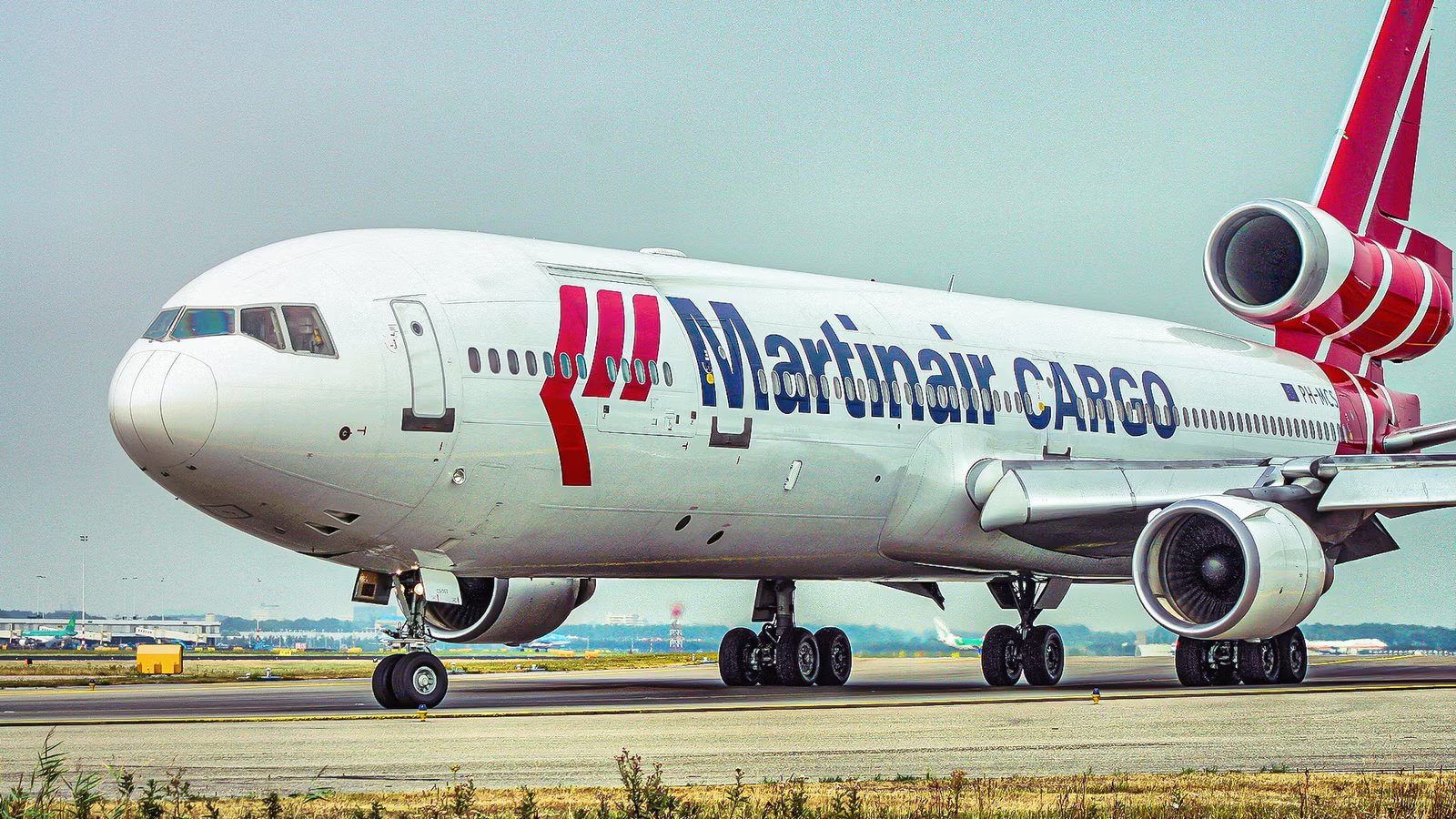
The McDonnell Douglas MD-11 is an iconic and distinctive aircraft because, in a world of quad and twinjet aircraft, this is a trijet. However, the third jet, mounted just below the tail fin, is fairly conventional. It is true that it has a fan, and the engine has a similarly straight airflow to engines mounted on an aircraft’s wing.
Learn more about the MD-11’s tail engine below, and the similarities it unsurprisingly shares with the DC-10. This article covers the s-duct, a feature that is common for older trijets due to its enhanced aerodynamic efficiency, but is notably absent from both the MD-11 and DC-10. The piece finishes on the small number of commercial aircraft that don’t have a fan, although none of these jets are still in production.
Does The MD-11’s Tail Engine Have A Fan?

As with the MD-11’s wing-mounted engines, its tail engine has a fan. This turbofan is fairly conventional as it draws air from an intake just ahead of the fin and has only a slightly curved channel to the fin. This duct is also fairly short, a design decision that improves efficiency by reducing pressure loss and airflow distortion. It also makes maintenance easier. A straight and short-tailed jet turbofan is not possible on all trijets. The MD-11 has an incredibly tall tail and a unique internal structure that allows the intake, fan, and compressor to be comparatively aligned. The jet was the successor to the DC-10, another large McDonnell Douglas trijet with a rear jet featuring a fairly straight fan.
S-Duct: The Feature Absent From The MD-11

If you are flying on a commercial jet, it will be powered by an engine with a turbofan. The types of jet that don’t use fans, such as turbojets, ramjets, scramjets, and pulsejets, have little use in commercial aviation. However, that does not mean all commercial jet engines are based on the same design concepts. A notable exception to standard jet engine design is in the tail jet of older trijets, such as the Lockheed L-1011 TriStar and Boeing 727. Likewise, the Boeing 747-300 trijet was designed to have an s-duct but was never built. These planes’ rear jets use an ‘s-duct’ between the air intake and compressor.
There are some advantages to an s-duct. Firstly, it allows much of the engine to be housed within the tail, reducing aerodynamic drag by 2 to 4%. It also lowers the engine’s height, which can make maintenance easier.
S-duct engines have now exited the commercial aviation industry, and no s-duct jets are currently in production. However, the design still has some use in the military and private aviation sectors. S-ducts are fantastic for stealth aircraft because they block the front section of the jet engine, reducing the radar signal emitted by the plane. High-speed fighter jets, like the Lockheed-Martin F-22 Raptor, also use s-duct engines, as aerodynamic improvements are essential for supersonic flight. There are also two trijet private jets that have s-duct engines, the Dassault Falcon 7X and 900.

The Aircraft Replacing The McDonnell Douglas MD-11
The MD-11s are approaching their operational life, and newer, more efficient types are taking over their role.
McDonnell Douglas MD-11 Overview

The MD-11 program launched in December 1986, with McDonnell Douglas setting out to build the largest trijet ever. The first prototype flew in January 1990 and received FAA certification in November of that year. The first delivery was made a month later, with Finnair serving as the launch customer. McDonnell Douglas hoped that this aircraft would compete with popular widebody twinjets: Boeing 767, Boeing 777, and Airbus A330. However, it failed to meet its range and fuel burn targets, harming the program’s popularity.
The MD-11 program kicked off with 52 firm orders and 40 options. It offered three versions: passenger, combi, and freighter. These orders were across ten airlines, including Dragonair, Federal Express, Finnair, and Korean Air. It also had orders from two leasing companies: Guinness Peat Aviation and Mitsui. Amid production and performance issues, Dragonair, Scandinavian, and UTA canceled their orders by 1988.
The table below shows specifications for the MD-11, according to data collected by Global Air.
|
Passengers |
410 |
|
Wingspan |
169 ft 3 in |
|
Length |
200 ft 8 in |
|
Maximum range |
7,144 nautical miles |
|
Powerplant |
3 x General Electric CF6-80C2D1F |
|
Service ceiling |
32,600 ft |
The MD-11 found its greatest challenge when Boeing acquired McDonnell Douglas in 1997. The new ownership kept the program going for a few more years, but canned it in 2000 to avoid internal competition with the Boeing 777 and 767. This was only enough time to fill the outstanding orders. 14 years later, the MD-11 retired permanently from passenger service, with KLM as its final operator. Over its 12-year production run, just 200 MD-11s were built. A quarter were freighters, an industry in which the jet continues to operate.
DC-10 Also Doesn’t Have An S-Duct For Its Tail Engine

The McDonnell Douglas DC-10 also has a rear engine with a fan and has no s-duct. This aircraft was the MD-11’s predecessor. The aircraft first flew in 1969 and was manufactured for 20 years. The plane is now out of production and has been grounded since a fatal crash in November 2025 involving the MD-11 due to safety concerns. Before this period of grounding, very few DC-10s remained in the sky, primarily flying aerial firefighting and cargo missions.
The two jets are similar in that they are trijets built by the same manufacturer. However, there are also differences that set them apart from what they have in common. The MD-11 made significant advances on the DC-10. The fuselage stretched by 18 feet 7 inches (5.66 m). The MD-11 also came with significant aerodynamic improvements and a smaller horizontal tail, yielding a 2.5%. McDonnell Douglas compensated for the reduction in tail authority by implementing a longitudinal stability augmentation system (LSAS) and storing some fuel in the tail as ballast. Hydraulic fuses were also installed to prevent hydraulic line failures, making the aircraft far safer.
The table below details specifications for the MD-11, using data from Skybrary, DHL, and UPS
|
Length |
181 feet, 7 inches (55.35 meters) |
|---|---|
|
Wingspan |
165 feet, 4 inches (50.39 meters) |
|
Height |
58 feet, 1 inch (17.70 meters) |
|
Typical range |
5,900 mi (5,130 nmi / 9,493 km) |
|
Maximum takeoff weight (MTOW) |
572,000 lb (259,000 kg) |
|
Production period |
1970 – 1989 |
|
Number built |
386 (excluding KC-10s) |
The MD-11 was also a changed environment for pilots to work in. The DC-10 was operated by three crew members, using analog instrumentation. Meanwhile, the MD-11 had digital technology and just two crew members. MD-11 pilots were also assisted by computer systems, altering the flying experience.

Where In The World Is The DC-10 Still Flying?
Only eight DC-10s remain operational around the world – mostly in the United States as firebombers and tankers.
Commercial Jets Without A Fan

A jet engine doesn’t have to have a front fan, as is always seen with modern commercial jets. All the thrust in such examples will come from the core exhaust stream. The earliest jet airliners didn’t have a fan, such as the Boeing 707-120 and the de Havilland Comet. These aircraft used turbojets, in which all air passes through the core, while a turbofan accelerates most of the air around the core to generate thrust.
Turbofans have since fallen out of favor because they are fuel-inefficient at subsonic speeds, as flown by the first airliners. They also generate a tremendous amount of noise. The de Havilland Comet addressed the noise issue with baffles on the engine and extensive cabin soundproofing. Still, there is no chance that the higher emissions and noise pollution will fly in the modern regulatory landscape.
Turbojets were used in these aircraft despite their drawbacks due to technological immaturity. Turbofan technology was still in its infancy when these aircraft were developed.
Concorde is another example of an airliner that used turbojets rather than turbofans, so it didn’t have a fan on its Rolls-Royce/Snecma Olympus 593 engines. This was because of the enormous drag produced by a turbofan at supersonic speeds. Concorde’s turbojets also had afterburners, which were needed for takeoff and acceleration during the transonic stage. Concorde’s retirement ended the use of turbojets for supersonic commercial aviation.
The Age Of The Trijet Is Ending

Questions about s-ducts and rear engines will soon be no more. The retirement of the MD-11 by  UPS Airlines following the crash in November 2025 is another step towards the end of the trijet. The crash in Louisville, Kentucky, of a UPS-operated MD-11 killed 15 people, including three crew members. The jet was on approach at the time.
The company explained in its fourth-quarter results: “UPS accelerated its fleet modernization plans, completing the retirement of its MD-11 fleet during the fourth quarter of 2025.”
Two other cargo carriers continue to fly the grounded trijet: FedEx Express and Western Global. FedEx has 58, while Western Global has 14. It remains to be seen if and when these carriers will return to flying the MD-11, which hinges on the completion of FAA inspections and crash investigations. However, FedEx’s current plans are for the aircraft to return to service by May 31, 2026.