dailynewsnblog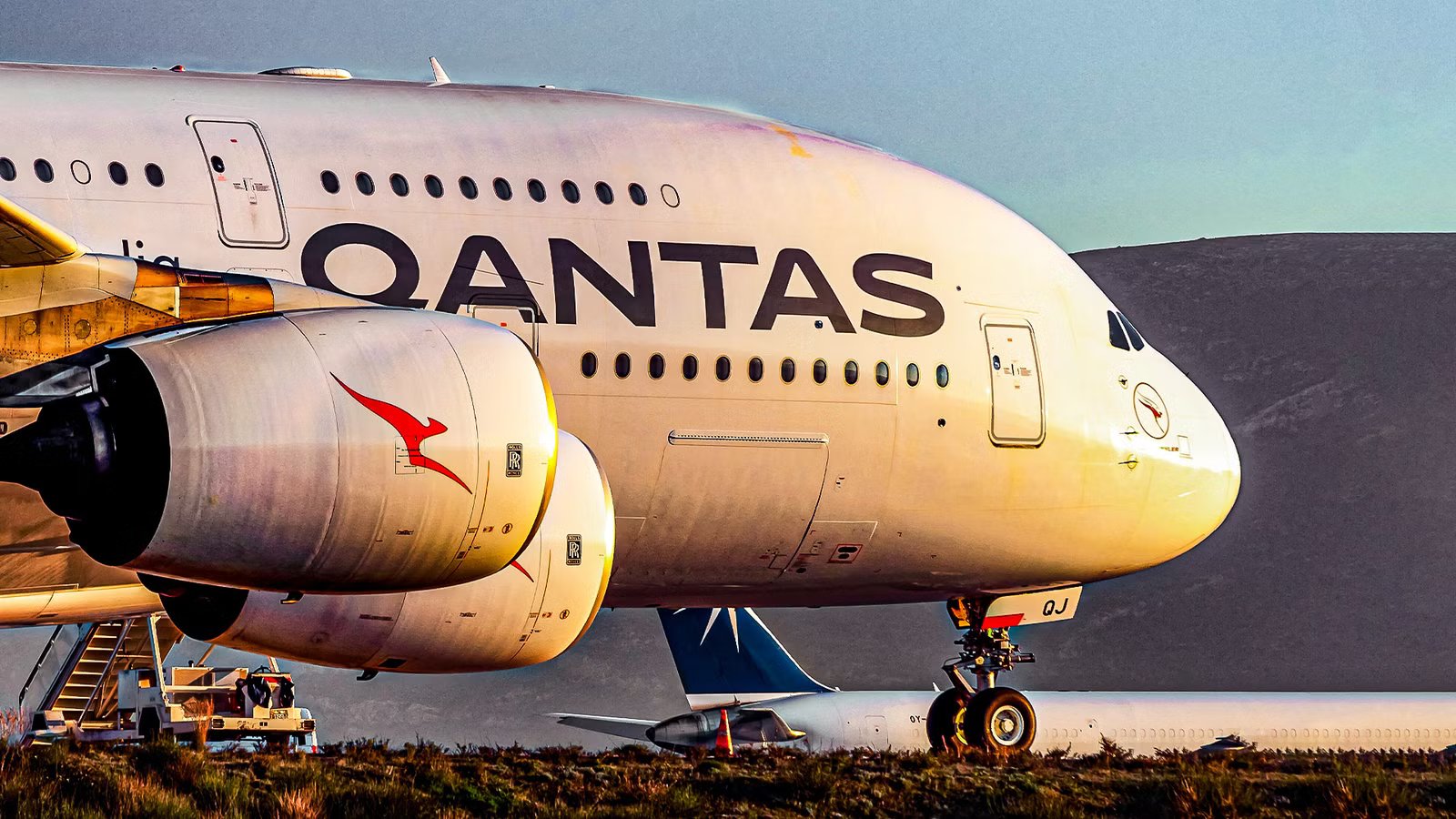
It is a common myth in the aviation industry that the Airbus A380 uses the same engines as the A340-600, usually because both are four-engined Airbus widebodies and both have Rolls-Royce Trent badges in some configurations. In reality, the A340-600’s long-haul performance was built around the Rolls-Royce Trent 500, which the manufacturer developed specifically for the A340-500 and the A340-600, with different thrust ratings available for each aircraft variant. The Airbus A380, by contrast, launched with two different powerplant choices, ranging from the Rolls-Royce Trent 900 to the Engine Alliance GP7200, a GE-Pratt & Whitney joint program.
So while the names may not sound related, the hardware is not interchangeable. The Airbus A340-600 does not fly with Trent 900 or GP7200 engines, and the Airbus A380 cannot be operated by Trent 500 engines. What is true is that aerospace manufacturers often evolve families of engines, sharing design DNA, manufacturing know-how, and even some core architecture without producing a drop-in replacement. We aim to clarify that distinction, and it explains why Airbus offered two engine suppliers on the A380, and links the engine question to the efficiency debate about the two engines that exists within the industry. Analysts question how much a larger airline’s per-seat advantage depends on different variables like its load factor, mission length, weight, and operational constraints.
A Brief Overview Of The Airbus A340-600

The Airbus A340-600 is the stretched, long-range flagship of the manufacturer’s four-engine A340 family, developed in the late 1990s to offer a Boeing 747-class passenger capacity on routes where operators remained interested in strong redundancy and dispatch flexibility. The jet was built with long-haul capabilities, and it was meant to be a long-haul flagship for decades to come. The jet, however, never quite lived up to these expectations. The plane briefly held the title of being the world’s longest airliner, and it features an advanced, strengthened wing, additional centerline landing gear, and increased fuel volume to support ultra-long missions.
This type entered flight testing in April 2001, and entered commercial service with Virgin Atlantic in August 2002, typically flying high-density trunk routes like London Heathrow Airport (LHR) to New York’s John F. Kennedy International Airport (JFK). The jet is powered by four Rolls-Royce Trent 500-series engines, which are optimized for the Airbus A340-500 and the A340-600 itself. Standard layouts can range from around 380 to 384 seats, although airlines often choose to configure them in unique ways. The aircraft is so large that it can often accommodate large, premium-heavy cabins.
The Airbus A340-600 earned itself a reputation for smooth, quiet cruising and strong payload range, with rising fuel prices and ever-more-capable twin-engine widebodies such as the Airbus A330, A350, Boeing 777, and 787. These aircraft simply offered better operating economics. Airbus ended the broader Airbus A340 program after demand dried up, but a handful of A340-600s remain in service today in very limited long-haul roles. It retained the glass cockpit of the A330 and A340 family, as well as fly-by-wire commonality. This makes cross-crew qualification easier for airlines already operating Airbus widebodies at scale.
A Brief Overview Of The Airbus A380

There are a handful of passenger airlines today that decided to invest heavily in the Airbus A380, the largest passenger aircraft ever produced, and it was designed to move more people through congested hub airports on all kinds of long-haul routes. The jet’s key selling point was not only its capacity, but its ability to provide such a quiet and smooth cabin experience. The design and commercial strategy behind this jet were conceived during the height of hub-and-spoke growth, and the program aimed to challenge the Boeing 747 by offering airlines a step-change in capacity.
The dynamic aircraft is capable of fitting more than 850 passengers in an all-economy layout, with typical three-class layouts in the 500-550 range depending on what operator is flying the jet. The Airbus A38- first entered commercial service in October 2007 when Singapore Airlines introduced it on its route from Singapore Changi International Airport (SIN) to Sydney Airport (SYD). Unusually, Airbus offered two engine families from day one, with the Rolls-Royce Trent 900 and the Engine Alliance GP7200, offering airlines supplier choice and performance trade-offs, according to manufacturer documents.
Despite strong overall appeal with passengers, the aircraft struggled commercially as the market shifted toward more flexible, fuel-efficient twin-engine widebody jets. Airbus delivered its final Airbus A380 in December 2021 to Emirates, the dominant operator of the aircraft type. The advanced model never really added routes to the map, but it allowed carriers to serve some of the most important nodes in their networks in an incredibly fuel-efficient manner. This, however, was only true if and only if they managed to fill the aircraft.

Is The Airbus A350 Bigger Than The A340?
Airbus A350 vs A340: Which one is truly bigger? Discover how range, capacity & efficiency redefine “size” beyond fuselage length.
What Made The Rolls-Royce Trent 500 So Capable?

The Airbus A340-600 was exclusively powered by Rolls-Royce’s Trent 500 family, making it a rare modern widebody built around a single engine supplier. In mainstream service, the A340-600 used the Trent 556 (rated as either the Trent 556-61 or the 556A2-61), and it delivered an impressive amount of takeoff thrust. The manufacturer’s higher-gross-weight A340-600 variants could be certified with higher-thrust Trent 500 derivatives to improve hot-and-high margins and payload range.
The Trent 500 keeps the original variant’s three-spool architecture, including separate low, intermediate, and high-pressure compressors and turbines, all managed by full-authority digital engine control for precise thrust setting and damage protection. Rolls-Royce paired a large high-bypass fan with a core scaled from the Trent 800’s lineage, targeting strong cruise efficiency and compliance with stringent noise and emissions limits.
On the airframe itself, four engines were able to deliver long-range redundancy and impressive dispatch flexibility that appealed to airlines before the ultra-reliable, high-thrust twinjets that dominated the market. The tradeoff was more engine-related maintenance and typically higher trip fuel burn versus newer twin-engine competitors on many missions. Rolls-Royce originally positioned the Trent 500 as a purpose-built platform for the A340-500/600, with additional thrust classes carefully tailored to these two main variants and giving operators a standardized performance ladder across the board.
The Airbus A380’s Engines Were Incredibly Capable

The Airbus A380’s engines were primarily built for a mission that few airliners ever faced. These engines were designed to lift the heaviest aircraft ever designed off the runway with the reliability that airlines demanded, all while meeting increasingly strict noise requirements. Airbus certified the A380 with two massive powerplants, with both the Rolls-Royce Trent 900 and the Engine Alliance GP7200 each serving as key programs.
Both sit in the same thrust class, meaning that these four engines can collectively deliver a massive amount of power at takeoff, offering enough margin for hot days, heavy payloads, and runway constraints at major hubs. The GP7200 blends GE90 and PW4000 heritage with a massive fan and impressive bypass ratio, all with the purpose of targeting low noise and strong cruise efficiency. The Trent 900, which used a similarly large fan and Rolls-Royce’s three-shaft architecture, has been continuously upgraded in order to reduce fuel burn and improve overall durability.
Once in service, that capability translated into confident climb performance, surprisingly quiet departures for its size, and the ability to move more than 500 passengers across oceans with consistent dispatch reliability. This is also the case because Airbus offered two suppliers for the engine, and the airline could choose performance and maintenance economics, all while both engines met stringent noise and emissions rules.

Here’s How Much Longer The Airbus A380’s Wingspan Is Compared To The A350
Discover the surprising difference in wingspan between two aviation giants.
The Key Differences Between These Two Engines

Airbus A340-600 and A380 engines are fundamentally not of the same class, even though both can be operated by engines from the Rolls-Royce Trent family. The A340-600 was powered only by the Trent 500 family, with a smaller fan and airflow sized for a 300-380-seat long-haul jet. The A380 launched with two much larger options, as both the Rolls-Royce Trent 900 and the Engine Alliance GP7200 can fly the plane.
These engines’ biggest difference is fan size, with the A380 engine being around 116 inches (2.95 m) in diameter, reflecting the fact that it was designed to lift a much larger and heavier aircraft. That higher mass flow and bypass ratio drive different systems and bleed-air and electrical systems. Another key difference between the two kinds of aircraft is their performance margins, as they are fundamentally designed to support somewhat different functions.
Even within Rolls-Royce, the Trent 500 and the Trent 900 share three-spool designs, but their cores, compressors, turbines, and durability packages are both different and non-interchangeable. Both are four-engine jets, but the A380’s powerplants were tuned to stricter community-noise targets and lower overall per-seat fuel burn.
What Is Our Bottom Line?

At the end of the day, the Airbus A380 and A340 are fundamentally different jets. Although the A340-600 is one of the longest and highest-capacity aircraft ever produced, it was not as large as the Airbus A380, and it served a slightly different purpose when it was deployed within global long-haul fleets.
The aircraft were both long-haul flagships, but one had a full-length double-deck, a factor that required serious consideration in the engineering process. The jets both have four engines, and they each immediately stand out in a world that is mostly dominated by flagship aircraft that are only powered by two turbofans.
Therefore, these two aircraft have different engines, even though the unfamiliar observer will notice some similarities. Quad-engine aircraft are becoming more and more rare, and there is a decently strong case to make that these could be two of the last four-engine aircraft to ever fly passengers in our skies.