dailynewsnblog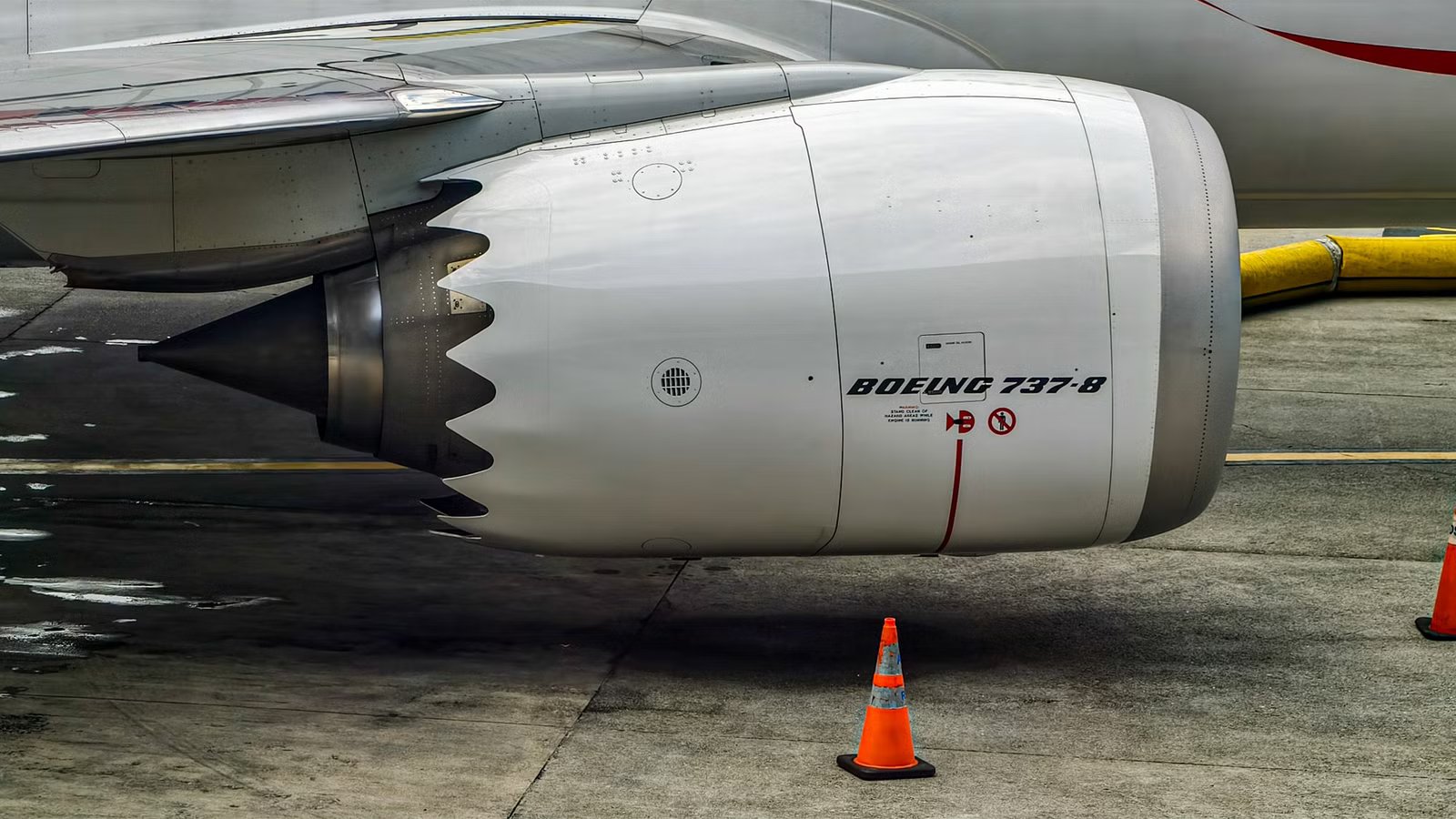
The design of aircraft engines has evolved dramatically and continues to advance. The development of the jet engine has driven global connectivity, breaking down geographical barriers and supporting economic growth. However, aircraft noise has remained a persistent challenge, particularly as urban development has expanded around Airports.
This has pushed manufacturers to develop quieter technologies. One of the most notable solutions is the use of engine chevrons, introduced in the 1990s, which reduce noise but introduce performance trade-offs. This article explores how chevrons work and their impact on aircraft performance.
A Brief Look Back At History

Firstly, to examine how chevrons affect performance, it is important to understand how they were developed and how they work. The origins of modern aircraft noise-reduction strategies can be traced back to the early 1950s, when commercial aviation rapidly expanded after the Second World War. The foundational work on what would later become chevrons was carried out by Geoffrey Lilley and Robert Westley at the College of Aeronautics (now Cranfield University). Their research was among the first to systematically investigate aircraft noise reduction. They found that using small serrated “teeth,” with half angled inward at 30° and the rest aligned with the axis, reduced noise by about five dB below choking and up to 12 dB above choking. Choking refers to the aerodynamic condition where airflow in a nozzle reaches sonic velocity (Mach 1) at the exit.
A decade later, noise reduction gained further attention in the United States through the Supersonic Transport Program. Launched in the 1960s and led by NASA and the Federal Aviation Administration (FAA), the program aimed to develop a commercial supersonic airliner capable of competing with the Anglo-French Concorde. Boeing was subcontracted to provide the airframe, and General Electric (GE) was responsible for the engines. However, growing environmental awareness and public concern over noise and pollution contributed to the program’s cancellation in 1971. The Supersonic Transport Noise Reduction Technology program was subsequently introduced, marking a broader industry shift toward quieter aviation.
This focus continued into the late 20th century. In 1988,  Boeingwas again contracted by NASA under the High Speed Civil Transport (HSCT) program, which focused on developing noise-reducing technologies for future high-speed aircraft. In the 1990s, NASA also began studying tabs—small trailing-edge devices that manipulate airflow to improve mixing and reduce flow separation. While tabs were effective at enhancing mixing, they caused significant thrust loss.
By the early 2000s, these efforts culminated in the Boeing Quiet Technology Demonstrator (QTD) program. Launched in 2001 in collaboration with NASA, GE Aerospace, and other industry partners, the program tested advanced concepts such as improved nacelle designs, acoustic liners, and chevron exhaust nozzles. Flight tests on the Boeing 777 showed measurable success, achieving noise reductions of more than two dB.
Finally, in 2006, General Electric introduced its GEnx engines, while Rolls-Royce introduced its Trent engine series, both featuring chevron nozzles. These exhaust nozzle designs became a defining feature of modern, quieter aircraft. Chevrons resembled earlier tabs but incorporated lower penetration angles and a greater number of serrations around the nozzle circumference.
Although many organizations have contributed to noise reduction over the past half-century, the development of chevron technology is strongly associated with NASA. Through sustained funding and collaboration, they played a key role in bringing together industry experts and advancing noise reduction over time.
What Exactly Are Engine Chevrons?

Michael Derrer Fuchs | Shutterstock, Simple Flying
The term chevron was popularized by Boeing, drawing inspiration from the V-shaped insignia used in the American Navy to denote rank. Chevrons are zigzag or serrated edges built into the rear of an aircraft engine’s nacelle, which is the outer casing that houses the engine.
Boeing has been the most prominent adopter of Chevron technology, incorporating it across several of its aircraft families. They appear on the 787 Dreamliner, the 747-8, and the 737 MAX; each of these uses a different engine supplier. All 787 Dreamliners are fitted with chevrons regardless of whether they are powered by General Electric GEnx or Rolls-Royce Trent 1000 engines. The 747-8, the final generation of the iconic 747, uses a variant of the GEnx on both its passenger and freighter variants. The 737 MAX, meanwhile, is exclusively powered by the CFM LEAP-1B, and all variants in the family feature chevron nozzles.
Airbus has taken a more selective approach. Chevrons are fitted as standard on CFM-powered A321s and offered as an option on the A320, though Airbus has limited their application to the inner core nozzle only, rather than extending them to the fan nozzle as Boeing does.

Why Don’t Airbus Aircraft Have Serrated Engine Covers?
Several Boeing models make use of serrated engine nacelles, or chevrons, to reduce noise, but Airbus doesn’t – here’s why not.
How Do Chevrons Work?

Commercial aircraft today mainly use high-bypass turbofan engines, which are an advanced form of the basic jet engine. A traditional jet engine (turbojet) works by drawing in air, compressing it, and mixing it with fuel in the combustion chamber. The fuel burns continuously, producing high-temperature, high-pressure hot air that expands and exits the engine at high speed, generating thrust. This fast-moving hot air mixes with the surrounding cooler air, creating strong vortices, which are a major source of noise.
In contrast, high bypass turbofan engines improve this process by introducing a large fan at the front. This fan directs a significant portion of the incoming air around the engine core as cold bypass air, while the rest passes through the core and becomes hot exhaust. Thrust is therefore produced by a combination of hot core air and cooler bypass air, with most of the thrust coming from the cold air. Because the exhaust velocity is lower and the mixing between hot and cold air is smoother, the resulting vortices are weaker, which significantly reduces noise and improves efficiency.
Chevrons further improve this mixing process. As the hot core air exits the engine and interacts with the cooler bypass air, the serrated edges of the chevrons help control how the two streams combine. This reduces large-scale turbulence, which is a primary source of noise.
Each chevron generates streamwise vortices that enhance mixing between the hot and cold air streams in a more controlled manner. At the same time, they redistribute the natural circular (azimuthal) vortices in the jet into smaller, streamwise structures. This has a stabilizing effect on the flow and reduces the intensity of turbulence linked to noise generation.
As a result, chevrons typically reduce noise at lower frequencies, which are associated with large turbulent structures further downstream. In some cases, they may slightly increase the level of higher-frequency noise near the exhaust due to smaller vortices. However, the overall effect is a noticeable reduction in perceived aircraft noise.
How Much Noise Do Chevrons Reduce?

Wikimedia Commons | Simple Flying
Boeing states that chevrons are capable of reducing noise by up to 15 dB overall. A study by the UK’s Civil Aviation Authority found the 787 Dreamliner to be at least five dB quieter than the Boeing 767 and Airbus A330-200 during its first 17 months of service at London Heathrow. A pilot and aviation commentator, Petter Hörnfeldt, mentions in this very informative video that chevrons can lower takeoff noise by up to six decibels, which is sufficient to meet strict airport noise limits.
Geometry of Chevrons
The effectiveness of a chevron nozzle depends heavily on its geometry, with the number of chevrons, tip angle, and penetration angle being the most critical variables. These factors are interdependent, meaning that adjusting one typically requires recalibrating the others to preserve overall performance.
The number of chevrons around the nozzle circumference significantly influences acoustic output. Research has shown that an eight-chevron configuration outperforms a sixteen-chevron design in noise suppression, while studies using systematic optimization methods have identified 11 chevrons as the ideal count for certain convergent nozzle designs. For supersonic applications, increasing the count from six to twelve reduced noise by between five and eight dB, with a ten-chevron arrangement identified as a top-performing configuration.
The tip angle defines the sharpness of each serration. Noise suppression generally increases with tip angle up to a certain point before diminishing. One parametric study found 88.8° to be optimal, while another identified a 30° inclination as producing the lowest acoustic power output.
The penetration angle, which describes how deeply the chevron tips are bent into the exhaust flow, presents the most significant design trade-off. Greater penetration strengthens the streamwise vortices and enhances mixing, but it simultaneously increases high-frequency noise near the nozzle exit and causes greater thrust loss. For commercial applications, a penetration angle of around 5° is commonly used as a practical compromise.
|
Parameter |
Increase results in… |
Negative Impact |
|
Count (N) |
Better low-frequency reduction |
Higher high-frequency penalty |
|
Tip Angle (β) |
Optimized mixing and noise suppression |
Reduced effectiveness if the angle is too wide |
|
Penetration (α) |
Shortened jet plume and lower peak noise |
Significant thrust loss and drag |
Types of Chevrons
Beyond geometry, chevrons can be categorized by the mechanism through which they operate, each offering different balances between noise reduction and aerodynamic performance.
Static mechanical chevrons are the most common type, consisting of fixed serrations cut into the nozzle trailing edge. They are effective at reducing low-frequency noise during takeoff but introduce a permanent thrust penalty, as they remain immersed in the flow throughout the entire flight.
Variable geometry chevrons (VGC) address this limitation by using shape memory alloys (SMA) embedded within the chevron structure. During takeoff, temperature changes trigger the alloy to morph the chevron into a higher-penetration position, maximizing noise suppression. At cruise altitude, cooler conditions allow the chevrons to retract and align with the flow, recovering aerodynamic efficiency. Current SMA materials are best suited to the cooler bypass nozzle rather than the hot core nozzle.
Active chevrons incorporate piezoelectric actuators, such as Macro Fiber Composite patches, that generate high-frequency perturbations in the jet’s mixing layer. These perturbations suppress the large-scale turbulent structures responsible for dominant mixing noise and can deliver an additional two dB of reduction beyond static designs, while also reducing the high-frequency noise penalty typically associated with fixed chevrons.
Fluidic chevrons take a different approach entirely, replacing physical serrations with injected air jets that simulate the same vortex-generating effect. Because the injection system can be switched off at cruise, this type avoids the permanent thrust and drag penalties of mechanical designs. Modern fluidic systems operate at relatively low pressures and have demonstrated noise reductions of up to four dB, though they do require bleed air from the engine during the takeoff phase.
How Do Chevrons Affect Aircraft Performance?

While chevrons are primarily designed for noise reduction, their influence on aircraft performance is more nuanced than it might initially appear. They introduce both penalties and benefits across thrust, fuel consumption, drag, and thermal management. How exactly they affect performance depends heavily on the engine’s configuration.
Drag
Chevrons generate controlled vortices in the exhaust flow that reduce areas of recirculating air in the wake (turbulent air left behind the engine nozzle as exhaust gases exit at high speed), producing a cleaner, narrower trail behind the engine that cuts pressure drag. They also alter the pressure distribution across the nozzle surface, increasing pressure on the core cowl and center plug, which reduces base drag and helps improve thrust.
That said, these benefits are not guaranteed and depend heavily on the design of the nacelle. Nacelle length, in particular, strongly influences whether chevrons help or hurt. On long nacelles, chevrons reliably reduce drag, but on short, non-optimized nacelles, the opposite can be true. In one study, adding chevrons to a short nacelle caused the drag coefficient to rise from 0.099 to 0.278 — a significant increase that led to a substantial rise in fuel consumption. This makes clear that chevrons are not a universal fix; they need to be carefully designed and matched to the specific engine and nacelle they are fitted to in order to deliver the expected benefits.
Thrust
The fundamental mechanism behind chevrons involves generating additional vortices around the exhaust flow to dampen the engine’s own turbulent structures. In doing so, however, energy is extracted from the flow, reducing the thrust the engine produces. For fixed mechanical chevrons, this occurs throughout the entire flight, as the serrations remain permanently immersed in the exhaust. In practice, modern designs are engineered to keep this loss below 0.5% during cruise, though losses of up to 3–5% are possible depending on the configuration. In more specialized applications, such as thrust-vectoring nozzles, the impact can be more pronounced — tests on a Bypass Dual Throat Nozzle showed the thrust coefficient falling from 0.839 to 0.631 (24.79% reduction) following the addition of chevrons, driven by increased flow disturbances and earlier flow separation.
These penalties are well-documented in the research literature. Studies have consistently linked greater chevron penetration to stronger mixing and lower peak noise, but also to measurable thrust loss. In one instance, a round-profile chevron reduced noise by 4.13% while incurring a 0.6% thrust penalty. The thrust loss is generally accepted as a reasonable compromise during takeoff, where noise regulations are most stringent, but is harder to justify at cruise altitude, where noise reduction is far less critical.
Not all configurations result in a net thrust loss, however. In certain designs, chevrons can improve performance by generating more favorable surface pressure distributions. Some chevrons increase positive pressures on the core cowl and center plug, reducing nozzle base drag. In supersonic configurations, tapered chevron tips can generate expansion waves that actually enhance momentum thrust.
Fuel Consumption
The net effect of chevrons on fuel consumption depends heavily on the overall design, too. By improving jet mixing and reducing aerodynamic drag, they can contribute to meaningful gains in fuel economy. Simulations of the Boeing 777X GE9X engine demonstrated that pairing a long nacelle with chevrons reduced block fuel consumption by over 10% compared to the baseline. In more advanced ultra-short nacelle configurations, where chevrons help maintain flow attachment over a more compact structure, the reduction in block fuel consumption can reach as high as 80%, though these figures reflect highly optimized experimental designs rather than typical production configurations.
Weight and Fuel Efficiency
An indirect but important benefit of chevrons is the reduction in structural weight they enable. Because they reduce noise at the source, less acoustic insulation is required inside the nacelle and fuselage. On the Boeing 787, the combined weight savings from this and related measures can reach up to 270 kg. Any reduction in aircraft weight directly reduces fuel consumption, extending range and reducing the environmental footprint of the aircraft.
Thermal Management
Chevrons also influence the thermal behavior of the engine and nacelle. By enhancing mixing between the hot core exhaust and cooler bypass or ambient air, they promote earlier thermal dissipation and reduce localized heating downstream. In simulations for the Boeing 777X GE9X engine, the long nacelle with chevrons achieved the lowest observed surface temperature (200 K). Short nacelles without chevrons exhibited significantly higher temperatures (287.9 K) because their limited duct length restricts flow deceleration and thermal dissipation. However, chevrons attached to a short nacelle actually increased the temperature to 295 K. This indicates that while chevron-induced vortex mixing is beneficial, it can generate localized heating if insufficient downstream length is available for the heat to dissipate.
Overall, chevrons do impose a performance penalty, primarily through small reductions in thrust and efficiency. However, these losses are generally minor and are considered an acceptable trade-off for significant noise reduction and environmental policy compliance.
Are Chevrons Still In Use Today?

Chevrons remain one of the most recognizable features of modern aircraft noise reduction and are still widely used today. Boeing continues to incorporate them on aircraft such as the 787 Dreamliner, 737 MAX, and 747-8. However, on the latest 777X, Boeing has moved away from chevrons altogether.
Instead, the aircraft relies on the next-generation GE9X engine, which achieves noise reduction through a combination of design improvements. These include a longer, more refined exhaust nozzle, advanced acoustic treatments, and lightweight materials such as ceramic matrix composites. A higher bypass ratio and fewer, larger fan blades reduce noise at the source while also improving efficiency. Studies on the optimization of the turbofan engine nacelle design for Boeing 777X have shown that an optimized ultra-short nacelle achieved a significantly lower drag coefficient and reduced block fuel consumption by 80.13%.
Importantly, technological innovation is only part of the solution. Operational measures also play a key role. Procedures such as Noise Abatement Departure Procedures (NADPs) are designed to reduce noise exposure for communities near airports by carefully controlling thrust and climb profiles after takeoff. Continuous Climb Operations (CCO) and Continuous Descent Operations (CDO) further improve efficiency by allowing smoother flight paths. This reduces fuel burn, emissions, and noise.
While chevrons marked a major step forward in noise reduction, their limitations highlight the broader engineering challenge of balancing acoustic performance with efficiency. The future of quieter aviation will depend on integrating advances in aerodynamics, materials, propulsion systems, and operational strategies.

Why Might The World’s Quietest Widebody Aircraft Cabin Have Boeing Worried?
Boeing’s historical dominance in the widebody market is under threat.