dailynewsnblog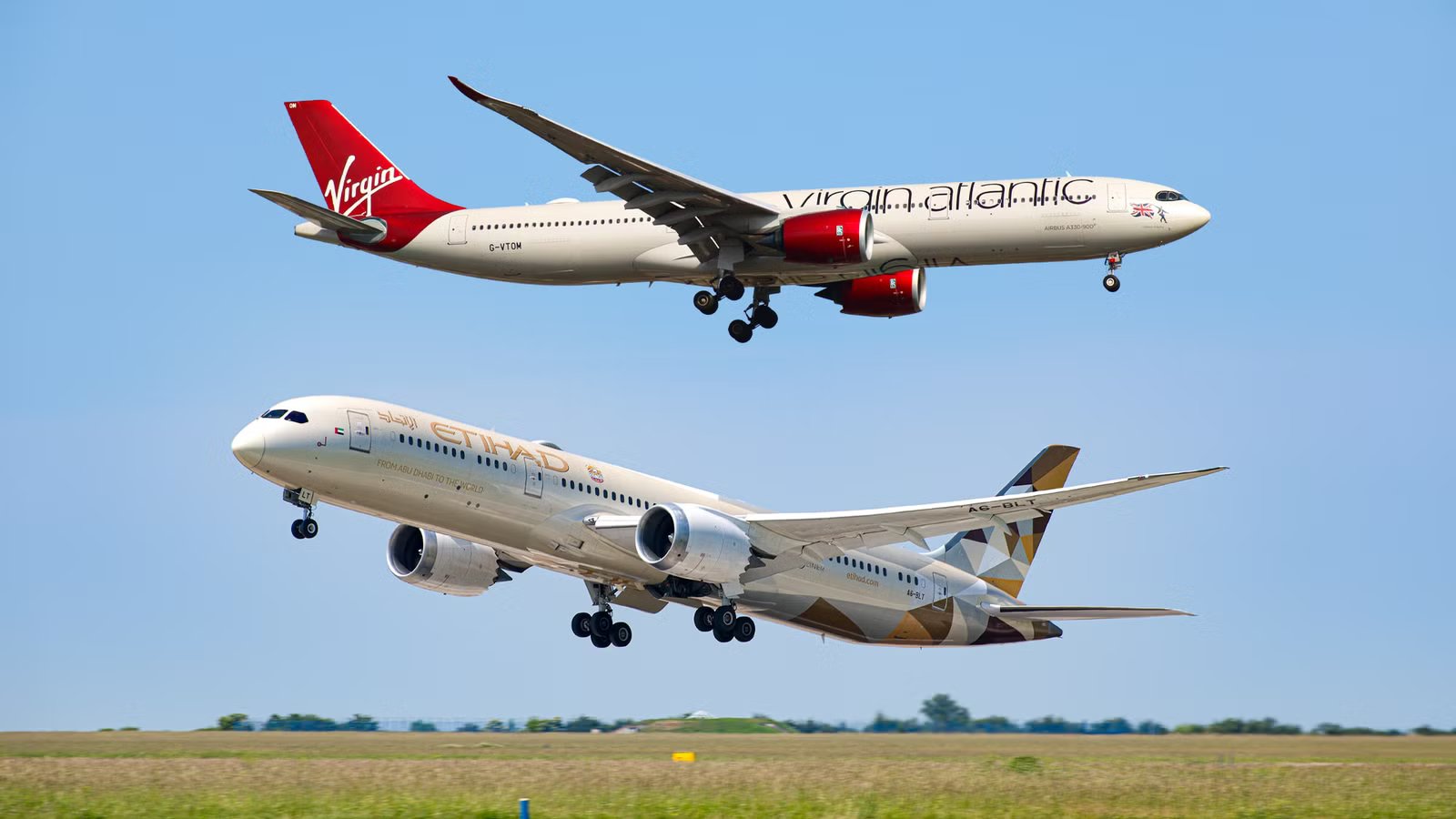
When comparing the latest generation of widebody jetliners around the world, two of the most popular airframes are the Airbus A330-900neo and the Boeing 787-9 Dreamliner. Interestingly, each represents a different design philosophy, and the Airbus is actually a modernized variant of a legacy airframe. The Dreamliner, on the other hand, is a modestly sized and affordable variant of Boeing’s latest twin-aisle technology.
One of the most important questions to ask in a technical comparison is which of these two jets is actually bigger. The context becomes crucial when comparing these two very different aircraft. The A330-900neo, with its more conventional design, is physically longer and typically has a higher max seating capacity. On the other hand, the 787-9 has a wider cabin and significantly longer range.
Made For The Mission: Airbus’ New A330

The A330neo was crafted to offer both lower up-front costs than more advanced composite widebodies as well as seamless fleet commonality. The newer A330-900 has a much lower ‘sticker price,’ but it still matches or slightly exceeds the passenger capacity of the Boeing 787, depending on the variant. This also applies to the Airbus A350, which rivals the 787-10, the largest Dreamliner, although it is pricier than the A330neo. When comparing each one side by side, the Airbus is consistently bigger.
The Airbus A330-800 is the smaller variant of the A330neo family. It typically seats 257 passengers in a three-class configuration, offering superior fuel efficiency and range, at aound 8,100 nautical miles, compared to the A330ceo. This makes the aircraft a direct competitor to the 787-8, which is the smallest of the Dreamliners, but the A330-800 is still larger than the Boeing.
The A330-900 can seat between 260 and 300 passengers in a three-class layout. Its maximum range is around 7,200 nautical miles. The A330-900 was made a direct competitor for the 787-9, with both being the top-selling airframe of each model family from their maker. The Airbus jets are consistently built for a higher seat capacity than their Dreamliner equivalents.
A330neo: Same Airframe, New Jet

New Engine Option is the full name of the ‘NEO’ designation. Airbus has applied it to all of the successor generation airframes built upon legacy designs. Despite its literal wording, the evolution of these aircraft goes far beyond simply the powerplants. The A330neo does have a new, exclusive engine made by Rolls-Royce. The Trent 7000 has significantly reduced both its fuel consumption and its noise footprint, and there is much more to the jet’s list of upgrades.
The A330neo is an evolution of the A330ceo with 95% airframe commonality using advanced materials and superior components. It allows airlines to modernize fleets with minimal training and maintenance investment while also offering a lower ‘sticker price’ than next-gen widebodies. To compete with the Boeing 787, Airbus improved the most high-impact areas. The biggest change is the new wing, which was redesigned through 3D Computational Fluid Dynamics (CFD) modeling.
The A330neo wing has the highest aspect ratio of any commercial aircraft in production, surpassing both the Boeing 787 and the upcoming 777X. This shape significantly reduces the induced drag, compounding the new wing twist, which optimizes its camber for superior aerodynamic performance. The outer wing is extended with Carbon Fiber-Reinforced Plastic (CFRP) sharklets, making its total span 209.97 feet. Airbus used A350 technology to make new pylons and nacelles for the larger engines as well.

7 Ways Airbus Made The A330neo Different From The Original A330
The A330neo represents progress in seven key areas compared to the older A330ceo.
787: Boeing’s Breakthrough Widebody

The 787-9 is the most popular variant because it offers the family’s best range. It features a strengthened airframe compared to the -8, allowing for a higher Maximum Takeoff Weight (MTOW) and increased fuel capacity, which enables it to fly further even while carrying more passengers. The 787-8 is optimized for fuel efficiency on long-range routes where the goal is to achieve the lowest possible operating cost.
As the largest variant is stretched 38 feet longer than the -8, the 787-10 can carry significantly more passengers and cargo, but because it uses the same fuel tanks as the 787-9 and has a higher structural weight, it sacrifices over 1,000 miles of range. All three variants share a common cockpit and similar handling characteristics, so that pilots trained on any version of the 787 can fly another with minimal additional preparation for the highest flexibility in crewing as well.
Airlines like United or Qatar Airways can still standardize a single engine type, like the GE GEnx, throughout their whole fleet of 787s by using multiple variants. This simplifies maintenance, spare parts logistics, and training. The 787-8 can be used by carriers to test new long-distance markets with lower demand, the 787-9 for their longest flagship ‘marathon’ flights, and the 787-10 for high-traffic regional or dense transatlantic routes where capacity is more important than range.

Airbus A330neo Vs. Boeing 787: Which Aircraft Gets More Miles Per Gallon?
Which jet rules fuel efficiency? Discover real MPG, expert insights, and airline data in this in-depth comparison.
Boeing’s Halo Jet: The Dreamliner

The 787 Dreamliner has been in service for years longer than its Airbus competitors and delivered exceptional results. As a result, the 787 has enjoyed the best sales record of any widebody ever made, with nearly double the sales Airbus twin-aisles have achieved since launch. That has been crucial for Boeing over the last few years as both its latest and greatest narrowbody and big widebody have proven to be financially unstable programs.
The 787 Dreamliner has not experienced any of the challenges seen in the 737 MAX and 777X programs. The 787 set new industry standards for fuel efficiency and passenger comfort that subsequent widebody aircraft designs, including the A350, had to match or exceed to remain competitive. The Dreamliner has even proven to be a better replacement for many airlines retiring quadjets like the iconic 747, which would have been expected to order the larger 777X as a successor.
Airbus was working towards the A330neo upgrade program when the launch of the 787 stunned the aerospace world with such an overwhelming sales success that the European planemaker had to urgently pivot its focus and invest in a new clean sheet design. That became the A350XWB (Xtra Widebody), which is now the company’s leading twin-aisle, long-haul jetliner, but it has failed to secure the same volume of orders as the Dreamliner.

How Much? The Boeing 787-9’s Extended Range Over The Airbus A330-900neo
The Boeing 787-9 and Airbus A330-900neo represent two vastly different philosophies in modern twin-engine engineering, but which one truly leads?
A New Era Of Aviation

The Airbus A330neo and Boeing 787 have both proven to be strong successors to the older A380 and 747 quadjets despite their smaller capacity. Modern twin-engine aircraft like these two have earned favor thanks to much lower operational costs, which makes flying them profitable even with partially filled cabins. The lightweight composite materials and fuel-sipping, high-bypass turbofans can lower fuel consumption by 25-40% compared to traditional aluminum quadjets.
The practical benefits of the A330neo and 787 have been manifested largely by the industry-wide shift from a ‘hub-and-spoke’ to a ‘point-to-point’ routing approach. Once a domain reserved for quadjets due to safety concerns, twinjets now operate safely over long transoceanic distances thanks to regulatory advancements in Extended-range Twin-engine Operational Performance Standards (ETOPS).
Comfortably performing direct flights to many destinations with low operating costs allows airlines to modify their capacity in response to passenger demand. The new twinjets’ smaller footprint makes it easier for them to integrate with existing airport facilities as well. The A330neo and 787 are prime examples of affordability, adaptability, and efficiency.

Here’s How Much Different The Airbus A350’s Winglets Are Compared To The A330neo
The A350’s winglets are much larger than the A330neo’s, an aircraft that partially followed the A350’s winglet design.
Ultra-Long-Haul Itineraries

While the 787 may be a bit smaller than an A330neo, it makes up for it with industry-leading range. One of the longest itineraries flown by any Boeing jet in the world is the remarkable flight from Perth (PER) to London Heathrow (LHR) operated by Qantas, made possible by the 787 Dreamliner. This specific route takes around 18 hours to complete and spans more than 9,000 miles (14,490 km). Right now, it’s the world’s longest scheduled 787 Dreamliner flight. This specific flight plan, which is only made possible by the 787, is also the only direct route between the Australian continent and the United Kingdom.
Similarly, the next longest flight plan for a Dreamliner currently scheduled by any operator is another Qantas itinerary, this time connecting the ‘land down under’ with the ‘Lone Star State’ via Melbourne (MEL) and Dallas-Fort Worth (DFW). This route is nearly identical to the one flown between Perth and London, measuring approximately 8,990 miles (14,440 km). The actual flight time is around 17 hours from takeoff to touchdown when flying back from Dallas.
Itineraries from Auckland (AKL) to New York (JFK), Houston (IAH) to Sydney (SYD), and San Francisco (SFO) to Singapore (SIN) are just a few of the extraordinarily lengthy, international routes that Boeing’s Dreamliners travel. Before the Dreamliner went into service, some of these routes were unfeasible, and others were dropped because of the inefficiency of quad jet aircraft like the 747 and A380, and the growing cost of fuel.