dailynewsnblog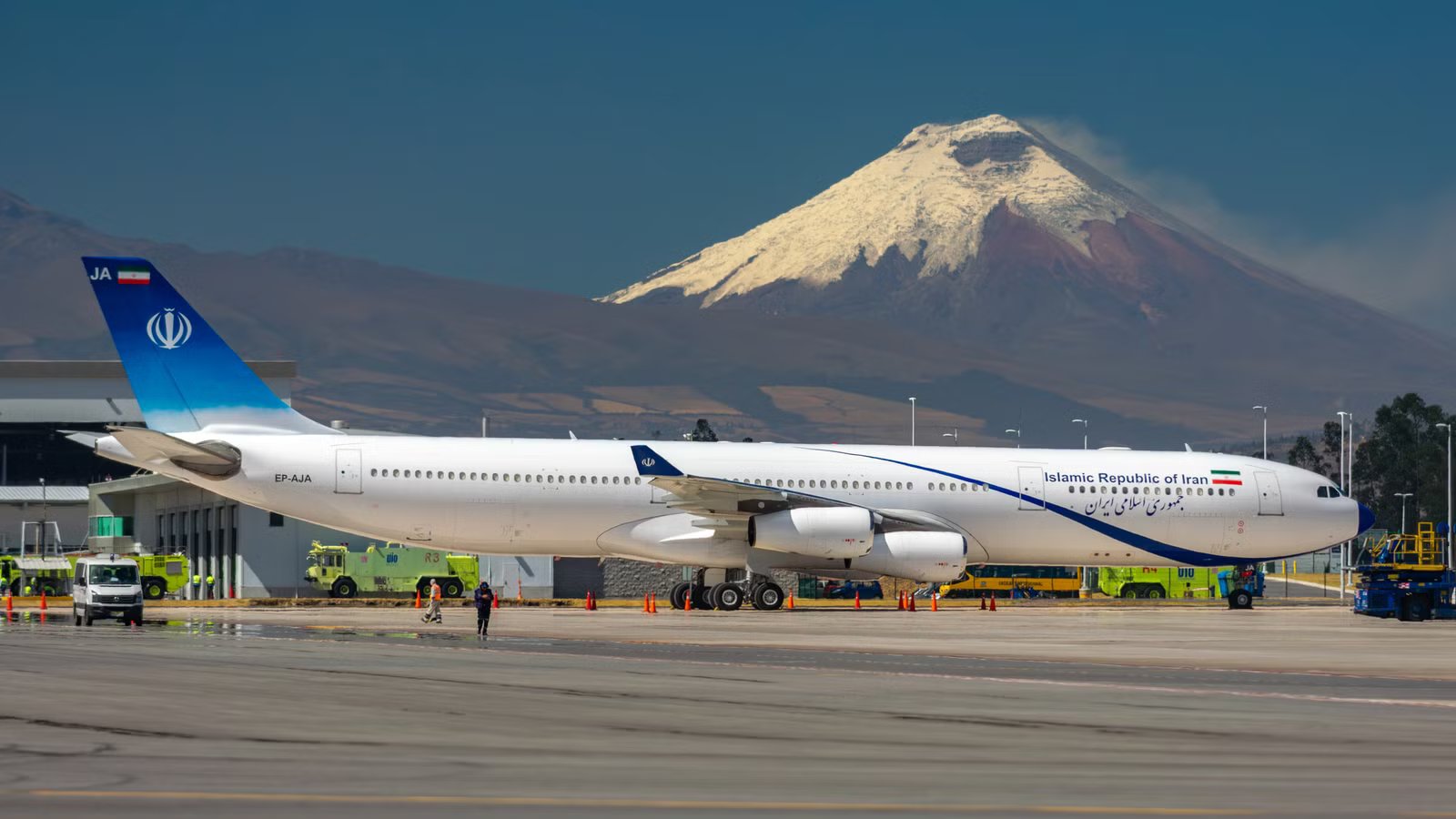
The Iranian equivalent of Air Force One has reportedly been destroyed as the Iran conflict enters its third week. According to a post placed on X (formerly Twitter) earlier, the Israeli Air Force claimed that it had destroyed the Airbus A340-300 of the former Iranian leader, Ali Khamenei.
Since the US and Israel conducted joint strikes on Iran, killing its leader on February 28th, the Middle East has become a conflict zone. Iranian airspace is now a no-fly zone due to missile strikes aimed at military targets from the US and Israel, and retaliatory strikes from Iranian forces.
Iran’s Governmental Airbus A340 Has Reportedly Been Destroyed

In a post to X (formerly Twitter) from the Israeli Air Force earlier today, the organization claimed to have “destroyed the plane of the leader of the Iranian terror regime at the “Mehrabad” airport in Tehran”. The message, posted in Hebrew, was accompanied by a satellite picture of Mehrabad Airport, and a picture of the government’s A340 aircraft, currently registered as EP-IGA.
The Air Force post goes on to say that:
“The plane was used by Ali Khamenei, leader of the Iranian terror regime, additional senior officials from the terror regime, and elements in the Iranian military, to advance military procurement and manage relations with Axis countries through domestic and international flights.”
Additionally, the Air Force stated:
“The destruction of the plane impairs the ability to coordinate between the leadership of the Iranian terror regime and Axis countries, in building military power, and in the regime’s rehabilitation capability. Thus, another strategic asset has been removed from the Iranian regime.”
A Look At The Airbus A340’s History

The Iranian Airbus A340-300, reportedly destroyed in Tehran, hasn’t always been flown by the Government, and has a colorful history. The aircraft was initially delivered to  Air Canada before the turn of the century on February 11th, 1999, having first flown on January 28th of that year, according to Planespotters.net.
The aircraft then hopped around operators as follows,
|
Airline |
Country |
Registration |
From |
To |
|---|---|---|---|---|
|
Air Canada |
Canada |
C-GDVV |
Feb 11, 1999 |
Jan 16, 2002 |
|
Air Jamaica |
Jamaica |
6Y-JMP |
Mar 5, 2002 |
Oct, 2007 |
|
Turkish Airlines |
Turkey |
TC-JIK |
Sep 6, 2008 |
May, 2012 |
|
AirBlue |
Pakistan |
AP-EDF |
Sep 29, 2012 |
Feb 3, 2014 |
|
Asian Express Airline |
Tajikistan |
EY-680 |
Sep 10, 2015 |
|
|
Iranian Government |
Iran |
EP-AJA |
Sep 15, 2015 |
|
|
Iranian Government |
Iran |
EP-DAA |
Nov, 2017 |
|
|
Iranian Government |
Iran |
EP-IGA |
Jun 2018 |
According to Planespotters, there are three other aircraft in the Iranian Government fleet. These include an Airbus A321-200 and two British Aerospace Avro RJ85s. The surroundings of Tehran Mehrabad International Airport (THR) are somewhat of an aircraft graveyard. According to the Times of Israel, Iranian forces had been moving aircraft into these areas to make it more difficult for the Israeli Air Force to identify them.

Aircraft Casualty: Iran Air Airbus A319 Destroyed In Airport Bombing
The jet involved was 24 years old, and had been parked since Saturday.
Airlines & Passengers Continue To Feel The Impact Of The Conflict
The ongoing conflict in Iran is not just affecting local aviation but has ramifications that are spreading around the world. Firstly, local carriers are severely limited in operations due to the risk presented by the conflict.  Qatar Airways, for example, operated just two outbound flights yesterday to London and Islamabad, according to FlightRadar24.com. According to Cirium, the airline had 256 scheduled flights yesterday, meaning 254 did not take off.
On a more global scale, airlines far away from the crisis are also being affected. As shown in the FlightRadar24.com screenshot above, airlines that fly through the region are now having to avoid the affected airspace, increasing flight times, crew times, and fuel usage. At the same time, fuel prices are rising, making flying more expensive for all airlines.
This increase in flight cost is starting to trickle down to customers. For example, Oman Air’s Cargo Division today revealed that it was introducing both a fuel surcharge and a “war risk surcharge” to offset higher costs that it is facing.
Note: This article shows the aircraft in its previous paint scheme. Photos of the current paint scheme were not available at the time of publishing.