dailynewsnblog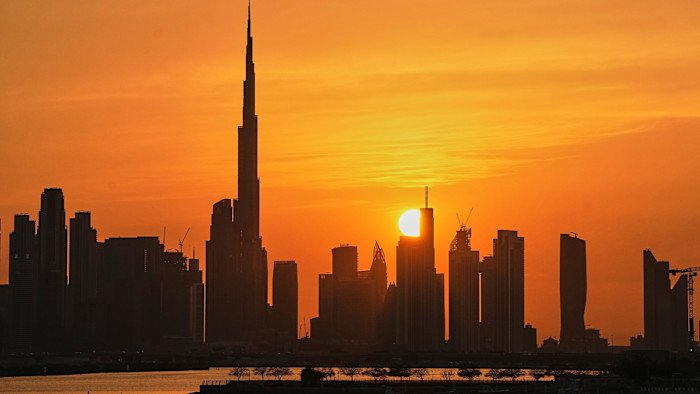
Unlock the Editor’s Digest for free
Roula Khalaf, Editor of the FT, selects her favourite stories in this weekly newsletter.
The writer is the Rene M Kern professor of practice at Wharton School, chief economic adviser at Allianz and chair of Gramercy Funds Management
As the world assesses the continuing economic damage from the Middle East war, much of the focus has been on how long it will be until “normal” energy production and shipments resume.
That is the most pressing issue, of course. But among the many other questions investors and policymakers should consider is a financial one: how will the relationship of the Gulf countries with international capital markets change in the short term?
The six members of the Gulf Cooperation Council — Bahrain, Kuwait, Oman, Qatar, Saudi Arabia and the United Arab Emirates — have collectively grown over decades into one of the most consequential forces in global finance, investing across the world.
But there is a risk that increased domestic need for funds in the wake of the war may have a temporary impact on those flows even if the long-term position of the countries is not in question. This would have implications for global interest rates and the distribution of funding, as the world has come to rely on GCC capital more deeply than many realise.
Before the US-Israel attack on Iran, the GCC nations had grown to exert systemic influence beyond their status as important energy suppliers. They served as large transport hubs (especially Qatar and the UAE), increasingly popular tourist destinations and as an important engine of global liquidity.
The GCC countries have generated a current account surplus of more than $800bn in the past four years. They have deployed their ample resources with sophistication, managing their wealth for current and future generations.
Having travelled to the region for decades, I found the sheer density of bankers, advisers and asset managers in the “waiting rooms” of Gulf countries in the past few years particularly striking. In the offices of sovereign wealth funds, family offices, pension funds and local banks, global financiers gathered in droves — either to report on existing portfolios or to pitch for fresh allocations.
Over the years, the GCC countries have expanded the scale and scope of their strategies to invest their patient capital, embracing the full spectrum of public and private markets, direct investments and more. Along the way, the countries have built deep financial relationships around the world and, most recently, the GCC has been at the vanguard of investments in AI, life sciences and robotics.
Now, with the energy sector experiencing a near “sudden stop,” the region faces unanticipated near-term revenue pressures. While some expenditures will fall, they will not keep pace. In fact, Gulf governments will rightly increase spending to protect their populations from the impact of the war.
Needless to say, the GCC region is not a monolith. Across the six nations, three variables will determine individual trajectories: the depth of accumulated financial buffers, the speed at which primary revenue recovers and the degree to which outward capital deployment is offset by domestic commitments.
Any change in global capital flows would come at an already challenging time for markets. Large budget deficits in advanced economies and the need to refinance maturing debt are driving up global bond issuance. At the same time, the AI revolution has huge financing needs and a wall of corporate refinancing looms elsewhere.
The net result? “Higher-for-longer” borrowing costs that have a disruptive impact on virtually every country, corporation and household, which compounds the longer the war lasts. It’s an environment that also risks aggravating existing financial fragilities — such as those associated with the AI bubble, certain segments of private credit and some sovereign debt concerns — while potentially exposing new ones.
The GCC nations will restore their oil exports and the region will retain its status as a transport and tourist hub. I have no doubt about that. These are nations that have demonstrated over several decades a remarkable capacity for adaptation and long-term strategic thinking. Yet the temporary change in their relationship with international capital flows is something that must enter into any analysis of the global economic and financial implications of the Iran war.
Like energy supplies, it is part of the broader economic fallout of a war that is already being felt around the world in higher prices and borrowing costs, while increasingly threatening growth, employment and financial stability.