dailynewsnblog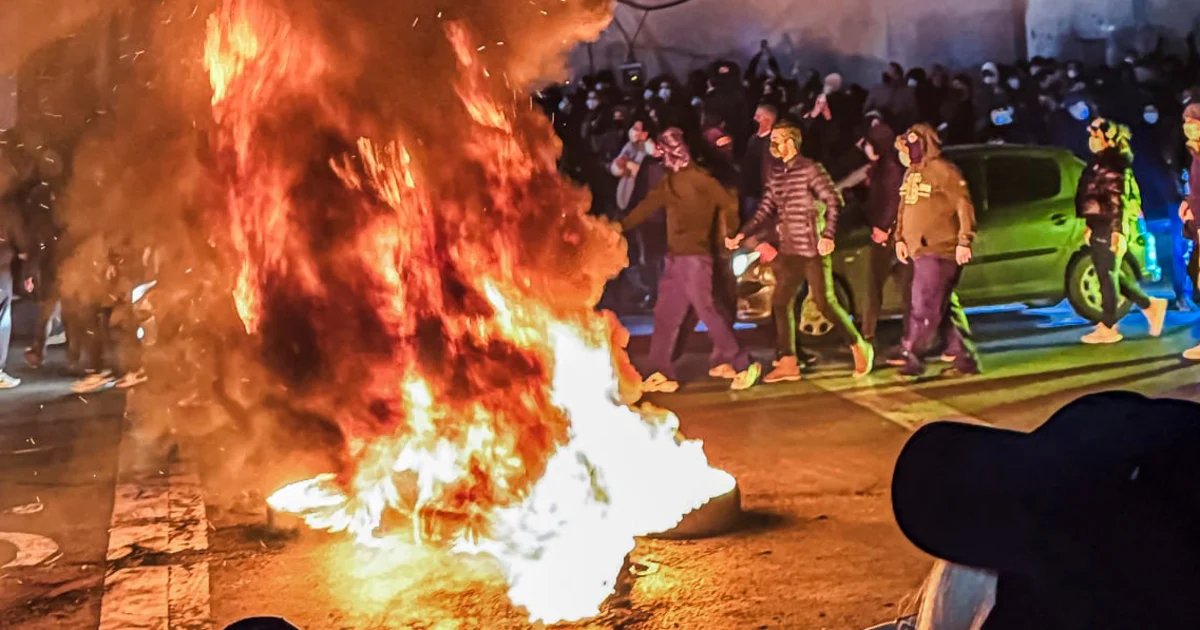
Iran has a grim history of crushing dissent, but the latest crackdown dwarfs anything seen during the repressive Islamic theocracy’s 47 years in power, evidence trickling out of Iran suggests.
Human rights activists say at least 2,500 people have been killed since protesters took to the streets last month, initially in a show of anger against rising prices and a faltering economy.
“This crackdown is more intense because the scope of the protests is more widespread, playing out at the same time in big cities but also remote areas in central and western Iran,” said Clément Therme, a nonresident fellow at the International Institute for Iranian Studies, a nongovernmental organization based in Saudi Arabia, Iran’s major geopolitical rival in the region.
Since widespread demonstrations in 2022, the regime’s goal “has been to diffuse fear,” both through killing protesters and executing prisoners, he said.
Even the partial picture of what’s happening inside Iran suggests something on a different level than past repression. The Human Rights Activists News Agency, a nonpartisan Virginia-based organization that relies on supporters inside Iran to track the protests and monitor deaths, says that demonstrations spread to all of the country’s 31 provinces.
The bloody reprisals against protesters are the culmination of decades in which the regime’s “propensity and ability to use violence” have only increased, said Rouzbeh Parsi, an adjunct lecturer at Sweden’s Lund University. The reason for that is the twin fear of “external pressure” and “domestic hatred” converging, he said.
Some 19,000 people have been arrested, according to HRANA, which says its data comes from on-the-ground sources and goes through multiple internal checks. Iran’s top judge has suggested that there needs to be rapid trials and executions to restore order.
Eyewitness accounts are scant, and those who do report on the situation usually do so anonymously for fear of reprisals.

A video geolocated by NBC News was posted online last weekend showing scores of bodies piled outside a makeshift morgue near Tehran. The scene is punctuated by screams and wails as people converge at the site in search of missing loved ones amid the chaos of the demonstrations. Another video verified by NBC News appears to show security forces firing automatic weapons at demonstrators, the shots echoing through the streets.
Though the internet has now been down for more than a week, Iranians have been able to make some international calls. In calls to The Associated Press earlier this week, Iranians described a heavy security presence on the streets and light foot traffic despite shops reopening.
The diaspora news outlet Tehran Bureau, founded by journalist Kelly Golnoush Niknejad, who was born in Iran and went to college in America, said witnesses described “war-like conditions across multiple neighborhoods,” with “active battlefields” including “firearms, military weapons, and sustained clashes.”The regime uses drones to “identify gatherings, followed by rapid deployment of forces,” it said.
That surveillance tallies with what Samira Mohyeddin, an Iranian-Canadian journalist, said she was told by a friend’s daughter from the southern Mazandaran province.
Posting a video on X of the conversation in Persian, Mohyeddin recounted that there was “blood on the streets” with drones and riot police maintaining order, and shops forced to close at 4 p.m. She said there had been no clashes in the past two days.
The Iranian regime has decades of precedent for using violence to suppress its opponents, dating back to its foundation.
In 1979, a popular revolution involving students and oil workers toppled Shah Mohammad Reza Pahlavi, an autocratic ruler bolstered by a CIA-backed coup in 1953, and whose SAVAK secret police imprisoned and tortured opponents.

But into that vacuum stepped not a democratic government, but a hard-line Shia theocracy headed by Ayatollah Ruhollah Khomeini.
Throughout the 1980s, Khomeini’s regime began what’s now referred to as a reign of terror against his opponents. In 1988, at least 5,000 political prisoners were forcibly disappeared, executed and dumped in mass graves, according to Amnesty International and other human rights groups.

Then, 2009 brought the “Green Movement” when millions took to the streets in protest at the apparently rigged re-election of then-President Mahmoud Ahmadinejad, a hard-liner. At least 72 people were killed and hundreds more injured, according to opposition figures.
Street marches flared again in 2017, 2018 and 2019, the latter seeing 321 people killed by security forces after demonstrating against rising oil prices, according to Amnesty.
Another high water mark came in 2022 after Mahsa Amini, a 22-year-old Kurdish woman, died in a hospital after her arrest three days earlier by the country’s morality police. She was accused of not adhering to the government’s mandatory rules on headscarves for women and clothing restrictions.


Thousands of protesters were detained and more than 500 are believed to have died, according to the United Nations. Some were hanged.
This playbook was seen in Syria in 2011, when Iran helped then-President Bashar al-Assad kill peaceful protesters and stay in power.
“They are basically repeating what they advised Bashar Assad to do in Syria during the first six months of the uprising there, which was peaceful and in the streets,” said Hadi Ghaemi, executive director of the Center for Human Rights in Iran, a New York-based advocacy group, said.
“These guys have experience of putting down nationwide large protests in Syria, and they are showing that they are not hesitant about massive killings.”