dailynewsnblog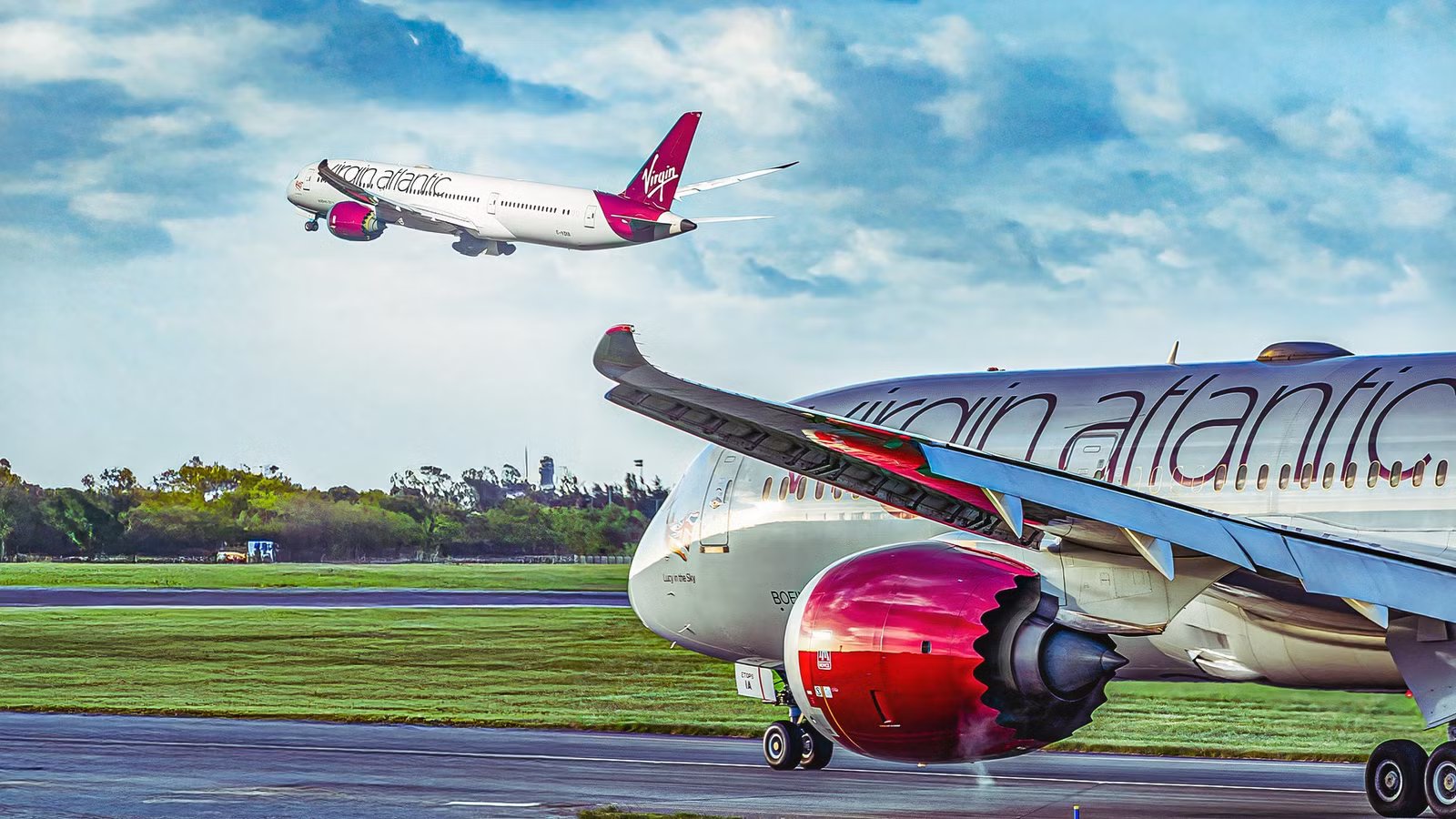
Virgin Atlantic has the second-highest number of long-haul flights from the UK. According to Cirium Diio data for 2026, the SkyTeam member has 11% of the country’s services, surpassed only by—who else?—British Airways (28%).
Naturally, Virgin ranks second for long-haul activity from London Heathrow (13%). However, it is number one in Manchester (16%), but—due to only one route and a sub-daily frequency—tenth from Edinburgh (2%).
Welcome To Seoul, Virgin!

On March 29, northern carriers, including Virgin, switched to summer schedules based on IATA slot seasons. Considerable numbers of airlines worldwide introduced many hundreds of new or returning routes around then. They included Virgin’s new market:  Heathrow to Seoul Incheon. This is bound to make my next weekly celebratory new routes article (see last week’s edition).
The background to this route is both unusual and intriguing. Flights were first mooted in 2023, when Virgin joined SkyTeam, but then shelved. Virgin is highly unlikely to have launched flights but for Korean Air’s acquisition of Asiana. Various countries had to sign off on it, including the UK.
A concern from the UK authorities was that only Korean Air and Asiana had nonstop passenger flights between the UK and South Korea (BA pulled out in 2020). If they became one single huge airline, as they will in time, there would be no head-to-head competition, with all the many consequences of that.
To gain the blessing of the UK authorities, Korean Air agreed to give up slots so that Virgin could launch a daily service to Seoul. It appears that Asiana, which is currently a subsidiary of Korean Air, will give up its slots, although it is unclear when its final Heathrow flight will be. A condition of the deal is that Virgin must serve Seoul for at least three years. As Virgin and Korean Air are both in SkyTeam and codeshare between London and Seoul, it does not provide ‘real’ competition.
Virgin now serves Seoul daily with the 258-seat Boeing 787-9. The equipment has 31 seats in business (1-1-1), 35 in premium economy (2-3-2), and 192 in economy (3-3-3). They have old cabins, which means they’re less competitive, but they’re due to be retrofitted between 2028 and 2030.
|
Frequency |
Heathrow To Seoul Incheon; Local Times* |
Seoul Incheon To Heathrow; Local Times** |
|---|---|---|
|
Daily |
1:25 pm-10:05 am+1 (12h 40m) |
12:25 pm-6:50 pm (14h 25m) |
|
* First week of April |
** First week of April |
It Is Virgin’s New Longest Route By Time

Notice from the table above that the block time—which is measured as chocks-off-to-chocks-on—from South Korea is a whopping 14h 25m. This is, of course, a consequence of avoiding Russian airspace and having to detour through Central Asia and Turkey.
Flights are much longer than they’d otherwise be. As such, this route has become Virgin’s new longest offering, both nonstop and one-stop. It is Virgin’s longest service since 2024, when the carrier removed Shanghai Pudong from its network. Due to avoiding Russian airspace, flights were timed at up to 15h 15m, although 14h 40m was much more common.

95% Full: Qatar Airways’ 10 Busiest US Routes Revealed
Find out which of the airline’s routes did not make the cut…
Virgin’s Five Longest Nonstop Routes In 2026

Later this year, the block time on Virgin’s brand-new Seoul service will increase slightly to 14h 30m, which will extend the lead over the second-longest service. That is Phuket back to Heathrow (13h 40m), which is another new market in the carrier’s network. The route, which will run three weekly on the 787-9, will begin in late October.
The rest of Virgin’s five longest nonstop routes this year are Cape Town back to Heathrow (up to 12h 00m; up to daily 787-9), Johannesburg back to Heathrow (up to 11h 20m; daily 787-9), and Heathrow to Los Angeles (up to 11h 20m; two to three weekly A350-1000/787-9). Timed at up to 11h 25m, Heathrow-Barbados-Antigua and Heathrow-Barbados-Grenada jointly take the top spot for one-stop services.