dailynewsnblog
Airlines and commercial aviation as a whole are built on layers of redundancy, precision, and procedural discipline, making it one of the safest forms of transportation. Yet within every flight, certain moments carry inherently higher risk. Among these, takeoff and landing consistently stand out as the most critical phases. According to aviation safety analyses and regulatory guidance, these stages demand the highest level of pilot attention, system performance, and operational coordination.
Regulators such as the European Union Aviation Safety Agency (EASA) define “critical phases of flight” as those periods centered around takeoff and landing. These moments include the takeoff roll, initial climb, approach, and landing. What unites these phases is a combination of low altitude, high workload, and limited margins for error. Aircraft are closest to the ground, operating at the edges of performance envelopes, and often navigating congested airspace.
Understanding why these phases are so critical requires placing them in the broader context of the entire flight profile. From engine spool-up on the runway to the final descent through turbulent air near the ground, each stage introduces unique challenges. This article examines those challenges in detail, focusing on the aerodynamic, operational, and human factors that make takeoff and landing the most demanding parts of flight.
Critical Phases In The Context Of An Entire Flight

A typical commercial flight is divided into several distinct phases. In general, they can be divided into: preflight preparation, taxi, takeoff, climb, cruise, descent, approach, landing, and taxi to gate. Each phase has its own procedures, performance requirements, and risk profile. During cruise, the aircraft operates at high altitude in relatively stable conditions. Autopilot systems manage much of the workload, fuel consumption is optimized, and there is significant time to respond to unexpected issues. In contrast, the phases near the ground compress time and decision-making into much shorter intervals.
Takeoff transitions the aircraft from ground roll to controlled flight within seconds. Landing reverses that process, requiring the aircraft to descend from altitude, align precisely with a runway, and decelerate safely. Both phases occur in environments where terrain, obstacles, weather, and other aircraft are immediate factors.
Ground proximity is a defining element. At altitude, a technical issue or weather deviation can often be managed with time and space. Near the ground, options are limited. Pilots must execute procedures quickly and accurately, often while coordinating with air traffic control and managing rapidly changing conditions. This contrast explains why takeoff and landing are categorized as critical phases. They concentrate complexity, reduce margins, and require peak performance from both pilots and aircraft systems.
Takeoff: Maximum Weight, Maximum Power, Minimum Margin

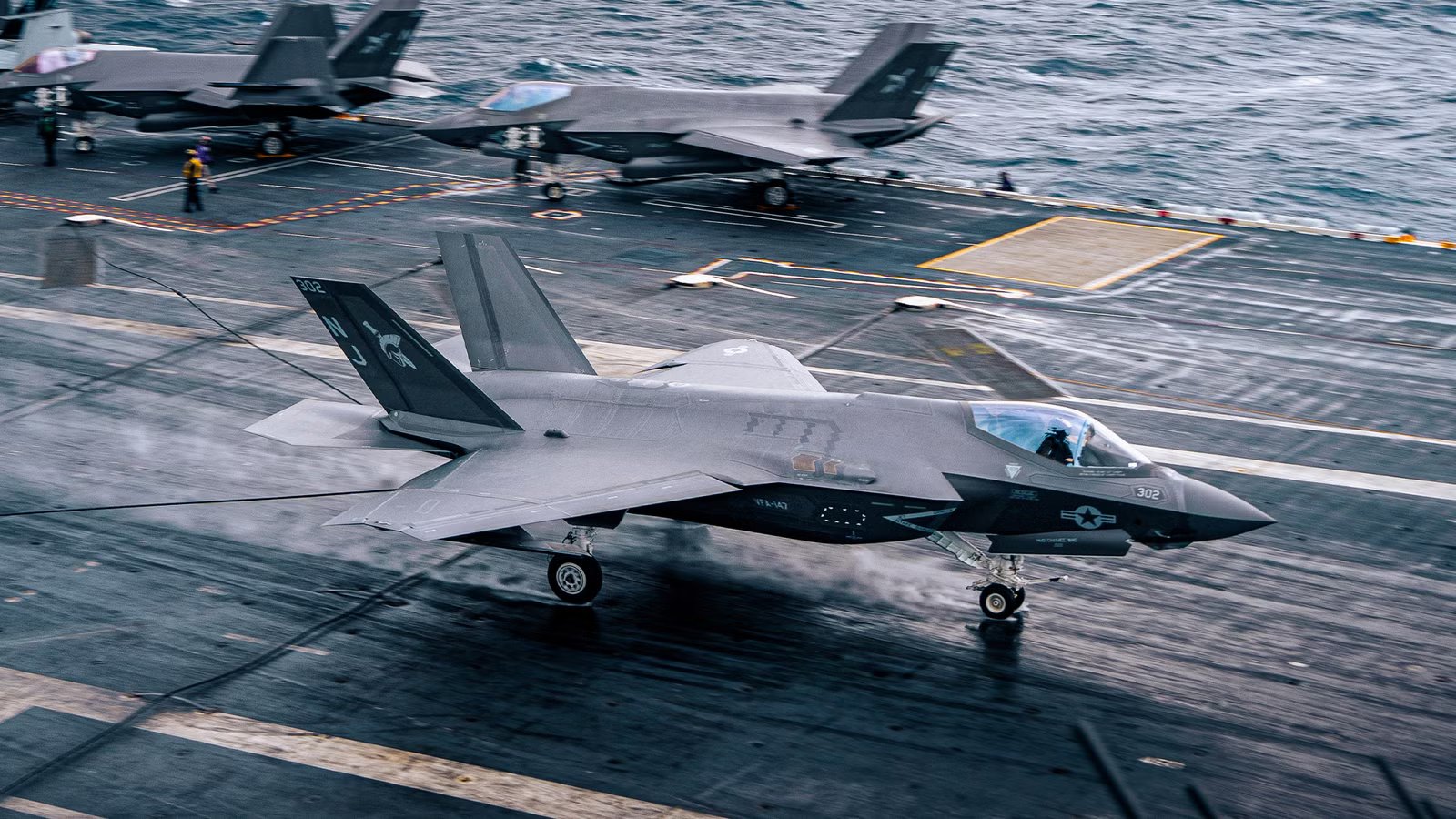
Takeoff is one of the most critical performance moments in flight. At this stage, the aircraft is typically at or near its maximum takeoff weight, carrying full fuel loads, passengers, and cargo. This weight directly affects the distance required to accelerate and become airborne, as well as the climb performance after liftoff.
Engines are already operating at or near maximum thrust during takeoff. This means there is little excess power available to compensate for unexpected conditions such as wind shear, runway contamination, or engine anomalies. The aircraft must achieve a series of precisely calculated speeds, including decision speed and rotation speed, within the available runway length. These are known as V-speeds.
|
Main Takeoff V-Speeds |
||
|---|---|---|
|
V Speed |
Description |
|
|
V1 |
The speed at which takeoff can no longer be aborted. No matter what happens after V1, the pilot will try to get airborne. |
|
|
V2 |
Takeoff safety speed. The speed at which the aircraft may safely climb with one engine inoperative. |
|
|
VR |
Rotation speed. At VR, the pilot will begin to apply inputs to the controls to lift the plane off the ground. |
|
|
Source: Code of Federal Regulations: Title 14: Chapter 1 |
||
Environmental factors further complicate the situation. High temperatures, high altitude airports, and short runways all degrade performance. Pilots must account for these variables through detailed preflight calculations, ensuring that the aircraft can safely meet required climb gradients even in the event of an engine failure.
The transition from ground roll to flight also introduces aerodynamic challenges. Lift must increase rapidly as speed builds, and control inputs must be precise to avoid over-rotation (and a tail strike) or insufficient climb angle. Any deviation can have immediate consequences due to the aircraft’s proximity to the ground. In summary, takeoff combines maximum weight, maximum thrust, and minimal margin for error. It is a phase where preparation, calculation, and execution must align perfectly.

What Exactly Is A Turn & Burn Takeoff?
Turn and burns demonstrate skill and engine power in the same maneuver.
Vulnerability Near The Ground

The initial climb phase begins immediately after liftoff and continues until the aircraft reaches a safe altitude. While often overlooked, this stage is an extension of the critical takeoff phase and carries many of the same risks. At low altitude, the aircraft remains vulnerable to obstacles, terrain, and environmental hazards. Engine failure during this phase requires immediate and precise response, as there is limited time to stabilize the aircraft and maintain climb performance.
Workload remains extremely high. Pilots must retract landing gear and flaps at the correct speeds, manage engine settings, and communicate with air traffic control, all while maintaining stable flight. Automation may assist, but manual oversight is essential. Ground Proximity Warning Systems and Terrain Awareness Systems play a crucial role during this phase by issuing alerts when the aircraft’s trajectory becomes unsafe. However, these systems are reactive, and the primary responsibility lies with the flight crew.
Weather can also have a significant impact. Wind shear, turbulence, and microbursts are particularly dangerous during initial climb because they can rapidly alter the aircraft’s performance. Unlike at higher altitudes, there is little room to recover from sudden changes in airspeed or lift, and the aircraft is still building speed. The initial climb highlights the continuity of risk from takeoff. Even after becoming airborne, the aircraft is not yet in a stable or low-risk environment.
Approach: Managing Energy And Precision

The approach phase marks the transition from cruise or descent to landing. It is one of the most complex parts of flight, requiring careful management of altitude, speed, and alignment with the runway. Unlike takeoff, where the goal is to gain energy and altitude, the approach requires controlled dissipation of energy. The aircraft must descend at a precise rate while maintaining target speeds that allow for safe configuration changes. Flaps and landing gear are deployed in stages, increasing drag and reducing speed.
Precision is critical. The aircraft must align with the runway centerline and maintain a stable glide path. Deviations in speed, altitude, or alignment can compromise the landing. For this reason, pilots are trained to execute a go-around if the approach becomes unstable. Fuel management becomes an important consideration during this phase as well. If weather conditions or air traffic congestion require multiple approach attempts or holding patterns, fuel reserves can diminish. Commercial regulations require sufficient fuel for alternate airports, but decision-making becomes more complex as reserves decrease.
Again, weather plays a major role in approach difficulty. Low visibility, crosswinds, and turbulence all increase workload and reduce margins. Instrument Landing Systems and other automatic navigation systems help guide the aircraft, but pilots must remain ready to take manual control if needed. The approach phase is a balance between precision and adaptability. It sets the stage for landing, and any errors here can be magnified in the final moments of flight if not handled correctly.

Pilot Shares What It’s Like To Perform A Go-Around During Landing
A pilot reveals the reality of go-arounds: why they happen, how they’re flown, and why abandoning a landing is often the safest decision.
Landing: Low Speed, High Risk, Limited Options

Landing is the final and arguably most demanding phase of flight. The aircraft must transition from controlled descent to a safe touchdown within a confined runway environment. At this stage, the aircraft is flying at relatively low speeds, which reduces aerodynamic margin. There is less lift available, and the aircraft is closer to stall speed. This makes it more sensitive to control inputs and environmental disturbances such as gusts or wind shear.
The aircraft must touch down within a designated zone on the runway to ensure sufficient distance for deceleration. Landing too early or too late can lead to runway excursions, one of the most common types of aviation incidents. Braking performance is another critical factor. Runway conditions such as rain, snow, or ice can significantly reduce friction, increasing stopping distance. Pilots must account for these conditions when planning the approach and landing. Landing encapsulates many of the challenges present throughout the flight. Low speed, high workload, and ground proximity combine to make it one of the most critical moments in aviation.
Final Thoughts

Takeoff and landing are universally recognized as the most critical phases of flight, not because aviation is inherently unsafe, but because these stages concentrate risk factors that are largely absent at cruise altitude. High workload, proximity to the ground, and limited margins for error create an environment where precision and discipline are essential.
During takeoff, the aircraft operates near its maximum weight and near maximum thrust, leaving little room for deviation. The initial climb extends this vulnerability, requiring careful management of performance and trajectory. On the other end of the flight, approach and landing demand precise control of energy, alignment, and timing, often under challenging environmental conditions. Throughout these phases, pilots rely on training, procedures, and advanced systems to maintain safety. In the broader context of flight, these critical phases highlight the importance of preparation and execution. While cruise may represent stability, it is during takeoff and landing that the full discipline of aviation is most clearly demonstrated.