dailynewsnblog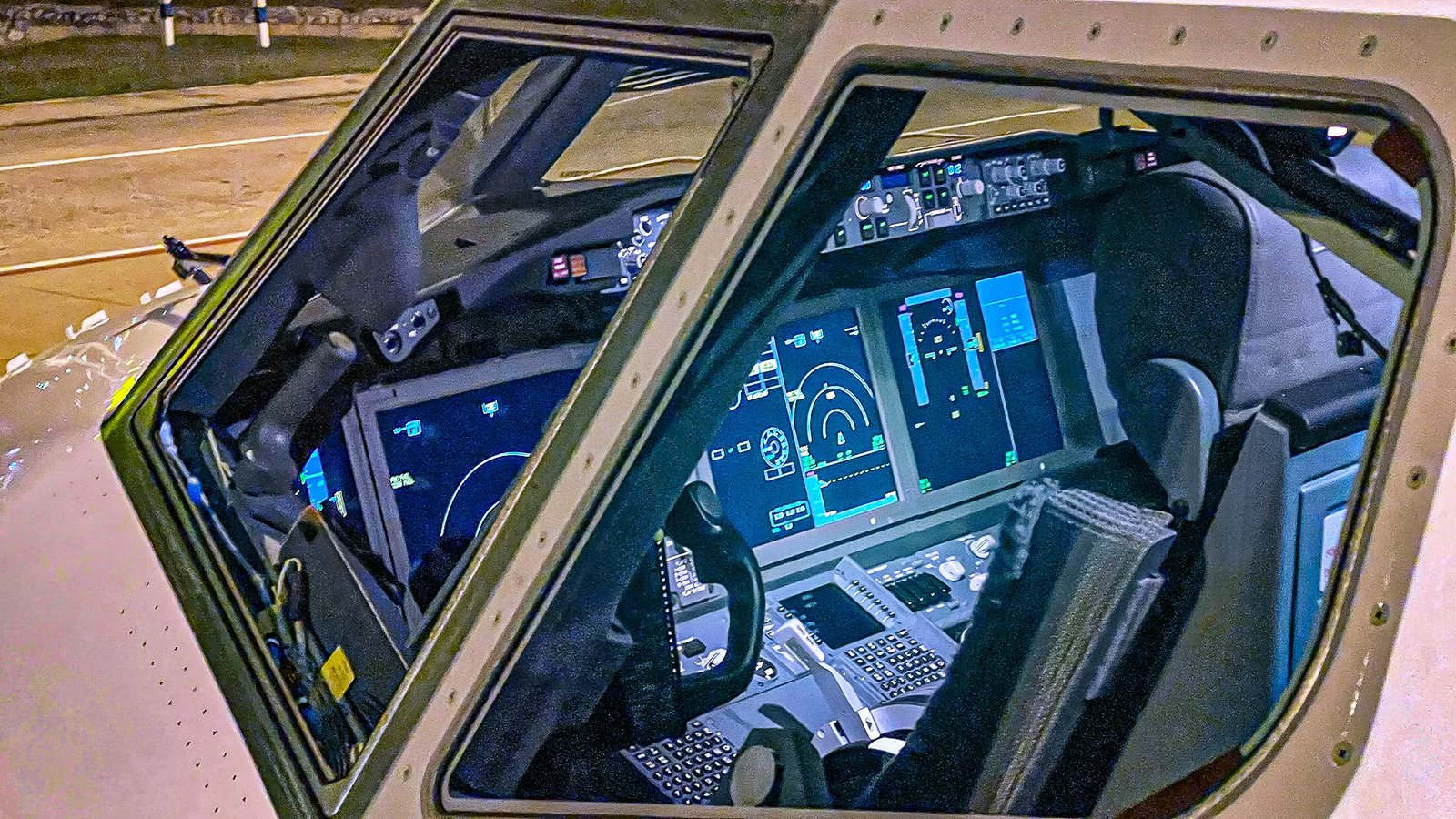
The Boeing 737 MAX is one of the most popular aircraft ever built, but it has significant differences from other aircraft currently on sale. It’s extremely analog in comparison to contemporary airliners like the Airbus A320neo, with fewer digital systems and, rather uniquely, a mechanical fly-by-cable system. The only other aircraft on sale with a fly-by-cable system is the Boeing 767, currently only sold as the 767-300F (which will cease production in 2027) and the military KC-46 aerial refueler.
All other in-production commercial airliners feature a fly-by-wire system, a digital flight control system where inputs on a yoke or sidestick send electronic signals to onboard computers, which then manipulate an aircraft’s control surfaces accordingly. The Boeing 737 MAX, of course, lacks this because it’s an update of a nearly 60-year-old aircraft type, and the 737 is one of the oldest commercial aircraft types on sale.
Overview Of The Boeing 737 MAX

The Boeing 737 MAX is the fourth generation of the legendary Boeing 737 line. The 737 started with the original 737-100 and 737-200 (collectively known as either the 737 Original or 737 Jurassic), which was succeeded by the 737 Classic. The 737 Classic, consisting of the 737-300/400/500 variants, featured fuselage stretches, new CFM56-3 engines, higher gross weights, and an updated flight deck. The 737NG, consisting of the 737-600/700/800/900/900ER variants, featured additional fuselage stretches in all variants, along with a new wing, new CFM56-7 engines, further bumps in gross weight, as well as a full glass cockpit.
Compared to prior generations, the 737 MAX was a relatively minor overhaul. While the 737 MAX 7 was revised to be a simple shrink of the 737 MAX 8 (thereby growing in size compared to the 737-700), the 737 MAX 8 and 737 MAX 9 are the same size as their 737NG counterparts. Meanwhile, the 737 MAX 10 is a new variant stretched from the 737 MAX 9, and has no 737NG counterpart. The 737 MAX family features another cockpit upgrade, along with new CFM LEAP-1B engines, new split-tip winglets, a new tailcone, and a slightly taller nose gear.
The purpose of upgrading the 737 is to retain (or ‘grandfather’) as much of the aircraft as possible to save on development time and costs, while upgrading only the components that yield the most benefits in fuel efficiency. Engines are the largest factor behind fuel burn, so upgrading a 737 with new engines results in an aircraft that burns only slightly more fuel than a clean-sheet aircraft, while being significantly cheaper to develop. For airlines, meanwhile, a refreshed 737 is significantly cheaper to buy and has commonality with older 737s.
The Flight Controls Of The Boeing 737 MAX

Up in the cockpit, pilots primarily control the 737 via two yokes, one for each pilot. The yokes, also referred to as control columns, are connected to a series of cables and pulleys that directly move the ailerons as well as the elevators. The rudder is also manipulated manually, and these systems all feature hydraulic assists to reduce the weight of the controls for the pilots. Stabilizer trim is manipulated mainly using switches on the yokes that activate electric actuators, which manipulate physical cables, and pilots can also control a trim wheel using a handle as a backup.
For the 737 MAX,  Boeing redesigned the aircraft’s spoilers to incorporate a new fly-by-wire system. When they activate, either to reduce speed in flight, for roll assistance, or for braking during landing, a ‘Spoiler Control Electronics unit‘ commands the spoilers to deflect at a specific angle, replacing cables and pulleys for this system. The benefit is that this reduces weight and complexity while enhancing performance. However, the spoilers themselves are activated via a hydraulic actuator, just like on older 737 models.
|
737 Generation |
Variants |
Entry Into Service |
|---|---|---|
|
737 Original |
737-100 737-200 |
1968 (737-100) |
|
737 Classic |
737-300 737-400 737-500 |
1984 (737-300) |
|
737NG |
737-600 737-700 737-800 737-900/900ER |
1997 (737-700) |
|
737 MAX |
737 MAX 7 737 MAX 8/200 737 MAX 9 737 MAX 10 |
2017 (737 MAX 8) |
The primary flight control system on the 737 is powered by two hydraulic systems (A and B), each of which can fully power the flight control system on its own if necessary. Just as with the spoilers, the primary control surfaces (the ailerons, elevators, and rudder) are manipulated with hydraulic actuators. Meanwhile, the 737’s autopilot system works by controlling hydraulic servos, which then manipulate the control cables that are connected to the control surfaces.

The Striking Differences Between The Boeing 737 MAX 8 & MAX 8-200
The MAX 8-200 is a special edition of the MAX 8 developed for ultra-low-cost carriers that seek to maximize the workhorse’s seating capacity.
The Software Systems Of The Boeing 737 MAX

A flight management computer (FMC) is standard equipment on a modern airliner. The FMC is part of the flight management system (FMS) and controlled through a Control and Display Unit (CDU). Until recently, Boeing has relied on General Electric to supply the FMC for the 737, but in 2025, Boeing announced a new in-house FMS named the ‘Boeing Flight Management System’ (BFMS), which was also announced with a new touchscreen CDU. These systems are being installed on new 737 MAX aircraft, and are also retrofittable on older 737 MAX as well as 737NG aircraft.
The FMS is a broad system that includes the FMC, as well as the autopilot, autothrottle, GPS, and Inertial Reference System (IRS). The 737 has two independent flight control computers (FCCs), which control the autopilot system. The FCCs receive input from the pilots via the Mode Control Panel (MCP), which is located in the center of the glareshield on the 737 MAX and is largely the same as on the 737NG.
While the cockpit of the 737 MAX looks very different from the 737NG, due to having four large 787-style displays rather than six smaller displays, the actual systems behind the screens are largely the same. This increases commonality between the two aircraft types. However, this also means that the 737 is more rudimentary than other airliners, since prior 737 updates also aimed to maintain commonality with older generations. For example, the 737 MAX is the only large commercial airliner in production without an Engine Indicating and Crew Alerting System (EICAS).
The 737 MAX’s MCAS Software

The 737 MAX is infamous for its Maneuvering Characteristics Augmentation System (MCAS), which was the primary culprit behind the fatal crashes of a Lion Air 737 MAX 8 in 2018 and an Ethiopian Airlines 737 MAX 8 in 2019. MCAS is, as the name suggests, a software system to alter how the 737 MAX handles in certain flight conditions. MCAS was originally used on the Boeing KC-46 to make the plane easier to handle during refueling operations, and it was implemented on the 737 MAX due to handling differences from the 737NG at high angles-of-attack (AOA).
The 737 MAX’s CFM LEAP engines are significantly larger than the CFM56 engines used on the 737NG, and due to the 737’s low stance, the engines needed to be installed forward and upward compared to before. This resulted in an increased pitching up characteristic at a high AOA compared to the 737NG, which could potentially lead to a stall. MCAS works by adjusting elevator trim to provide a pitch-down motion. Crucially, however, Boeing does not describe MCAS as an anti-stall system, as it’s intended to make the 737 MAX handle like a 737NG in this scenario, rather than prevent a stall.
|
Specification |
MCAS 1.0 |
MCAS 2.0 |
|---|---|---|
|
Data source |
One Angle-Of-Attack (AOA) sensor |
Both Angle-Of-Attack (AOA) sensors |
|
Protection from unreliable data |
None |
Deactivates if the two data feeds differ by more than 5.5 degrees |
|
Nature of activation |
Can command full nose-down trim |
Can never command more trim than the force required by pilots to counteract it |
|
Number of activations in a high-AOA event |
Unlimited |
Once |
MCAS is present on every 737 MAX in service and in production, but it has been significantly revised compared to its earlier implementation. Previously, MCAS relied on a single sensor, had unlimited authority, and could activate an unlimited number of times. After the two 737 MAX crashes, in which MCAS activated as a result of faulty AOA data, Boeing revised the system to rely on data from both AOA sensors and also limited MCAS to one activation per high AOA event. In addition, MCAS now adjusts trim much more gradually than before.

Why Can’t The Boeing 737 MAX Be Powered By Any Other Engine Type?
Why the 737 MAX uses only the LEAP-1B: Boeing’s design limits, certification rules, and engine geometry make any other powerplant impossible.
Differences With Contemporary Aircraft

The Boeing 737 MAX’s closest competitor is the Airbus A320neo, but although the A320 family itself is almost 40 years old, it’s far more similar to newer aircraft like a Boeing 787 or Airbus A220 than the 737. The A320 debuted many design elements and technologies that are now standard in commercial aviation, with digital fly-by-wire being one of the most notable differences.
In a digital fly-by-wire system, inputs on the cockpit controls send signals to the aircraft’s flight computers, which then command electric motors and actuators to manipulate the control surfaces. While most manufacturers use a fly-by-wire logic that emulates traditional flight controls, in that pilot inputs directly move control surfaces, Airbus computer logic sees pilots commanding the aircraft to maneuver in a certain way, with the computers determining how to manipulate control surfaces to accomplish it.
Some pilots find the 737’s traditional control system to be more engaging, but the 737 also has a less automated cockpit, which can increase workload. For instance, newer aircraft feature autotrim systems that work for the entirety of a flight, whereas the 737 MAX does not. In addition, the 737 MAX lacks an EICAS system, with pilots instead having to rely on warning lights to determine onboard failures and a book called the Quick Reference Handbook (QRH) for steps on how to resolve them.