dailynewsnblog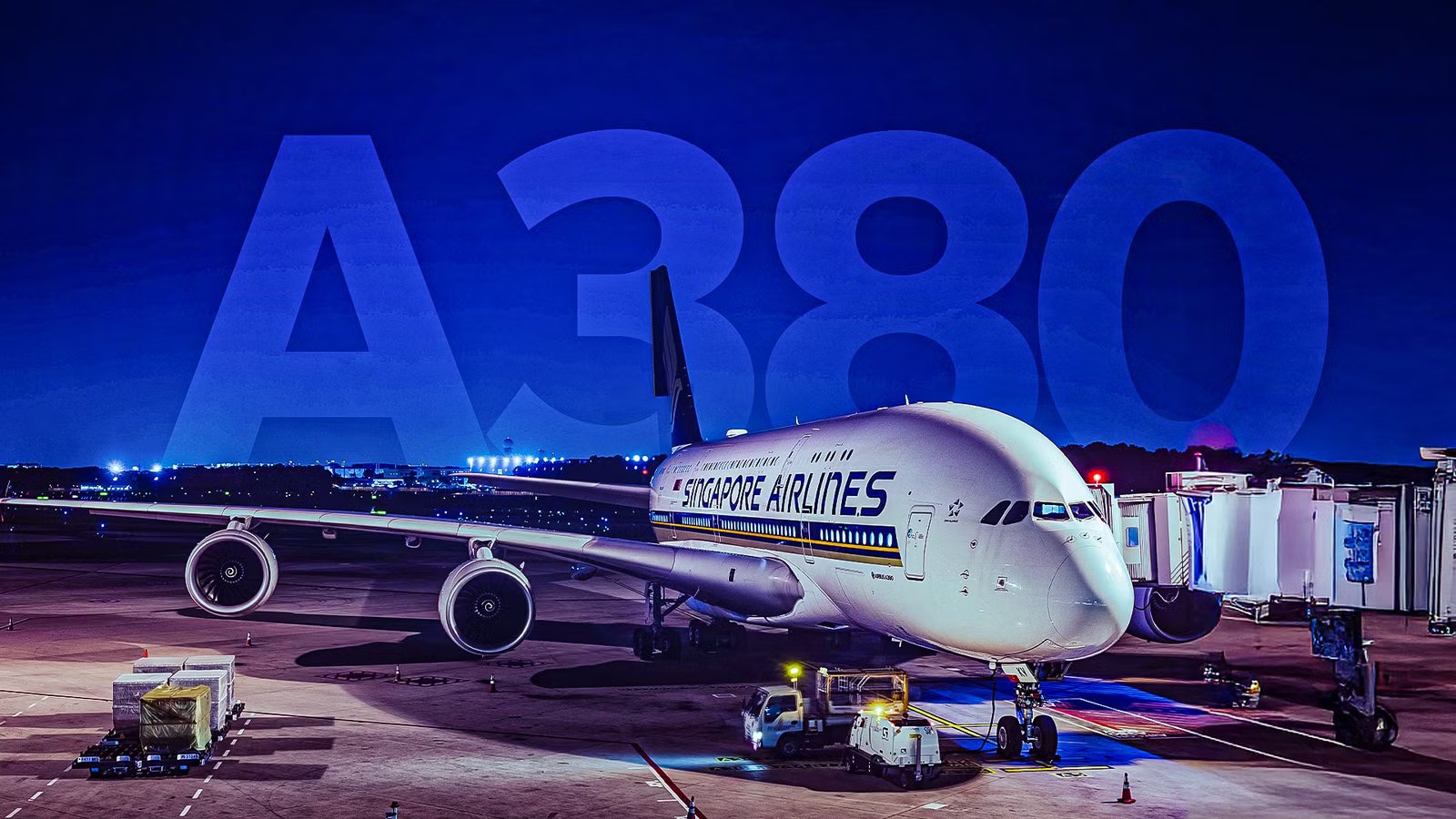
When the Airbus A380 took to the skies in 2005, it was heralded as the future of long-haul air travel. The world’s first full-length double-deck passenger aircraft, the A380 was built to carry more travelers, more comfortably, than any airliner before it. Its sheer size and technical ambition captured global attention. At a time when aviation was increasingly defined by efficiency and capacity, Airbus set out to design a jet that would redefine what was possible in terms of scale, passenger experience, and long-distance travel.
As an aircraft that was designed to be big, this jet is all about the inside. With so much space, airlines could fit in more passengers than ever before while also giving them more comfort and space. Additionally, the extra space gave carriers new opportunities to innovate with passenger amenities, and as such, these planes are some of the most luxurious airliners in the skies today. Let’s look deeper at the interior of the world’s largest airliner.
All About The Airbus A380-800

The Airbus A380 was unlike anything that came before it. Measuring 239 feet (72.72 meters) in length with a wingspan of 262 feet (79.75 meters), it was both longer and wider than the Boeing 747-400, which had dominated the long-haul market since the 1970s. The A380’s full double-deck design set it apart immediately, enabling airlines to configure cabins with over 500 seats in standard layouts and up to 850 in an all-economy arrangement.
Airbus believed that a larger aircraft would solve the modern issues of congestion at major airports, like London Heathrow, where limited slots forced airlines to maximize capacity per departure. By concentrating so many passengers onto one aircraft, the A380 was marketed as a solution to growing demand in high-density markets such as Europe to Asia or the transpacific corridors.
While the A380 program was a failure, there are some airlines that have succeeded with the type even today. Emirates is the most prominent example of this, but London-based  British Airways has also found success and even entertained the idea of purchasing used examples. Additionally, Qantas has plans to continue to fly the type until the 2030s, and several airlines have returned the type to service after the COVID-19 pandemic.
The Pilots’ Perspective

Airbus placed as much emphasis on the cockpit as it did on the passenger experience. The A380’s flight deck represented the culmination of decades of Airbus design philosophy, blending commonality with innovation. Pilots transitioning from other Airbus types would find familiar side-sticks, overhead panels, and logic, but the A380 introduced larger displays and additional tools to handle the demands of the world’s biggest airliner.
Airbus developed its common flight deck first with the A320 in the 1980s. With it, Airbus introduced fully-digital fly-by-wire, sidestick controls, a ‘dark cockpit’ philosophy, and the world’s first full glass cockpit. Six large displays (formerly CRT, but now LCD screens) provided all information as opposed to the mix of digital displays and analog dials that were common in the 1980s. The cockpit was then copy-and-pasted onto the Airbus A330 and the Airbus A340.
|
Aircraft |
Entry Into Service |
|---|---|
|
Airbus A320 |
1988 |
|
Airbus A340 |
1993 |
|
Airbus A330 |
1994 |
|
Airbus A380 |
2007 |
|
Airbus A350 |
2015 |
With the A380, Airbus made the screens larger and also added four more, bringing the total up to 10. Two of these hosted the Onboard Information System, which essentially acts as an integrated Electronic Flight Bag. The onboard software was also thoroughly overhauled, and Airbus included new cursor controls along with a keyboard integrated into the famous tray table. Many elements of the A380’s cockpit design were carried over to the Airbus A350.

Airbus A380 Vs. Boeing 747: How Do They Compare On Ultra-Long-Haul Flights?
Does it make a significant difference to to choose one aircraft or another for a long flight? If so, that’s the thing, which is the best airliner?
The Airbus A380’s Lower Deck

At 21 feet 7 inches (6.58 meters), the Airbus A380 has the widest cabin of any airliner ever made. While a cynical perspective could see this as an opportunity for airlines to shove even more people into a crammed area, economy class on the 10-abreast Airbus A380 might just be the most spacious of any aircraft. Part of this is the width (so wide that Airbus once proposed 11-abreast economy, though no airline ever pursued this), but also the height: its ceiling height is higher than any other airliner.
The Airbus A380 was developed and introduced in an interesting time in commercial aviation. It entered service after the Airbus A330 and Boeing 777, but before the 787 and A350. As a result, there are some noticeable quirks with the plane’s interior. Perhaps most noticeable was the fact that Airbus offered customers a choice of a traditional shelf-style overhead bin or the more modern pivot-type. Some airlines even choose to use both, as seen in the Singapore Airlines A380 pictured above.
With lower noise levels thanks to advanced insulation and the jet’s distance between engines and cabin, the A380 offered an environment that felt less fatiguing, making it popular on ultra-long-haul routes. Its cabin altitude is also set to roughly 6,000 feet on most flights, comparable to the Dreamliner or the Airbus A350. As such, this is perhaps the least physically exhausting aircraft to fly on for long-haul trips.
The Upper Deck Of The Airbus A380

The upper deck was the key part of the A380. It stretched from nose to tail, whereas the 747 only had a partial upper deck. It provided airlines with enormous flexibility to develop premium layouts. Business class cabins frequently occupied the upper deck, though British Airways is notable for installing business class on both decks of the A380. Because of the narrower width, it was typically most economical for airlines to install premium cabins on the upper deck and keep economy downstairs.
 Emirates configures most of its A380s with 76 business class seats, all of which are on the upper deck. Lufthansa installs 78 business class seats, while British Airways flies its A380s with 97 Club World seats. The lower deck doesn’t provide enough extra space to add another seat per row, so placing business class upstairs made for a more efficient use of space. Some airlines only installed business and first class on the upper deck, meaning that an entire deck was dedicated to premium seating.
|
Cabin |
Lower Deck Configuration |
Upper Deck Configuration |
|---|---|---|
|
Economy Class |
3-4-3 3-5-3 (proposed) |
2-4-2 |
|
Premium Economy |
2-4-2 |
2-3-2 |
|
Business Class |
2-4-2 (British Airways) |
1-2-1 2-2-2 2-3-2 (British Airways) |
|
First Class |
1-1-1 1-2-1 |
1-2-1 1-1 (Etihad Airways, Singapore Airlines) |
A distinctive quirk of the upper deck was the forward-most section. Due to the fuselage design, airlines were unable to place seats in this area, creating opportunities for creativity. Emirates famously installed first-class showers in this space, while other carriers such as Qantas and Korean Air used it for lounges. Etihad Airways, meanwhile, installed two lavatories (one of which includes a shower) on one side, while the other hosts ‘The Residence.’

Why Airlines Don’t Want Their Airbus A380s Anymore
A look at the challenges of operating a fleet of Airbus A380s today, and the future outlook on the type.
Getting Creative With The A380’s Space

The Airbus A380 was so huge that it gave airlines the opportunity to innovate with passenger amenities. Emirates set the standard with its upper-deck bar and lounge, which is available to premium passengers. This space became a centerpiece of its brand, offering travelers a chance to mingle, stretch, and enjoy drinks mid-flight. Qatar Airways and Etihad followed suit, incorporating lounges and relaxation zones in their A380 configurations.
While the three Middle Eastern carriers are best known for their focus on passenger comfort, several A380 operators chose to add a lounge in one form or another. Air France and Qantas both installed lounge areas in the forward-most section of the upper deck. Korean Air also installed a lounge in this area, along with an additional lounge in the rear-most section. This distinguished the A380 from other aircraft, proving to be an effective differentiating point.
 Etihad Airways and
  Singapore Airlines are notable for installing the world’s two most spacious first-class products. Dubbed as ‘First Apartments’ and ‘Singapore Suites’ respectively, these two cabins are unique in that they only feature one aisle, as opposed to the twin parallel aisles found on the rest of the plane. These seats feature by far the most amount of space out of any premium seating product in the world, and wouldn’t be economical on a smaller aircraft.
The Flaw With The Cargo Compartment

The Airbus A380 was intended to be a passenger aircraft first and foremost, and this focus may have been one of the contributing factors to the type’s demise. While the A380 is an enormous aircraft, its length is its least impressive statistic. After all, it’s shorter than the Boeing 777-300ER, Boeing 747-8, Airbus A340-600, and even the Airbus A350-1000. Combined with the enormous wingbox, you end up with a small cargo hold.
As such, along with the fact that the cargo compartments have to accommodate two passenger decks’ worth of luggage, this meant that the A380 couldn’t haul a significant amount of cargo. While this wasn’t a major issue on some routes, it left a significant amount of money on the table for other destinations. Cities like Hong Kong provide lucrative cargo revenue for airlines, and the A380’s design makes it suboptimal for this hub.