dailynewsnblog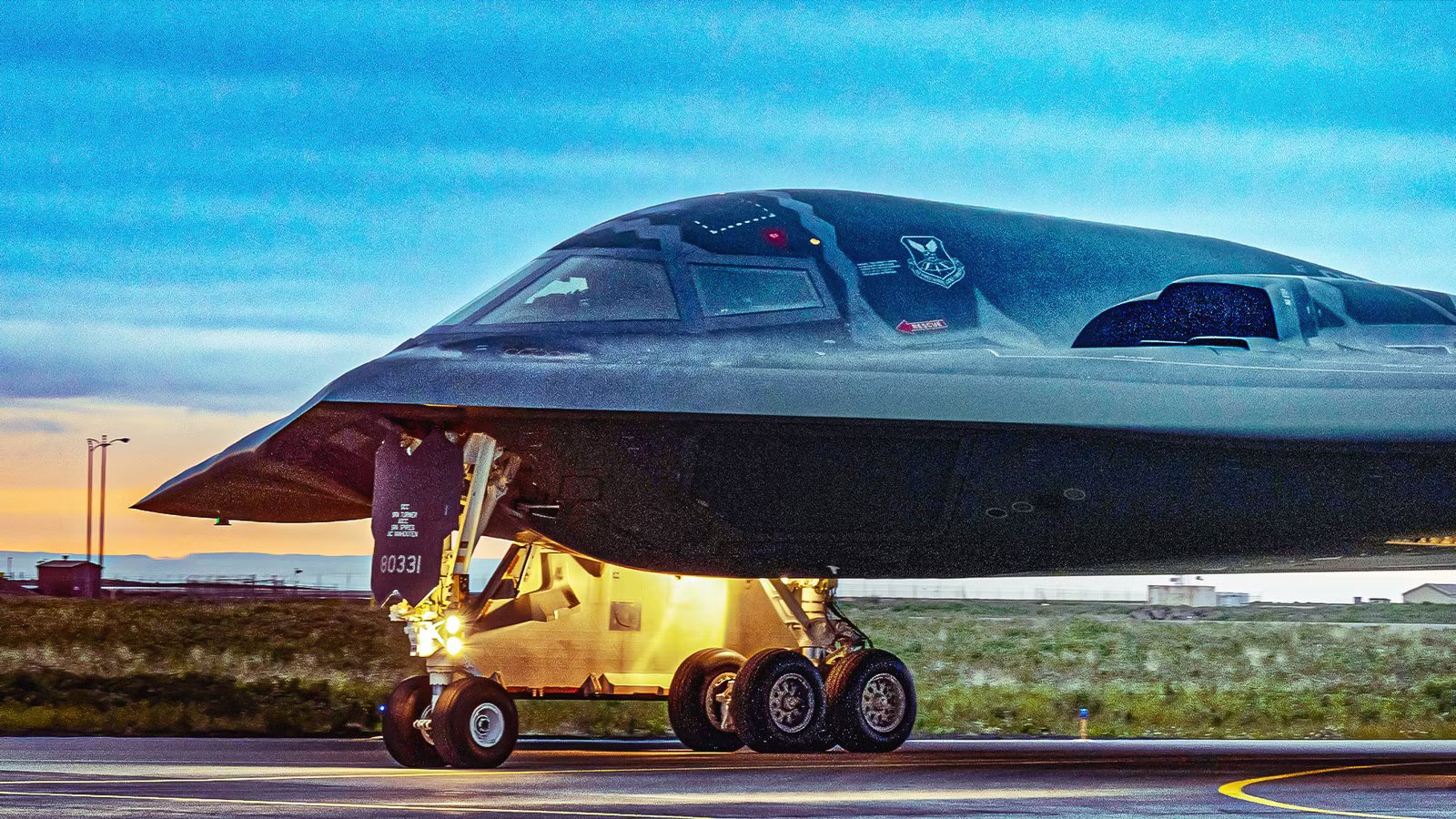
The Northrop B-2 Spirit cockpit has limited space for pilots to move about because it’s a functional work space and is not intended to be luxury accommodation. However, the B-2 needs to be flown by pilots, and pilots have needs, just like other humans. As of the time of writing, it seems B-2 Spirits are active in operations over Iran, and at least some of these missions are long and grueling nonstop flights from the United States and back. These aircraft are refueled multiple times both to Iran and on the way back.
For these long missions, United States Air Force (USAF) pilots typically bring water (sometimes Gatorade), toiletries, light snacks, and spare clothes on the flight. Here is what to know about the confined space on the B-2 Spirit and how it is designed to provide what the pilots need to complete their mission, but not more.
A Toilet & A Cot For Pilots

The B-2’s crew rest facilities are rudimentary, but functional. There is a basic toilet for the pilots, although privacy is minimal, with the other pilot reported to be able to hear the toilet in use. The onboard toilet is a portable and sealed system. On ultra-long missions, pilots need to get some shut-eye. There is a fold-down sleep cot behind the cockpit area that is mounted along the cockpit bulkhead. Understandably, given that the B-2 is only flown by two pilots, there is only room for one pilot to sleep at a time.
The cot is also sufficient for average pilots, but tall pilots find it difficult to fully stretch out. Some pilots are reported to prefer sleeping on the floor. The cot is also not designed for deep sleep; instead, it is designed for short and functional naps to help the pilots stay alert and get through their missions. They can get a proper night’s sleep after they touch down.
As stated, the B-2 is only flown by a crew of two. The pilot is seated in the left seat, while the mission commander is seated in the right seat. By comparison, the B-52 is flown by a crew of five (including the pilot, copilot, weapon systems officer, navigator, and electronic warfare officer), and the B-1B is flown by a crew of four (including the pilot, aircraft commander, offensive systems officer, and defensive systems officer).
The Microwave & Minifridge

Perhaps most famously, the B-2 Spirit has a minifridge and a microwave. The minifridge is not the typical minifridge someone might keep in their garage; it is a couple of Styrofoam coolers, so the type is more often found on camping trips. The pilots typically pack meals themselves, and they are able to heat them up in the microwave.
According to statements by B-2 pilot Lt. Col. Tim Sutton speaking on the Whayman College YouTube, it appears the microwave was a later addition to the aircraft. He said, “We got an upgrade to a microwave so… we have a microwave on board for food.” Additionally, the cockpit is reported to be tall enough for a six-foot pilot to stand erect. Pilots can typically stand up and stretch out in the cockpit, at least those pilots who are not tall. Historically, pilots were required to stand 5’4″ to 6’5″ tall, although regulations have relaxed.
|
US Air Force strategic bombers in inventory (per USAF) |
|
|---|---|
|
B-52 Stratofortress |
76 |
|
B-1B Lancer |
46 |
|
B-2 Spirit |
19 |
|
B-21 Raider |
2+ (for testing, expected to enter service 2027) |
When it comes to taking a shower on board, there is a solution. There are reports of pilots at the end of their long missions, stripping down to nothing and then washing with a sponge and drying with camping towelettes. Pilots may wash their faces, brush their teeth, put on a fresh flight suit, and comb their hair so that they are well-presented as they land.

This Is How Powerful The B-2 Spirit Bomber Is
The B-2 is famous for its stealth, but how much punch does it pack? Let’s find out.
The Long B-2 Spirit Missions

The issue for B-2 Spirit missions is that because the aircraft is so valuable and because it is often the most vulnerable on the ground, they are often flown directly from the Continental United States and back. This makes the sorties extremely long in duration. Not only does it require the crew to remain alert and at the top of their game during bombing and flights over hostile airspace, but it also requires multiple in-air refuelings needed to complete the mission.
The longest missions, including those of Operation Enduring Freedom in 2001, took as much as 44 hours for a single crew set. Some missions have lasted as long as 70 hours, but this is with touching down in Guam and replacing the crew. Other missions take over 30 hours, like those of Operation Odyssey Dawn (2011 against Libya), Operation Iraqi Freedom (2003 against Iraq), Operation Allied Force (against Serbia in 1999), and last year’s Operation Midnight Hammer (against Iran).
Whiteman Air Force Base famously has doctors and physiologists who specialize in aiding pilots to endure long missions and stave off fatigue. These doctors prescribe medication for especially long missions to help the pilots stay focused on their missions and return safely with the aircraft. These doctors also help other pilots, but B-2 pilots tend to attract more public attention.
B-2 Spirit Sorties In 2026

According to reporting by The War Zone, these B-2 Spirits are flying missions from their home base in Whiteman, Missouri, and dropping bunker-busting bombs on deep missile caves and other targets too deep for regular munitions carried by fighter jets to penetrate. One B-2 is able to carry 80 500-lb JDAMs or two 30,000 lbs GBU-57 Massive Ordnance Penetrators. The 80 smaller JDAMs have the ability to eliminate an entire airfield’s infrastructure in a single pass, while the GBU-57s sit at the other end of the spectrum and are able to dig down to some of the deepest facilities.
This doesn’t mean the B-2 Spirits have the capacity to destroy all the deeply buried targets, but it means they offer a capability that no other nation on earth possesses. Perhaps short of a nuclear bomb, these potentially have the greatest capability known to destroy deep facilities. When the facility is too deep for a single GBU-57, multiple bombs can be dropped one after another with exacting precision, digging deeper and deeper.
Naturally, the US Air Force has smaller bunker buster bombs in its arsenal, and the Pentagon has confirmed the B-2s have been using 2,000-lb bombs. It also has 5,000 lbs of bunker busters. The largest bunker busters known to be in Israeli service are the 2,000 lbs class, although there are unconfirmed reports that it may have 5,000 lbs class bombs as well.

Inside The B-2 Spirit Bomber’s Secret Crew Rest Areas
Why the B-2’s rest areas are functional, not comfortable and the tales of a “mini-fridge” are overblown.
B-2 Spirits Operating From Home Bases

Of the US’s line-up of strategic bombers, it seems the B-2 Spirits were the first to take part in 2026’s combat operations. Only after the US was sufficiently convinced that Iran’s air defense network was comprehensively eliminated, at least over the parts of the country of interest, did it start using its non-stealth B-1B Lancers and then its lumbering B-52 Stratofortress.
But while B-1B Lancers and B-52 Stratofortress are now performing their missions from RAF Fairford in England, it doesn’t appear the B-2s are. Operating from England means that the B-1Bs and B-52s are safe on the ground and out of range of missiles and drone strikes that could target them on the ground. However, it is also close enough to dramatically reduce the sortie time relative to flying from bases in the United States.
In early March, The War Zone reported, “A flight of four B-2 Spirit stealth bombers returning to Whiteman Air Force Base in Missouri after bombing Iran had to divert to Dyess Air Force Base in Texas. The aircraft — PETRO41, PETRO42, PETRO43 and PETRO44 — reportedly altered their course due to weather issues at Whiteman.” Some B-2s may have been forward deployed to Diego Garcia or Guam, but there is no open-source reporting confirming that as of the time of writing.
Most Bombers Cruise At About The Same Speed

Crew facilities are typically better on large transport aircraft like the C-17 Globemaster III, which are not constrained by stealth requirements like the B-2 Spirit is. B-2 pilot Lt. Col. Tim Sutton noted the B-2’s crew area is “nothing like the C-17” in terms of comfort. When it comes to cruise speed, as a rule, the optimal cruise speed for tankers and transports is slower than that of bombers. The typical transport and tanker ferry speeds generally fall in the Mach 0.75 to Mach 0.80 range, while the bombers sit around Mach 0.85, with the B-1 pushing that up to around Mach 0.90.
One misunderstanding of supersonic and subsonic aircraft is that supersonic aircraft fly faster than subsonic aircraft; they don’t. Supersonic-capable aircraft like the B-1B and Tu-160, along with fighter jets, seldom fly supersonic. Flying supersonic stresses the airframe, accelerates fatigue, and collapses combat ranges. Most military aircraft fly supersonic only in a dash, but this is not sustained.
Russia has been using its supersonic Tu-22M3s and Tu-160 on missions against Ukraine for four years now, but there is no indication they have been flown supersonic once, especially in sustained flight. Bombing missions are also typically not particularly time sensitive, as they go after fixed targets. That said, the ferry speeds for the US Air Force’s bombers are not the same, even if they are similar. They are typically high-subsonic for the B-1B and the slowest for the B-52, with the B-2 cruising around Mach 0.85.