dailynewsnblog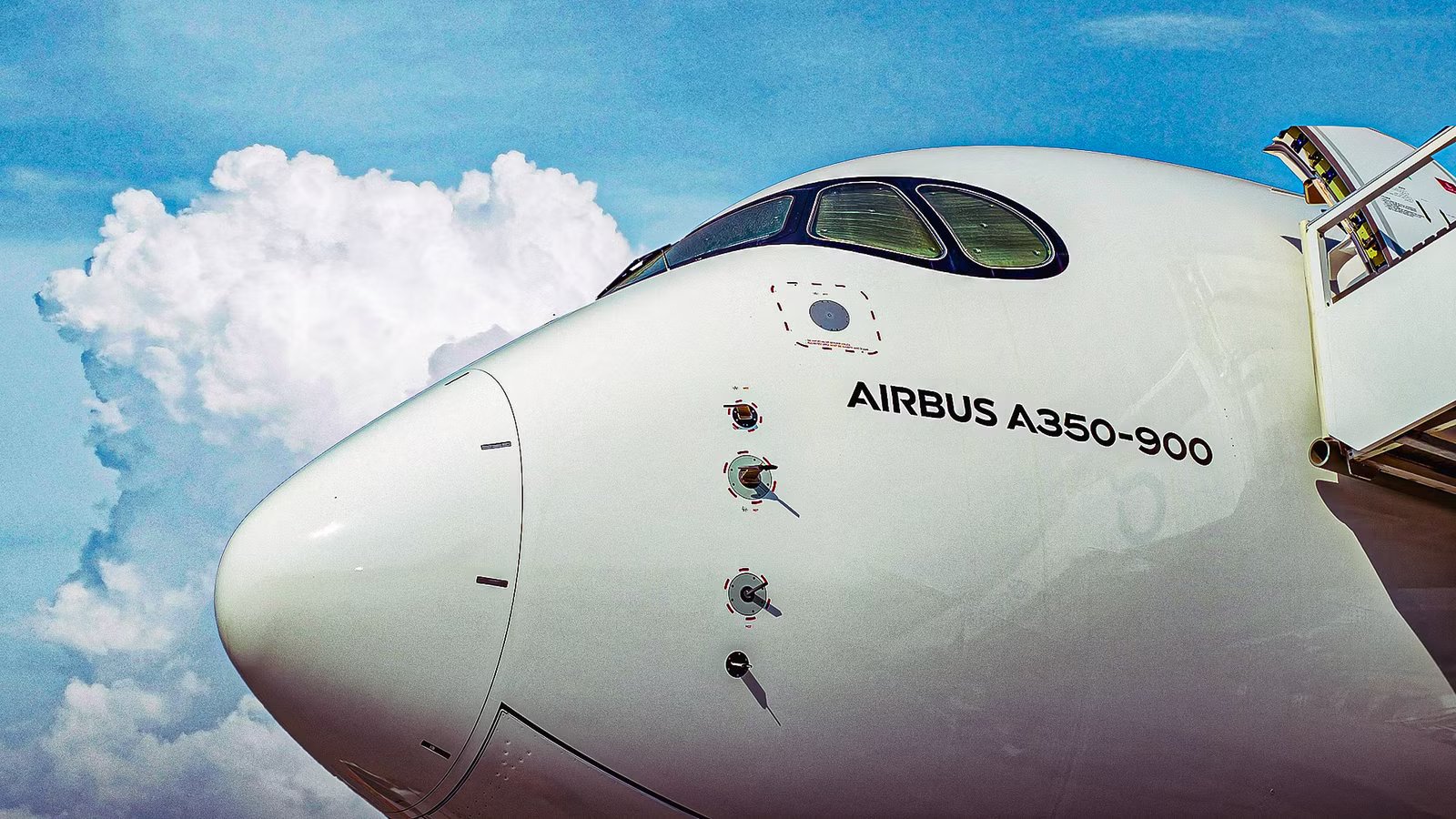
The Airbus A350is one of the most modern commercial aircraft in the skies today. However, beneath the aircraft’s sleek exterior lies more than just passenger seating and gleaming cabin finishes. Indeed, some of the A350’s secrets rest far away from the public eye, tucked away behind closed doors and hidden beneath the flight deck.
One such intriguing element is the space located just below where the pilots sit. It is small, discreet, and not part of any published seat map, yet its very existence highlights how modern aircraft are designed with not just passengers in mind, but also the people who operate them. This secret room is a testament to the evolving demands of ultra-long-haul flying, crew wellbeing, and the ingenious use of limited space on a high-performance aircraft.
All About The Airbus A350

The Airbus A350 is one of the most advanced widebody aircraft flying today. Born out of the need to challenge the Boeing 787 and 777 families, the A350 was designed to blend efficiency, comfort, and long-range capability. The program was officially launched in 2006, but took many years of development before the first flight of the A350-900 in 2013, which entered commercial service in 2015 with  Qatar Airways.
Its launch set a new benchmark for fuel efficiency and passenger comfort in the long-haul market, and went on to become a huge commercial success for the European manufacturer. The Airbus A350 is built around advanced materials and systems, and more than 50% of its structure is made from composite materials, similar to the Boeing 787, which helps reduce weight and improve fuel burn. Its wings are sculpted with aerodynamic efficiency in mind.
With its Rolls-Royce Trent XWB engines, the A350 balances power and efficiency in a way that’s attractive to airlines flying ultra-long sectors. Variants of the Airbus A350 currently in service include the A350-900 and the larger A350-1000, with both types flown by major carriers around the world. Delta Air Lines is the type’s largest operator in the US, while the likes of Singapore Airlines, Cathay Pacific, and  Emirates also have sizable fleets.
These aircraft are often deployed on long- and ultra-long-haul routes that once required stopovers but are now economically viable. Such routes include Singapore Changi Airport (SIN) to New York John F. Kennedy International Airport (JFK) and  Hartsfield-Jackson Atlanta International Airport (ATL) to Johannesburg O. R. Tambo International Airport (JNB).

Why The Airbus A350 Has Such An Ultimate Passenger Experience
Discover why the Airbus A350 offers the ultimate passenger experience — quieter cabins, roomier seats, and comfort praised by flyers worldwide.
The Airbus A350’s Hidden Space

When passengers think of a commercial aircraft, they usually imagine the cabin, including passenger seating, galleys, and lavatories, with few taking a moment to wonder what lies above or below that public space. On the Airbus A350, there is a restricted area just beneath the flight deck that is off-limits to passengers and generally unknown to most travelers. This secret space is not a lounge: rather, it serves a practical and critical role in aircraft operations.
It is a space used by flight crew for rest during long flights, and it also houses equipment that is essential for the smooth running of the aircraft. On many long-haul aircraft, space is at a premium, and designers have to balance structural requirements, passenger comfort, and crew needs without adding unnecessary weight or complexity. The area below the flight deck on the Airbus A350 represents one of those clever solutions where functionality meets necessity.
What makes this space unique is not just its location, but how it is integrated into the Airbus A350’s overall design. Unlike older aircraft, where crew rest areas might be cramped or cobbled together from unused storage, the A350 was engineered from the outset with crew wellbeing in mind, and that includes dedicated rest spaces located away from the main cabin. Placing such a rest area beneath the flight deck takes advantage of otherwise unused space, while keeping the crew close to key operational zones.
What Is It Like Inside?

Access to this hidden room is typically through a discrete door near the flight deck, known only to the pilots and cabin crew. For the rest of the passengers, meanwhile, it is invisible. Once inside, the space is functional rather than luxurious, but it’s designed to be comfortable and restful, and the furnishings usually include a small bunk or resting area, lighting that can be dimmed, and enough room for flight crew to lie down and rest.
On ultra-long flights, crew members generally use this area in shifts, enabling pilots to rest while others take the controls. After all, resting in a dedicated crew area helps reduce fatigue and supports safety on ultra-long-haul flights that can exceed 18 hours. In addition to sleeping facilities, the compartment may also serve as a quiet spot for the crew to take a break during their duty.
It is separate from the main passenger environment, meaning less noise and distraction, which is a valuable feature on aircraft that operate at night or through multiple time zones. The space is also designed with safety in mind: anything stored there must be secured for turbulence, and the area must meet regulatory requirements for weight, ventilation, and access.

Why The Airbus A350 Has Such A Reduced Pilot Workload
Airbus calls its A350 the “best office in the sky” for good reason. It has exceptionally low pilot workload.
Why Crew Rest Matters

Passenger comfort gets a lot of attention in the aviation industry, and for good reason, with airlines competing on the likes of seat design, in-flight entertainment, cabin mood lighting, and airport lounge access. However, behind this is another layer that matters just as much: crew wellbeing. On long-haul flights, pilots and flight attendants are on duty for many hours, and international regulations require rest periods so that they remain alert throughout.
This is where dedicated crew rest areas come into play, as being able to rest in a quiet, darkened environment can make the difference between a manageable duty period and one that’s exhausting or unsafe. Crew rest compartments are not glamorous: they are functional spaces designed to meet health, safety, and regulatory standards. However, they are becoming increasingly important as airlines push into ultra-long-haul markets where the time in the air stretches well beyond previous extremes.
Design Efficiency & Space Utilization

Commercial aircraft design is a constant exercise in compromise and optimization, and every cubic inch of an aircraft weighs money and affects performance, so engineers must decide where space should go and how it should be used. For years, early long-haul aircraft prioritized passenger space and cargo capacity, with crew rest areas sometimes improvised above overhead lockers or rear galleys.
Today, with aircraft like the Airbus A350, the philosophy has shifted toward intentional crew wellbeing without sacrificing performance. Aircraft like the Airbus A350 are designed from the beginning to integrate systems and spaces in the most efficient way possible. That means thinking beyond just seating rows and baggage lockers.
Engineers model airflow, pressurization, structural loads, and human ergonomics, and when it comes to hidden spaces like the one under the flight deck, what looks like a secret room to the outside world is really the result of detailed planning and regulatory input. This design efficiency also benefits passengers indirectly, as, by allocating space intelligently, Airbus can keep the cabin quieter, reduce vibration, and improve overall aircraft balance.
Meanwhile, airlines that operate the A350, such as  Delta Air Lines, Qatar Airways, and Singapore Airlines, find they can serve ultra-long-haul routes economically. Ultimately, space on an aircraft is always at a premium, and the fact that there is room for a crew rest area, tucked away beneath the cockpit, speaks to the A350’s thoughtful design. It also reflects the changing expectations of modern aviation, with safety, efficiency, and human factors no longer being afterthoughts, but core elements of aircraft design.

This Is How Powerful The Airbus A350 Is
Its power isn’t just in raw thrust.
The World’s Largest Operators Of The Airbus A350

The latest data from ch-aviation shows that Singapore Airlines is currently the world’s largest operator of the Airbus A350. The  Star Alliance carrier has a total of 65 in its fleet, made up of 58 A350-900s and seven A350-900ULRs, followed by Qatar Airways with 58 and Cathay Pacific with 48.
|
Ranking |
Airline |
Airbus A350-900 |
Airbus A350-900ULR |
Airbus A350-1000 |
Total |
|---|---|---|---|---|---|
|
1 |
Singapore Airlines |
58 |
Seven |
– |
65 |
|
2 |
Qatar Airways |
34 |
– |
24 |
58 |
|
3 |
Cathay Pacific |
30 |
– |
18 |
48 |
|
4 |
Air France |
38 |
– |
– |
38 |
|
5 |
Delta Air Lines |
37 |
– |
– |
37 |
|
6 |
Air China |
30 |
– |
– |
30 |
|
7 |
Lufthansa |
30 |
– |
– |
30 |
|
8 |
Japan Airlines |
15 |
– |
10 |
25 |
|
9 |
Turkish Airlines |
25 |
– |
– |
25 |
|
10 |
Thai Airways |
23 |
– |
– |
23 |
Sizable orders for the A350 have also been placed by many airlines, including Air Canada, Korean Air, Air India, Starlux Airlines, and Qantas. The Australian flag carrier will deploy the A350-1000 on its upcoming Project Sunrise flights, connecting Australia to Europe and North America with non-stop flights. The world’s largest operators of the Airbus A350 are outlined in the table above.