dailynewsnblog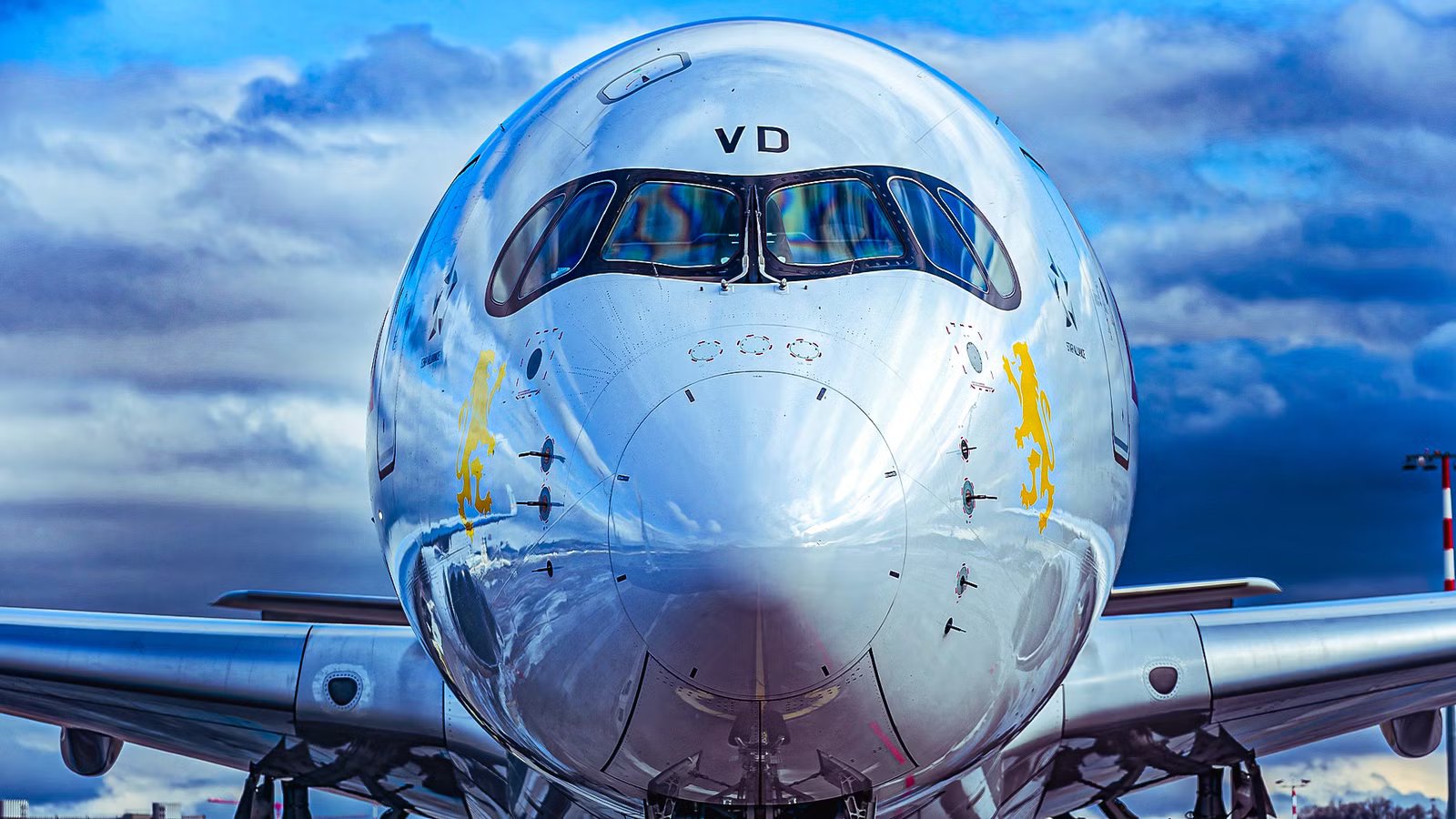
The Airbus A350’s avionics bay is one of the plane’s most intriguing hidden spaces, as it is a dense, access-controlled compartment beneath the cockpit floor that houses much of the plane’s electronic and computing infrastructure and technology. Rather than just being tucked invisibly behind cockpit panels, many of the A350’s key avionics units are concentrated in a stand-up workspace that looks more like a compact server room than a traditional aircraft cavity. That arrangement reflects the reality of a modern widebody aircraft, where flight management, monitoring, electrical distribution, and system-control hardware all need to be both protected and maintainable. The bay is reached through a floor hatch in the cockpit area, and the layout is designed to give technicians easier access to critical equipment without dismantling large sections of the plane.
This unique space is an unseen technical heart for one of Airbus’ most advanced long-haul aircraft. In this discussion, we aim to reveal how much modern commercial aviation depends on digital architecture, redundancy, and smart maintenance design, not just aerodynamics and engines. It also helps explain why the A350 feels so technologically sophisticated from the flight deck outward. The avionics bay is compelling because it turns an ordinary assumption that airplanes hide their computing centers behind hidden panels into something far more accessible.
Avionics And Computer Systems On Modern Commercial Aircraft

On a modern airliner, avionics and computer systems act as the aircraft’s central nervous system. Sensors across the jet constantly measure speed, altitude, position, attitude, engine performance, temperature, pressure, and the status of hundreds of onboard systems. That information is sent through digital networks to flight-control computers, display systems, navigation equipment, and maintenance monitors, which then process it in real time and present the most important data to pilots in an organized form.
In advanced aircraft, many of these functions are integrated through modular avionics architectures rather than isolated black boxes, allowing systems to share data more efficiently and support flight planning, system health monitoring, and warning logic. In just as important a manner, modern aircraft computers are built around redundancy and fault tolerance. This has been especially the case over the past few years, since a pair of 737 MAX crashes caused by faulty sensors and computer systems led to hundreds of deaths and brought an international spotlight on flight computer safety.
Modern aircraft systems are overwhelmingly digitized, and advanced computers make it easy for pilots to fly jets, allowing them instead to focus on troubleshooting computer systems. While it may come as a surprise to many, modern cockpits are already highly automated. Critical functions do not depend on a single computer, sensor, or power source. Instead, multiple channels cross-check each other so that if one element fails, others can take over or isolate the fault. This is especially important in aircraft that are powered by fly-by-wire technology, where pilot inputs are interpreted electronically before commands are sent to control surfaces. The result is a system that is not only highly automated, but also designed to remain safe, predictable, and maintainable even when individual components may happen to fail.
A Brief Analysis Of The Airbus A350

Before we dive into this specific avionics bay, we need to discuss the aircraft as a whole first. The A350 is the manufacturer’s flagship long-haul widebody and one of the company’s most capable modern clean-sheet airliners. Launched in 2006, it was designed to compete at the top end of the twin-engine market with a strong emphasis on efficiency, range, and passenger comfort. The family’s two main passenger variants are the A350-900 and the larger A350-1000, which Airbus lists at roughly 300-350 seats and 350-410 seats respectively, in typical three-class layouts.
The manufacturer Airbus also notes the impressive extended-range capabilities of both the A350-900 and the A350-1000, putting the aircraft firmly in the ultra-long-haul category. What ultimately makes the A350 especially important is that it blends long-range capabilities with a highly digital, efficient design. Airbus describes it as a next-generation jet built around extremely advanced aerodynamics, Rolls-Royce Trent XWB engines, and a structure using a high proportion of composite materials.
This ultimately helps airlines lower fuel burn while also giving the jet the range to operate missions that once required larger or less efficient aircraft. The A350 has become a key aircraft for intercontinental networks because it offers airlines flexibility and enough capacity for premium long-haul routes, but with economics that suit thinner point-to-point markets as well. In simpler terms, the jet is Airbus’ answer to modern demand for quieter, more efficient, long-range twin-engine aircraft.

Insanely Modern: Inside The Airbus A350’s Secret Room Below The Flight Deck
The Airbus A350 is one of the most modern commercial aircraft in the skies today.
A Look Into The Avionics Bay

The Airbus A350’s advanced avionics bay sits directly underneath the flight deck and functions as one of the jet’s most important hidden technical spaces. For anyone who is seeing it for the first time, it looks significantly less like a traditional aircraft compartment and more like a compact equipment room, with racks, modules, wiring, and access points concentrated in a stand-up area below the cockpit’s floor.
This overall visual impression is not misleading in nature. The bay supports the A350’s highly digital design philosophy, in which many key functions are coordinated through integrated modular avionics rather than scattered across large numbers of separate legacy boxes. Airbus says the A350’s Integrated Modular Avionics allows aircraft systems to communicate in real time and supports flight planning, fuel cost optimization, system health monitoring, and predictive maintenance.
In practical terms, the bay itself is where much of that kind of architecture becomes physically tangible. It is not simply where the computers go, but a carefully organized environment built around accessibility, redundancy, and system integration. That is why the compartment has attracted so much attention in pilot walk-throughs and popular coverage. It gives a rare, visual glimpse of the electronic backbone that makes the A350 one of the most advanced long-haul airliners currently in global airline service. For most, however, the bay is an unseen and unheard-of feature of an advanced cabin.
A350 Avionics Bay Maintenance Access Matters

What makes the A350’s avionics bay especially interesting is not just what it contains but rather how effectively it reflects the realities of operating and maintaining a modern widebody. This is a working technical space designed for authorized crews and technicians who may need to inspect, isolate, or replace components quickly. The bay is reached through a cockpit floor hatch in the walk-through videos that made it famous, and mechanics discussing the aircraft describe it as a practical location for circuit breaker access, computer replacement, and troubleshooting.
That matters primarily because the A350 was designed around efficiency, not only in the skies, but also on the ground. Airbus explicitly links its avionics architecture to health monitoring and predictive maintenance, which means the aircraft’s systems are intended to help airlines identify faults, improve dispatch reliability, and reduce downtime.
The avionics bay is therefore part of a larger operational story. It is a physical interface between the plane’s digital intelligence and the engineers responsible for keeping it serviceable. This unique compartment is hidden from passengers, but it reveals how modern aviation depends as much on maintainable computing infrastructure and fault management as on wings, engines, and cockpit displays.

The Striking Differences Between The Airbus A320 & Boeing 737 Cockpits
Explore the striking Airbus A320 vs. Boeing 737 cockpit differences, from sidesticks to noise, and learn how pilots see these iconic flight decks.
What About Avionics Bays On Similar Aircraft?

On many similar long-haul aircraft, the avionics bay serves much the same purpose as it does on the A350, as it is a hidden electronics hub where critical computers, interfaces, and maintenance-accessible equipment are concentrated. On Airbus aircraft like the A330 and the A330neo, this under-cockpit compartment also gives technicians a practical place to access computers and troubleshoot faults without having to tear the flight deck apart, according to Airbus.
Boeing widebodies all have a relatively similar logic, with the space often referred to as an electronic and equipment (E&E) bay. On aircraft like the Boeing 787 Dreamliner, that area supports the jet’s highly networked systems architecture and provides physical access to the hardware behind the plane’s digital flight, communications, and monitoring systems.
What ultimately differs is not the basic idea, but rather the level of integration and overall sophistication. Newer aircraft tend to rely much more on heavily modular, networked avionics and health-monitoring systems, all so that these bays increasingly resemble compact server rooms rather than simple racks of isolated boxes. In pretty much every case, the principle is relatively simple, as vital electronics remain protected, cooled, and easy to maintain.
What Is Our Bottom Line?

At the end of the day, the Airbus A350 has been, for the past decade, one of the most advanced and capable long-haul aircraft on the market. The jet is capable of flying further than pretty much any other large-sized widebody on the market today, meaning that it has to have best-in-class flight control and avionics systems to support ultra-long-haul operations. Avionics technology has also only continued to advance.
The aircraft has slowly become a pilot favorite due to its incredibly advanced control systems. The avionics bay is a key piece of why this system functions as effectively and efficiently as it does. The compartment, however, will seldom be seen by passengers and just as rarely seen by the cabin crew in any significant capacity.
Although it is a unique addition to the A350 and a key piece of how the jet operates, it is not particularly distinct that the aircraft has a special avionics bay. Other Airbus jets often feature a similar setup, and Boeing has a slightly altered structure, although the same principle pretty much still holds.