dailynewsnblog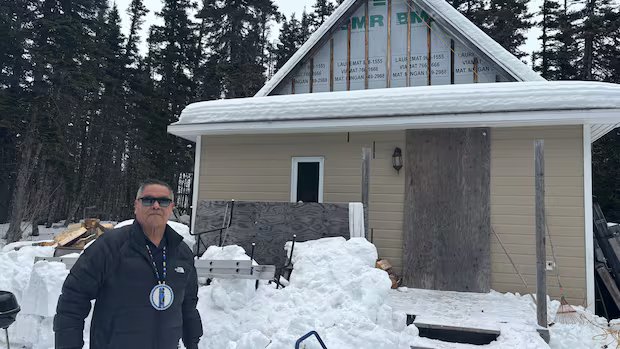

Listen to this article
Estimated 4 minutes
The audio version of this article is generated by AI-based technology. Mispronunciations can occur. We are working with our partners to continually review and improve the results.
An Innu community on Quebec’s Lower North Shore is shaken by an intervention by wildlife officers who circled and attempted to enter a cabin in Ekuanitshit Monday evening, injuring an elderly woman in the process.
The officers, armed with a search warrant, were there to check for the presence of a boreal caribou carcass — a species of caribou listed as a threatened species under both federal and provincial legislation.
But the intervention turned tense.
Community members filmed and posted videos of the interaction to social media, prompting reaction from Indigenous communities who underlined the conflicting dynamic between Indigenous hunting practices and wildlife laws.
Quebec’s provincial police confirmed to Radio-Canada that officers were present to support the game wardens in the community.
Over a dozen officers were involved, says Jean-Charles Pietacho, chief of Ekianitshit, who witnessed the intervention.
“They really lacked respect. They came in like cowboys, banging on doors,” said Pietacho.
A grandmother who was in the cabin with her family blocked the agents from entering, he says. When officers cracked the cabin’s windows, a shard of glass hit and cut her face, according to the chief.

Evelyne Piétacho confirmed in a message to CBC that she was the woman injured in the intervention on Monday evening and sent along a photo of her face showing a cut near her eye.
An ‘intrusion in our lives,’ chief says
On Tuesday, Pietacho spoke out about how this intervention further fractured the relationship between the community and the government.
“It’s like an intrusion in our lives,” he told CBC.
“It’s the history we unfortunately have lived for the past 100 years and it’s continuing today in 2026. But we will not give up, that’s for sure. We will not give up on doing what we can for [the protection] of our traditional food.”

When questioned about the events by Radio-Canada, Quebec’s wildlife protection officers’ union president, Martin Perreault, refused to comment, citing a lack of details.
A day after the intervention, police in the Innu community of Pakua Shipi issued a news release saying wildlife officers were no longer authorized to intervene in the community.
“This decision is intended to prevent any escalation and to ensure the safety of everyone,” read the statement.
“Recent events that occurred near another community demonstrate that the absence of structured dialogue can create unnecessary tensions and compromise the safety of both officers and community members.”
No more interventions ‘until the dust settles’: minister
Questioned at the National Assembly on Tuesday, Ian Lafrenière, the minister responsible for public security and relations with First Nations and Inuit, expressed his concern regarding the events.
He offered to meet with the chiefs of Ekuanitshit and Nutashkuan over the coming days. This invitation will later be extended to the entire Innu Nation, he specified.
Lafrenière added that wildlife protection officers will no longer intervene within the communities “until the dust settles” and they have had the chance to speak with the chiefs.

A line was crossed on Monday and “trust is broken,” said Assembly of First Nations Quebec-Labrador Chief Francis Verreault-Paul.
He condemned the methods used by law enforcement but told Radio-Canada he’s ready to collaborate with the Quebec government on this matter.
“About 20 Sûreté du Québec officers, accompanied by wildlife officers — all of them armed — descending on a cottage in the middle of the night for possibly one boreal caribou is not the way to do things,” Verreault-Paul told Radio-Canada.