dailynewsnblog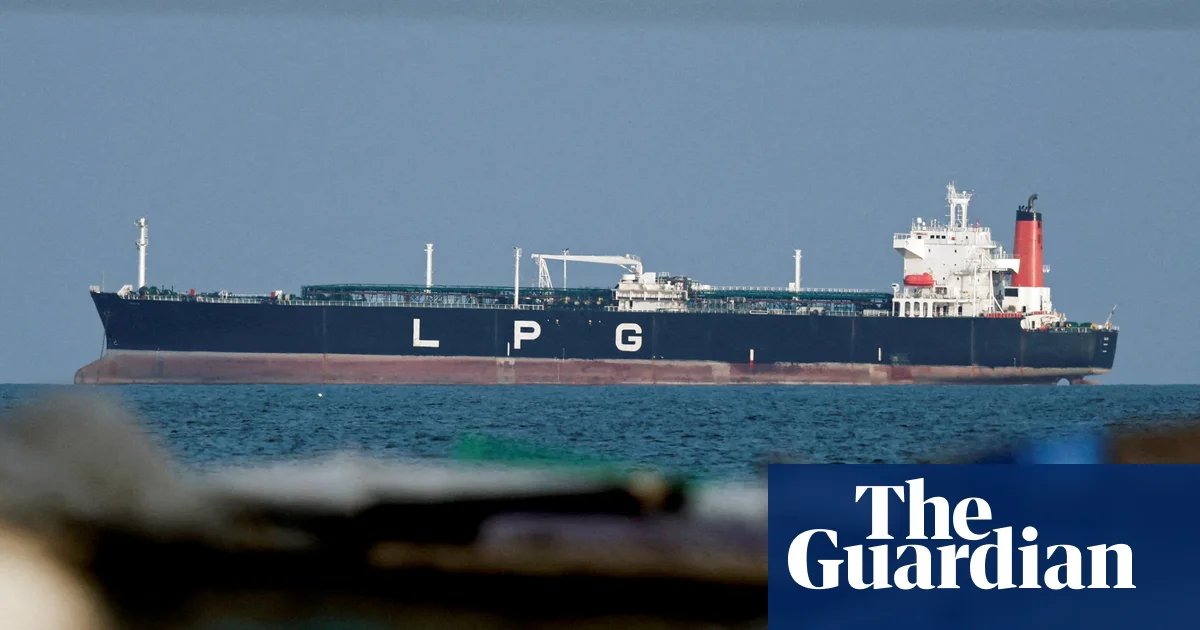
Few doubt that in the first days of the new war in the Middle East, the initiative belonged to the US and its ally Israel. Now it seems less sure, however.
Mohsen Rezaee, a senior officer in Iran’s Revolutionary Guards, on Sunday said “the end of the war is in our hands” and called for the withdrawal of Washington’s forces from the Gulf and compensation for all damage caused by the assault.
Three weeks ago, it appeared unlikely that Tehran’s senior officials would ever sound quite so confident.
The conflict began with a surprise strike by Israel that killed the supreme leader Ayatollah Ali Khamenei. US and Israeli warplanes then swiftly proved they could operate with impunity over Iran, drawing on deep reserves of intelligence to strike at thousands of targets. The only significant losses were inflicted by friendly fire.
Iran retaliated with barrages of missiles and drones launched at Israel that were largely intercepted by Israel’s air defence systems. So far, 12 people have been killed in Israel by attacks by Iran. The toll is still substantially lower than in the much shorter conflict between the two powers last year.
Countries in the Gulf did less well when targeted by Iran, but have still been able to protect their residents and infrastructure from any crippling damage – though whether their stocks of crucial interceptor missiles will run out is much debated, and their reputation as oases of calm, luxury and wealth is in ruins.
The US and Israel prove each day their massive conventional military superiority with more strikes on Iran, but it could appear the initiative is slipping away from them.
Donald Trump has given multiple timelines for the duration of the conflict, but in recent days has suggested it would only end after Iran has been forced to make concessions. Many analysts believe the US is getting trapped in a much longer war than it wanted.
The critical change has been the closure of the strait of Hormuz, which carries a fifth of the world’s oil and gas. This has sent shock waves through the global economy, sending oil prices soaring and spiking prices at the pump. The US president is now coming under domestic and international pressure to bring hostilities to a rapid end.
Danny Orbach, a professor of military history at the Hebrew University in Jerusalem, nonetheless insisted Israel and the US were still directing the dynamic of the war.
“Having the initiative means you are setting the agenda … Iran is running out of missile launchers … so the only thing open to Tehran was to escalate the conflict and hope that somehow it will stop. That is why it attacked the Gulf states and then closed the strait of Hormuz,” he said.
Some have suggested Trump could order US marines who are on their way to the Middle East to seize Kharg Island, which is Iran’s principal oil export hub, to pressure Tehran. But the marines will not arrive for at least two weeks.
Trump may also order the destruction of the oil facilities on Kharg, crippling Iran’s economy potentially for years to come. So far, only military targets there have been hit, a choice made “out of decency”, Trump said on Saturday.
“Iran is dependent on a US decision on whether to blow up or not their economy. If there is any stalemate, it is not an equal one,” said Orbach.
But other analysts disagree. Peter Neumann, a professor of security studies at King’s College London, said Iran had played a bad hand successfully.
“For a number of days now, the US has been trying to find a good response to the closure of the strait of Hormuz, that they clearly didn’t expect … I think the Iranians now have the initiative,” Neumann said.
Trump has called on other countries to send warships to join a US attempt to reopen the strait. None have so far accepted, and most analysts say such an effort would be fraught with risk. Not only would protecting hundreds of tankers demand the diversion of huge military resources, but it could never guarantee total security for shipping. A single Iranian missile, mine or small boat loaded with explosives could have a devastating effect.
This suggests the decision to reopen the strait will have to be taken in Tehran. There is little evidence that Iran’s current leadership is inclined to do anything that would mitigate the threat to the global economy, or that the regime change that Israel and the US hoped to bring about in Iran is imminent.
Neumann added: “Despite the great success in destroying military and economic infrastructure in Iran, this hasn’t had the desired political effect. The regime seems weak but stable.”
Israeli commentators on Sunday described government efforts to lower expectations raised at the start of the war. Yoav Limor wrote in the mass market newspaper Israel Hayom that officials believe regime change is less likely and blamed “the powerful grip the regime has continued to maintain on the security forces and the ruthless suppression that deeply terrified the Iranian public”.
But within this spiralling regional crisis, other smaller conflicts may follow their own dynamics.
Pro-Iranian militias in Iraq still seem unwilling to commit entirely to the defence of Iran, while the Houthis in Yemen have yet to enter the hostilities.
In Lebanon, Hezbollah surprised Israel by seeking to avenge the death of Khamenei with a series of extensive barrages with missiles and drones. Since then, the Iran-backed Islamist movement has continued to fire salvoes into northern Israel, revealing a strength unsuspected by many analysts.
Israel has responded with a massive air offensive that has killed more than 800 people and forced the displacement of about 800,000.
David Wood, a Lebanon analyst at the non-profit International Crisis Group, said Hezbollah did not hold the same cards as the Iranians.
“Israel have clear and ambitious aim of eliminating Hezbollah as a threat to its national security, though their means of achieving this are unclear. Hezbollah has one clear objective: to survive,” said Wood. “Hezbollah might have surprised even the Israelis at the beginning of the conflict but we shouldn’t assume it will be able to maintain that over the long term given the massive Israeli military superiority.”