dailynewsnblog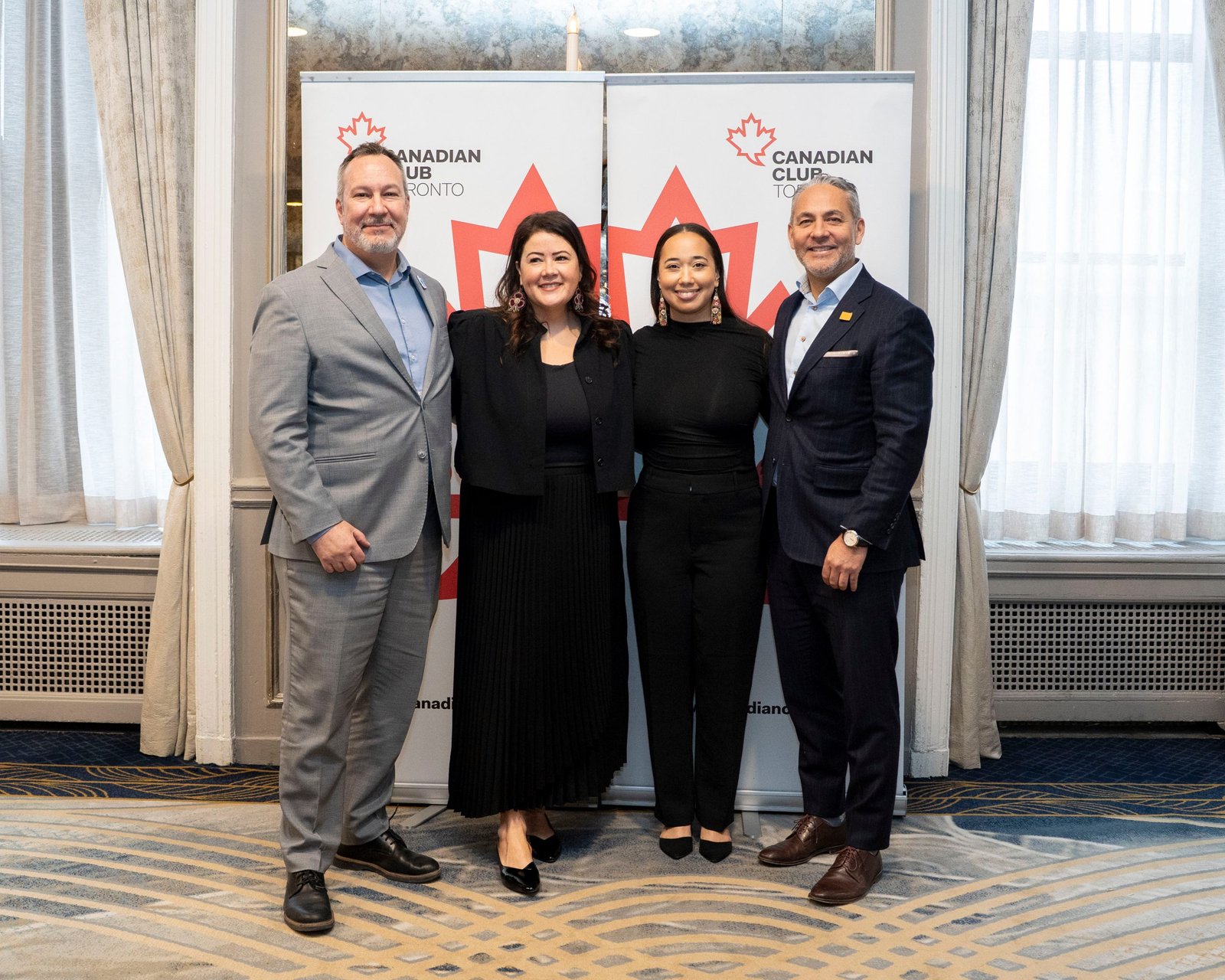
Four members took the stage at the Canadian Club in Toronto Wednesday to share their experience working with the new federal government agency created to fast-track development.
Some of Ottawa’s Indigenous advisors say their expertise is solicited and taken into account as the Carney government works to speed up major projects through streamlining and financing coordination.
Four of the 11 members of the federal Indigenous Advisory Council (IAC) took the stage at Toronto’s Canadian Club on Wednesday—a rare public engagement for the group as a whole since being appointed last September.
“Some people may see this as another body of government to be tokenized,” said Kluane Adamek of Kluane First Nation in the Yukon.
“I see it very differently… as having the ability as a council to be working at the forefront of something that this country is doing is totally different.”
Adamek said the group has only been in place for six months, and that more time is needed to assess how the government is acting on the advisory council’s advice and recommendations.
But overall, she senses the council has already made a difference.
“I do think there have been steps taken and advancements made that wouldn’t have been made had there not been an IAC,” she said.
The group has met at least once since its appointment, as iPolitics reported in November.
It is not clear if there have been more meetings since, but the government has mandated a minimum of four in-person meetings a year, plus more virtual meetings as required.
The federal government pays IAC members a flat rate of $89,315 per person to cover time and travel expenses for eight in-person meetings over a two-year mandate, according to public records.
Six months into their appointment, the IAC has yet finalized the terms of reference that establish the group’s purpose, mandate and responsibilities within the Major Projects Office (MPO).
Insights into inner workings of advisory process
But even with no official and agreed-upon terms of reference, the IAC members on the panel mentioned they are receiving project briefs that enable them to provide expertise and guidance.
“We require those briefings to be delivered with an Indigenous lens,” said Nunavik’s Vanessa Doig.
“What kind of consultation have they already undertaken? Does that constitute fulsome engagement? If it doesn’t, then we would advise the MPO on what additional information should be necessary, because the duty to consult remains with the Crown.”
Doig points out that it isn’t the group’s responsibility to assess what constitutes a good project.
“We’re not going into an advisory council meeting to vote at the end,” she said.
“It’s more so that we’re all giving our perspectives and counting on those to be considered by the MPO.”
Several members pointed out that there is space for different opinions among council members, and there is no expectation that the group will be unanimous in its recommendations and advice.
“I mean, ultimately, if we’re at an impasse, we’ll leg wrestle,” joked Lorne Pelletier of the Manitoba Métis Federation, before adding there are many opportunities to give feedback to the MPO in real time.
The IAC was created following some backlash from Indigenous groups about the implications of the Building Canada Act, which enables projects with a “national interest” designation to bypass several laws, including the oil tanker moratorium off the B.C. Coast.

Treaty 8 Grand Chief Trevor Mercredi also sits on the IAC, but was not present at the Toronto panel.
He came to Parliament last fall and told reporters the IAC did not provide any input on the agreement between Ottawa and Alberta that promises a new bitumen pipeline can be referred to the MPO for designation under the Building Canada Act.
He expressed concerns about whether the MPO is serious about listening to its Indigenous advisors based on that experience.
On the IAC panel, Bingwi Neyaashi Anishinaabek’s JP Gladu called for more programs that facilitate Indigenous equity in major projects, specifically mentioning the budget of the federal Indigenous Loan Guarantee program.
“I don’t know if $10 billion is going to be enough if we’re talking about half a trillion dollars worth of required investment,” he said, urging bankers and investors to help fill the void.