dailynewsnblog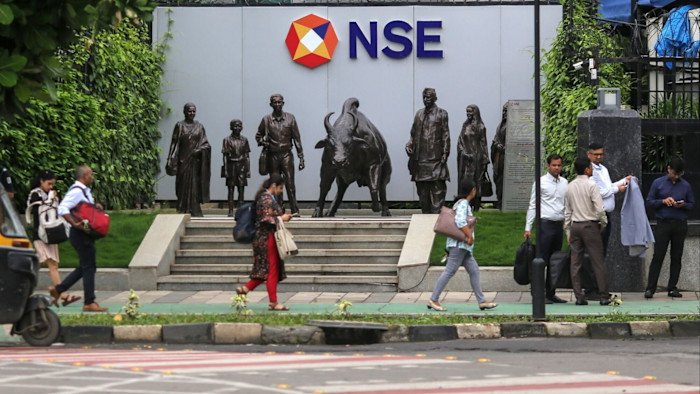
Indian industry and financial markets cheered a long-awaited deal between New Delhi and Washington to cut the highest US tariff rate imposed on any major economy, even as analysts cautioned that key details remained unclear.
News of the overnight agreement lifted India’s previously underperforming markets. The blue-chip Nifty 50 index rose 2.8 per cent on Tuesday, trimming its year-to-date decline to 1.3 per cent, while the rupee recorded its biggest one-day gain in more than three years, strengthening 1.2 per cent against the dollar.
The rally came after US President Donald Trump indicated that the US and India had reached an agreement reducing Washington’s 50 per cent tariffs on Indian imports, some of the highest levied by his administration on any country during his second term.
“As long as there is a deal in place and Trump off your back it will help sentiment for the next few months,” said Amar Ambani, executive director at Yes Securities in Mumbai.
Trump said on Monday that the US would lower its tariffs on India to 18 per cent after Prime Minister Narendra Modi “agreed” to halt purchases of Russian oil.
US officials had accused India, which has a close relationship with Russia, of helping to fund Moscow’s war in Ukraine and last year levied a 25 per cent punitive tariff on its imports for this reason, on top of a 25 per cent “reciprocal” tariff India already faced on its exports to the US.
Anant Goenka, a billionaire Indian industrialist and president of the Federation of Indian Chambers of Commerce and Industry, hailed the agreement as a “significant reset in India-US economic ties”.
But Wendy Cutler, a former US trade representative and now senior vice-president at the Asia Society Policy Institute, said that, while the deal was “certainly a relief” for India, the announcement was “light on details”.
Doubt was also thrown on whether India would be able to eliminate all Russian imports entirely, even though it had curtailed inflows in recent months.
“It is unlikely to cease all purchases immediately which could be disruptive to India’s economic growth,” Moody’s Ratings said in a statement. “A complete shift towards non-Russian oil could also tighten supply elsewhere, raise prices and pass through to higher inflation given that India is one of the world’s largest oil importers.”
Trump in his announcement on Monday said that Modi had agreed to “‘BUY AMERICAN,’ at a much higher level, in addition to over $500 BILLION DOLLARS of U.S. Energy, Technology, Agricultural, Coal, and many other products”.
Brooke Rollins, US agriculture secretary, later thanked Trump for a deal that she said “will export more American farm products to India’s massive markets, lifting prices, and pumping cash into rural America”.
However, it is not clear how much India has yielded on that front. Nearly half of India’s workforce is involved in and dependent on agriculture, and New Delhi has previously protected the sectors vehemently in all its trade deals.
Piyush Goyal, India’s trade minister, said after Trump’s announcement that “this agreement unlocks unprecedented opportunities for farmers”.
In trade talks with Washington last year, India came close to an agreement to slash most of its duties on imports from the US but resisted opening up its dairy and other markets to US imports.
“This is the final straw. We will hit the street,” warned Avik Saha of the Sanyukta Kisan Morcha, or United Farmers’ Front, a coalition of dozens of farmers’ unions, as news broke of a deal that could potentially open up agriculture. “This government seems to have taken the stand that they don’t need farmers’ support to win elections. Farmers should show them their strength.”
India might have to extend any concessions on agriculture to other countries too for parity, which was part of their trade agreement, two western diplomats said.
India had in recent months sped up trade negotiations with other leading partners after Washington put it under pressure over trade and its purchase of Russian oil. New Delhi and London signed off on an India-UK free trade agreement last year, and last week the EU and India concluded talks on a long-negotiated FTA.
“The FTAs with the EU and the UK led to some recalculation in Washington,” said Shyam Saran, a former Indian foreign secretary. “The expectation that, ‘we have the Indians by the neck’, has not worked out the way they wanted.”
For now, analysts and industry expect pressure to ease on Indian markets and business sentiment.
“This is a great boost for the already sombre sentiments as Indian goods will now be able to compete on US soil,” said Apurva Sheth, head of market perspectives and research at Samco Securities in Mumbai.
“However, one must also remember that exports to the US are a small part of our $4tn GDP,” Sheth said. “So yes the trade deal is good for the economy and markets in the short term but one must not expect miracles out of it.”