India, Canada agree to terms of reference on comprehensive economic partnership


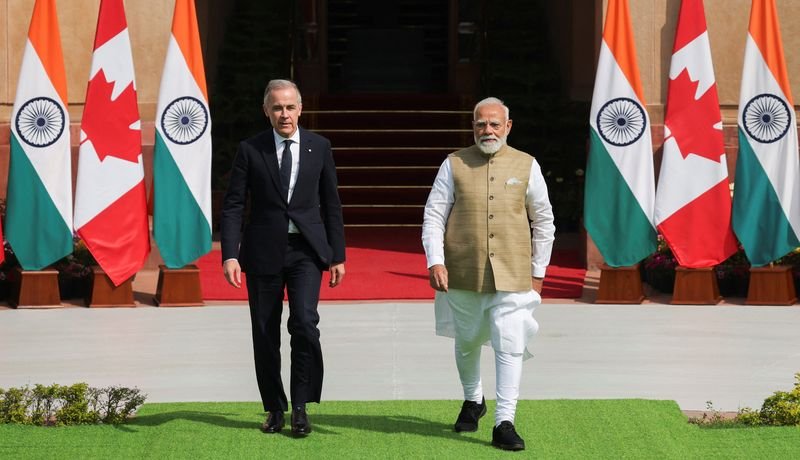
NEW DELHI, March 2 (Reuters) – India ‌and Canada ‌have agreed to ​terms of reference on a comprehensive economic partnership, ‌the ⁠Indian foreign ministry said ⁠on Monday.

India and Canada ​aim ​to ​increase bilateral ‌trade to $50 billion by 2030, Indian Prime Minister Narendra Modi ‌said during ​press ​statements ​with ‌visiting Canadian PM ​Mark ​Carney.

(Reporting by Sakshi Dayal, ​writing ‌by Shilpa Jamkhandikar; ​Editing by Himani ​Sarkar)


Source link

  • Related Posts

    Supreme Court hears challenge to law barring drug users from having guns

    WASHINGTON — The Supreme Court on Monday hears its latest gun rights case concerning a federal law that bars frequent users of illegal drugs from possessing firearms. Gun rights advocates…

    JPMorgan Says Buy European Oil Majors as Gulf Supply Risks Rise

    On that basis, the bank kept an overweight on Shell and Galp Energia SGPS SA, upgraded Eni SpA to overweight, and raised TotalEnergies to overweight from neutral. The bank’s new…

    Leave a Reply

    Your email address will not be published. Required fields are marked *

    You Missed

    USA hockey’s Hilary Knight, Megan Keller join Hughes brothers on “SNL,” joke about Trump invite and “Heated Rivalry”

    USA hockey’s Hilary Knight, Megan Keller join Hughes brothers on “SNL,” joke about Trump invite and “Heated Rivalry”

    Supreme Court hears challenge to law barring drug users from having guns

    Supreme Court hears challenge to law barring drug users from having guns

    When the Internet Goes Dark, the Truth Goes With It

    When the Internet Goes Dark, the Truth Goes With It

    How Chinese New Year Signaled the Trends in Luxury Consumption

    How Chinese New Year Signaled the Trends in Luxury Consumption

    Carney meets with Indian PM Modi in New Delhi, touts energy partnership

    Carney meets with Indian PM Modi in New Delhi, touts energy partnership

    JPMorgan Says Buy European Oil Majors as Gulf Supply Risks Rise