dailynewsnblog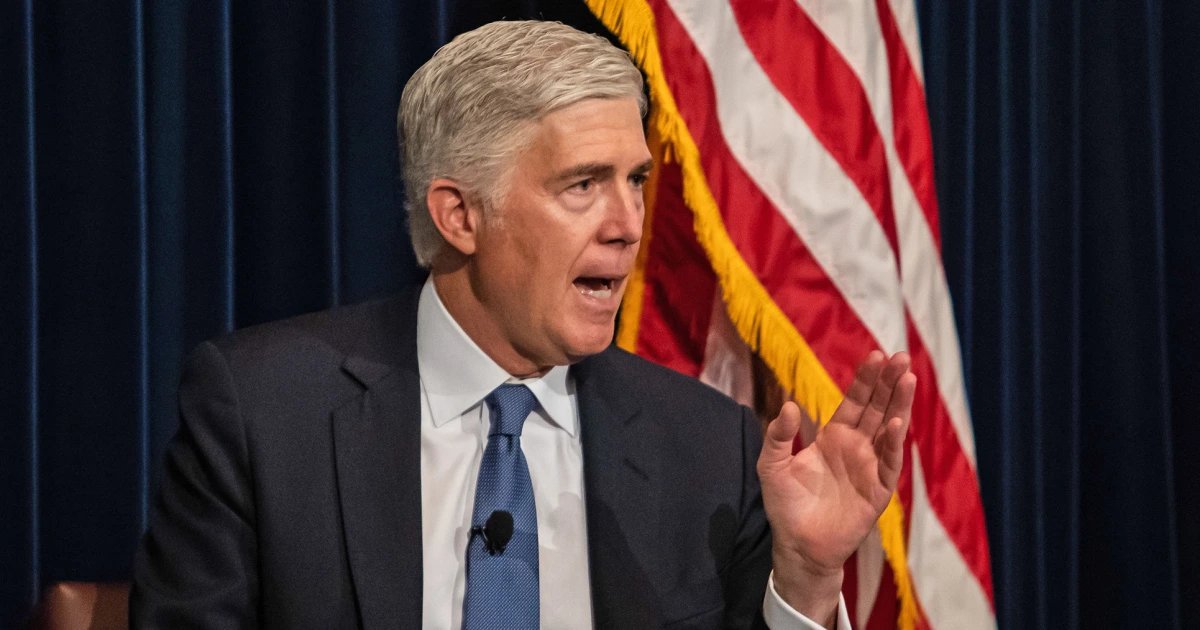
WASHINGTON — Conservative Justice Neil Gorsuch pulled no punches in taking aim at his colleagues on the Supreme Court for a lack of consistency in approaching broad assertions of presidential power made by Joe Biden and Donald Trump.
Gorsuch was part of the 6-3 majority that struck down most of Trump’s tariffs on Friday, but he wrote a separate 46-page opinion that chided several of his fellow justices over how they approached the case.
His colleagues were effectively applying the same Supreme Court precedent differently under Trump than they did under Biden, he argued, writing: “It is an interesting turn of events.”
His invective focused on a theory known as the “major questions doctrine,” which adherents say bars sweeping presidential action not specifically authorized by Congress. The conservative-majority court embraced the doctrine while Biden was in office to strike down broad plans, such as his effort to forgive student loan debt.

But in ruling against Trump on tariffs Friday, the conservative majority splintered. Gorsuch, Justice Amy Coney Barrett and Chief Justice John Roberts were in the majority, finding in part that Trump’s tariffs needed to go through Congress. Three others, Justices Clarence Thomas, Brett Kavanaugh and Samuel Alito, dissented.
“It shows you how much internal dissension there is on the Supreme Court right now,” said Robin Effron, a professor at Fordham University School of Law.
Roberts’ 21-page majority opinion reads as if he hoped it would attract nine votes, she added, but instead it was a “huge internal fail.”
Even some of the justices who agreed with the outcome did not sign on to the part of Roberts’ opinion that sought to adopt the major questions doctrine in curbing Trump’s tariffs, raising questions about how it will be applied in future cases.
While the court’s three liberals, who backed Biden and criticized the major questions doctrine in past rulings, were in the majority against Trump, they again did not embrace the theory.
Gorsuch, who has wholeheartedly supported the major questions doctrine, pointed to his colleagues’ waffling on the issue in his opinion.
“Past critics of the major questions doctrine do not object to its application in this case,” he said, in a reference to the liberal justices.
“Still others who have joined major questions decisions in the past dissent from today’s application of the doctrine,” he added, referring to the dissenting conservatives.
Thomas, Kavanaugh, Barrett and liberal Justice Elena Kagan all felt the need to respond to Gorsuch in their own opinions (which might be one reason why the court took months to decide the case).
Kagan, for example, pushed back on the idea that she was quietly endorsing the major questions theory, notwithstanding her former criticism.
“Given how strong his apparent desire for converts, I almost regret to inform him that I am not one,” Kagan quipped in a footnote directed at Gorsuch.
Jonathan Adler, a professor at William & Mary Law School, said Gorsuch’s critique of Kagan had merit, saying it is “hard to square” her opinion on Friday with her previous votes.
In one 2022 case in which the court ruled against Biden’s attempts to tackle climate change, Kagan wrote that the major questions doctrine seemed to “magically appear” when it suited the conservative majority.
But Ilya Somin, a professor at George Mason University’s law school who joined the legal challenge to the tariffs, said the dissenting conservatives were just as guilty of contradicting themselves. In his opinion, Kavanaugh argued in part that the major questions doctrine does not apply to tariffs because of foreign affairs considerations.
“It seems like they want to carve out this arbitrary exception to major questions for tariffs even though it can’t be justified,” Somin said.
For Adler, the bigger picture is that whatever the legal approach the court took, it ruled against Trump in a major case despite many on the left fretting that would not happen.
“Whether we characterize this as major questions doctrine or not, it’s very clear that the court thinks it is important to police the boundaries of what powers Congress has given the executive branch,” he added. “There were plenty of folks who didn’t think that would happen in cases involving the Trump administration.”