dailynewsnblog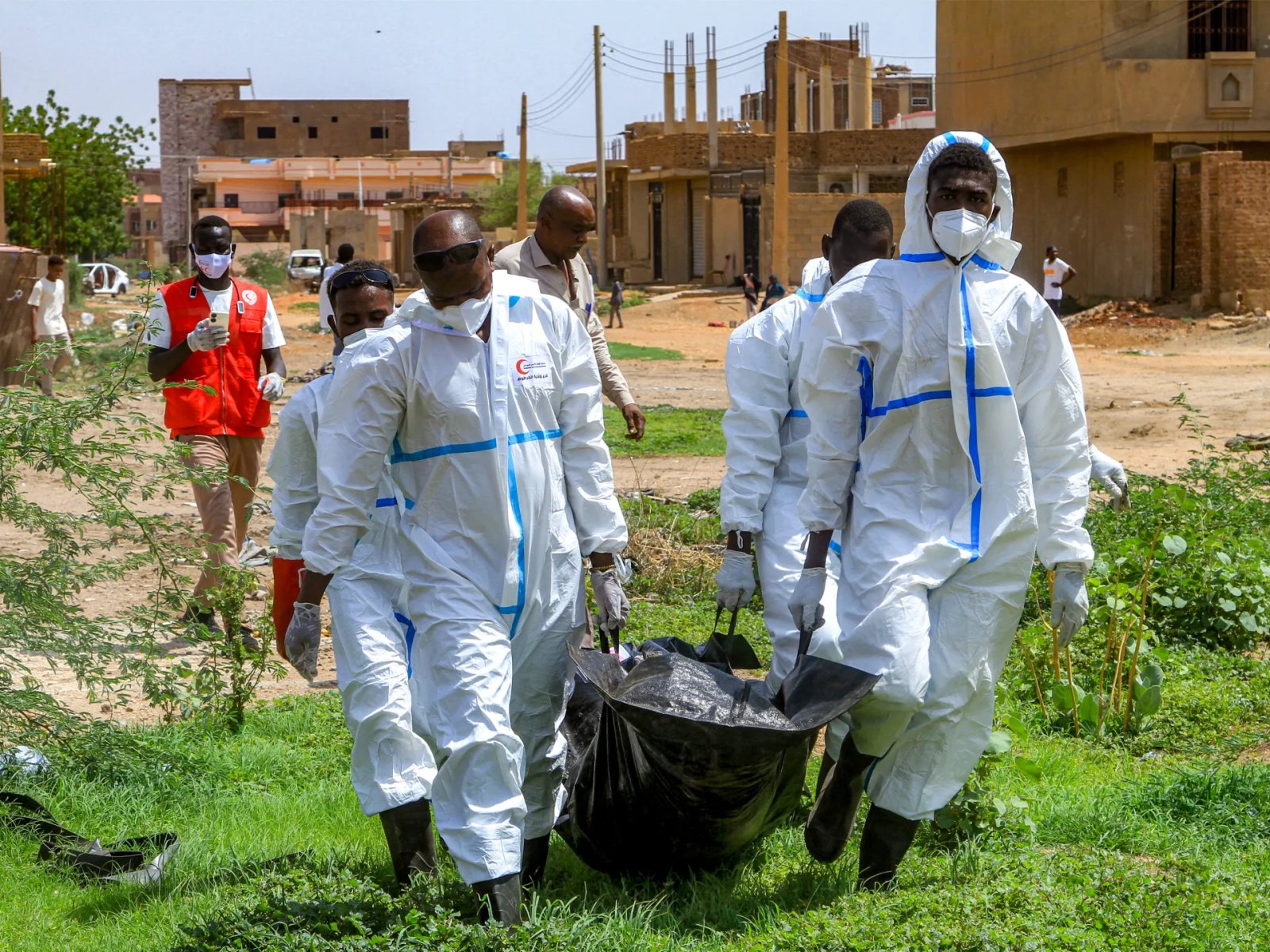
Khartoum, Sudan – Iman Abdel-Azim had to bury her brother in the courtyard of her home in Khartoum North when he died as fighting between the Sudanese military and the paramilitary Rapid Support Forces raged around them.
Her neighbours had to help her bury him because it was impossible to access cemeteries in the fighting. She was not the only resident of the capital region’s three cities – Khartoum, Khartoum North and Omdurman – who had to do this.
Recommended Stories
list of 3 itemsend of list
After Khartoum State announced at the beginning of December a major effort to exhume the remains of people buried in this makeshift manner and move them to cemeteries, Abdel-Azim feels her grief has been renewed as she relives the pain of losing a loved one.
Organised campaign
State and local committees were formed to implement the exhumations. They are made up of representatives from forensic medicine, Civil Defence, the Sudanese Red Crescent, and neighbourhood management and services committees.
Ahmed Abdel Rahman, executive director of Khartoum North, told Al Jazeera that the campaign aims to alleviate the psychological burden on families and improve the health and humanitarian situation in the capital region.
According to Abdel Rahman, the campaign is being overseen by the High Committee for Collecting the Remains of Those Who Died During the Battle of Dignity.
The process will unfold in stages, the first of which is identifying makeshift burial sites.
After that, families are notified and allowed to nominate a representative to be involved in every step, from exhumation to burial.
Forensic medicine specialists will supervise the exhumations and reburials in cemeteries with full documentation of the remains.
The process of transferring these remains began as early as when the Sudanese army took control of Khartoum State, Hisham Zain al-Abidin, director of the Forensic Medicine Authority in Khartoum State, explained to Al Jazeera.
He affirmed that by the first quarter of 2026, Khartoum and its seven districts would be free of any makeshift graves.
However, he added, the field teams responsible for the exhumations and reburials are facing a number of challenges, including a shortage of body bags, “which could affect the work being carried out as required”.

Sabotage
According to Zain al-Abidin, the Rapid Support Forces sabotaged the DNA units used to preserve samples from several buried bodies, which has made it difficult to identify many victims.
He said teams are numbering and documenting the burials of unidentified bodies, then burying them in graves specifically for unidentified individuals.
He called on stakeholders, organisations and citizens for help in preparing the graves and stressed that the work ahead is extensive and requires concerted efforts between the government and citizens.
For her part, Shireen Al-Tayeb Nour Al-Daem, vice president of the Steering and Services Committee in the Shambat neighbourhood of North Khartoum, told Al Jazeera that the committee had surveyed graves in homes, mosques and public squares in several neighbourhoods as a preliminary step before the arrival of medical teams and the commencement of exhumations and transfers of bodies.
Nour Al-Daem said the committee informs victims’ families to attend and follow up on the official procedures with the legal and medical teams until the transfers and burials are completed.
The committee is working on identifying and surveying the locations of makeshift graves, collecting data and communicating with families, Nour Al-Daem said, urging citizens to report the locations of makeshift graves so field teams can access them.
When teams arrive to undertake the exhumations and reburials, the committee will also undertake the logistics and support for those teams. This includes coordinating between the field teams and the families of the deceased to ensure the presence of the family or a representative.
If no relatives of the deceased are present, she added, the High Committee has instructed that the exhumation be halted.
She indicated that the country needs further efforts to complete reconstruction and rebuilding and what the committees are doing “paves the way for a safe environment for the return of citizens” despite the difficulty of people experiencing a second farewell to their loved ones.
The streets of Khartoum are also filled with bodies that have not yet been buried, some of which have decomposed, representing a challenge to identify them and dangers to public health.