dailynewsnblog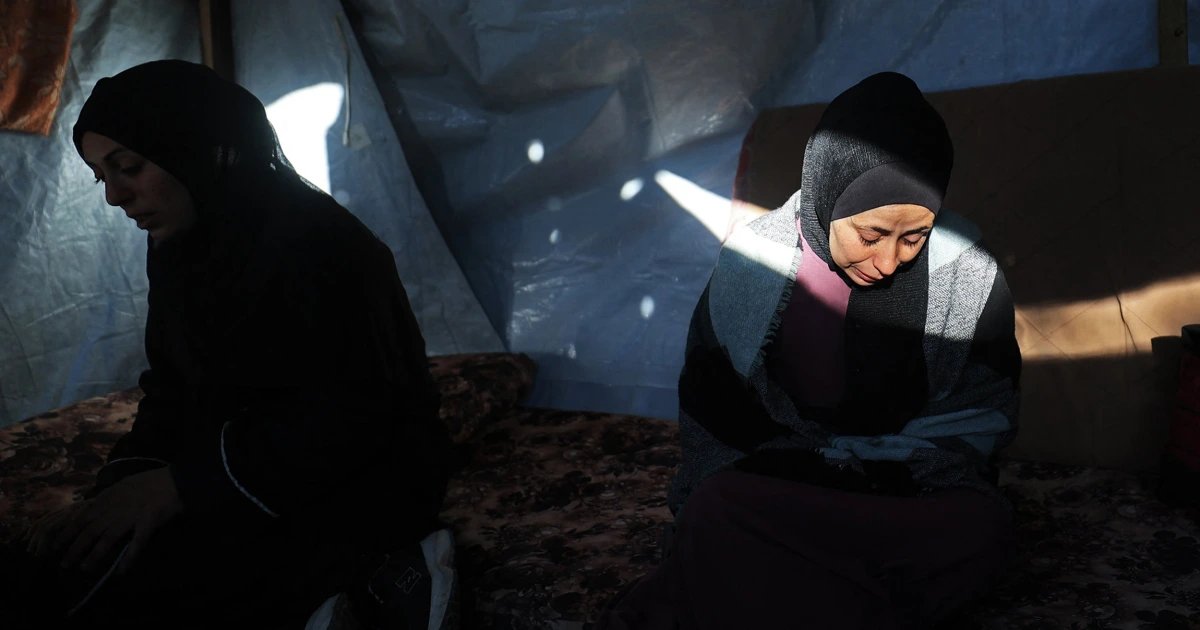
Burning scraps of plastic and cardboard in a large tin can outside his family’s tent in a southern Gaza graveyard, Raed Abu Ouda prepares a meal for his children, remembering a time when they didn’t have to live this way.
“We used to live in palaces, but now we live in graves,” Abu Ouda, 42, who said he was injured in February when a shell struck his home despite the ongoing ceasefire, told NBC News this week. His family’s tent is one of several built in an area used as a cemetery outside the Jordanian field hospital in Khan Younis.
The graveyard, he said, was the best shelter his family could find, with thousands of Palestinians still blocked from returning to their homes, or at least what’s left of them, because they sit behind the “yellow line” — a boundary delineating territory still occupied by Israeli forces, comprising roughly half of Gaza.

“We have become people living in unnatural conditions,” said Abu Ouda, who lost his work as a farmer after the conflict in Gaza began. Describing the daily struggle to get food, water and the most basic supplies for survival in the Palestinian enclave, five months into the current ceasefire between Israel and Hamas, he questioned how he was supposed to support his family of seven, including his youngest child, 1-year-old Arwa.
“I can’t even provide a single jerrycan of water for them,” he said.
Hopes that the ceasefire, brokered in part by President Donald Trump, would advance — and that the process of rebuilding Gaza might begin after more than two years of war — swelled after Trump’s son-in-law Jared Kushner unveiled plans for the enclave’s future, marked by gleaming high-rise towers and beaches packed with tourists. Kushner had outlined a timetable of a few years for the reconstruction despite the ongoing strikes in Gaza, but large-scale work is yet to begin.
Now, a wider war consumes the region after the United States and Israel launched strikes on Iran last month, triggering retaliatory attacks from Tehran and its proxies. Palestinians in the battered enclave fear they have been forgotten, with progress on advancing the ceasefire deal between Israel and Hamas largely sidelined by the latest hostilities. Key obstacles include the future disarmament of Hamas and the withdrawal of Israeli troops from areas that are still occupied.

“The war involving Iran has had a major impact on Gaza,” Doaa Basam, a 26-year-old pharmacist displaced from Beit Hanoun in northern Gaza to Khan Younis, told NBC News on Wednesday.
Basam noted a continued “shortage of many essential supplies,” including adequate food and medicine.
The Kerem Shalom crossing is currently the only functioning route in and out of Gaza. Israel closed the Rafah crossing with Egypt “until further notice” as the Iran conflict broke out, citing security fears, just weeks after it was reopened under the ceasefire deal.
Meanwhile, fears have grown for future access to aid in the enclave after dozens of humanitarian organizations, including Oxfam and Médecins Sans Frontières, or Doctors Without Borders, were barred by Israel from operating in the Palestinian territories over their refusal to cooperate with new vetting rules that would have forced them to provide lists of their staff, as well as their personal information.
The Israeli government said the rules were implemented on security grounds, to rule out any links to terrorism among humanitarian workers.
Israel’s top court issued a temporary injunction to allow the organizations to continue most of their activities while it weighs a petition from 17 aid groups challenging the government ban, but a decision on the case has yet to be made.
Speaking at a news briefing Wednesday, U.N. spokesman Stéphane Dujarric said “ongoing restrictions on aid operations” were “worsening an already critical humanitarian situation.”
Between Feb. 27 and March 5, just more than 3,400 pallets of aid administered by the U.N. and partners were offloaded at Gaza’s crossings, according to an update published March 6 by the United Nations Office for the Coordination of Humanitarian Affairs. That works out to around 485 pallets per day, with around 70% of them containing food supplies, according to OCHA.

The figures are a significant decrease from the average over the period since the ceasefire came into effect, with an average of 2,240 pallets a day delivered across the period between Oct. 10 and March 5. Those figures only pertain to aid administered by the U.N. and its partners, however.
OCHA warned a week ago that, even before the crossing closures and challenges posed by the Iran conflict, additional food supplies were “urgently needed to ensure that partners have sufficient stocks to maintain distributions,” with its partners’ operations covering “only 50 percent of minimum caloric needs” for 1.2 million of Gaza’s 2 million residents.
OCHA also noted that medical evacuations out of Gaza were also on hold amid the Iran war, while only “a limited number of commercial supplies have been permitted to enter,” with delays causing fuel shortages, driving up prices and increasing reliance on humanitarian aid.